
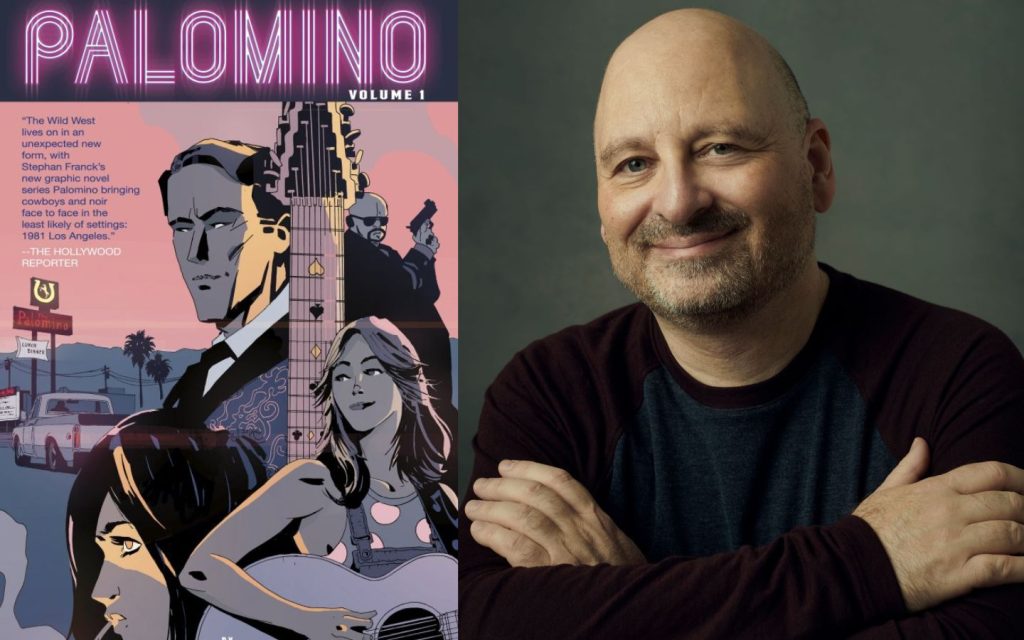
Previously on… PALOMINO
Stephan Franck has spent decades making other people’s myths feel real — bringing Spider-Man, the Smurfs, and the Iron Giant to life through the demanding frame-by-frame logic of animation. But with Palomino, his sprawling 661-page noir epic set against the fading glory of Los Angeles’s country music club scene, he’s doing something harder and more personal: building a myth of his own.
Split across 1981 and 1995, Palomino traces a father and daughter through crime, loss, and the slow death of a particular American dream — one that happened to play pedal steel guitar and wear rhinestone suits in the San Fernando Valley. It’s a book about time, about inheritance, about the things children have to finish that their parents started and couldn’t.
We sat down with Franck to talk about what it means to finally tell your own story, why noir and the Western were always the same thing, and what Don Rickles taught him about knowing when to stop.
An Interview with Stephan Franck
You’ve spent your career making other people’s characters feel alive — Spider-Man, the Smurfs, the Iron Giant. Then you sit down to make PALOMINO, which is yours completely. What actually changes? What’s harder, and what quietly disappears?
Stephan Franck: Working on characters that are universally beloved and who have taken on personal significance in people’s lives is a great privilege, as well as a huge responsibility. It’s also a childhood dream come true, and in a sense, it’s like reconnecting with old friends you’ve known your whole life. On the other hand, when creating original characters, you are by definition just meeting them, so they have the ability to surprise you in a different way. It’s got the excitement of discovery. But in all cases, I try to do my best to deliver honest moments by listening to what the characters or the story are trying to tell me.
The whole thing is very “method”. And I love your choice of words–“Feel alive” is definitely a great way to say it. I think the best characters are not just trying to stay alive, they are trying to feel alive. It’s that quest that animates everyone and motivates everything. That said, the first time I saw a cosplay of one of my original characters in the wild — which was Sledge from Silver — I almost choked up!
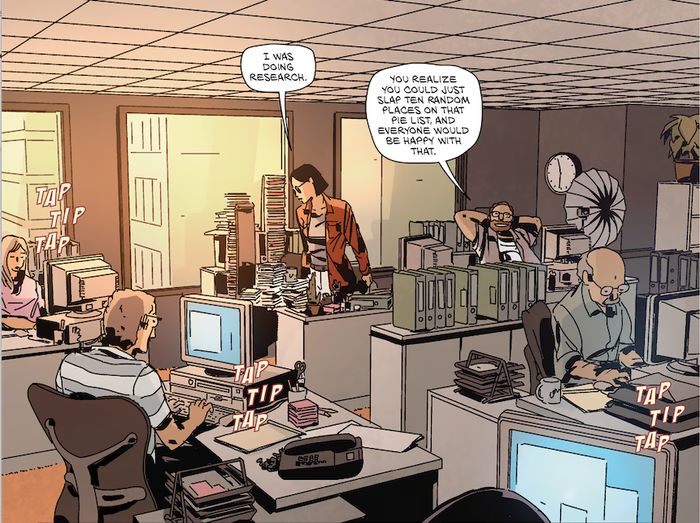
You weren’t just a fan of LA’s country music club scene — you were in it, playing guitar, living the thing PALOMINO is about. At what point did you realise that wasn’t just background colour for the story, but the actual reason it had to exist?
Stephan Franck: The Palomino was a mythical place where, on any random night of the week, you were apt to run into John Belushi and Jerry Lee Lewis getting drunk together, or one of the Beatles could get up on stage unannounced, and have California governor Jerry Brown quietly sit in the back with his girlfriend Linda Ronstadt and no secret service!
So beyond my passion for the music that came out of the Pal, it was also a place of huge significance, where all sorts of cultural and political streams of influence converged, even as the American century was entering a crucial transitional phase. Couldn’t dream of a better stage for a noir story about an interconnected web of crimes involving several levels of the town’s power structure.
Most noir stories pick an era and dig in. PALOMINO splits itself across 1981 and 1995, with fourteen years and a generational baton-pass in between. Why structure it that way — and what can a time jump do emotionally that a straight-through narrative just can’t pull off?
Stephan Franck: The 14-year time jump wasn’t part of the original plan, but the idea sort of asserted itself after Volume 3 was done. As I was starting on the script for Volume 4, scenes I had planned all along began to feel false, and the time jump became the obvious choice. As soon as I accepted that structure, certain contrivances magically disappeared, and certain themes began to resonate.
For one, the universal challenge of parenting is that, at some point, you have to accept the shift from being the main character in the story of your life to becoming a secondary character in the story of someone else’s life. In many ways, Palomino is about time not stopping for anyone, and about the impermanence of all things. Then I realized that the Palomino Club’s high watermark was 1981, and it permanently closed in 1995, so the time jump structure validated itself and tied everything together.
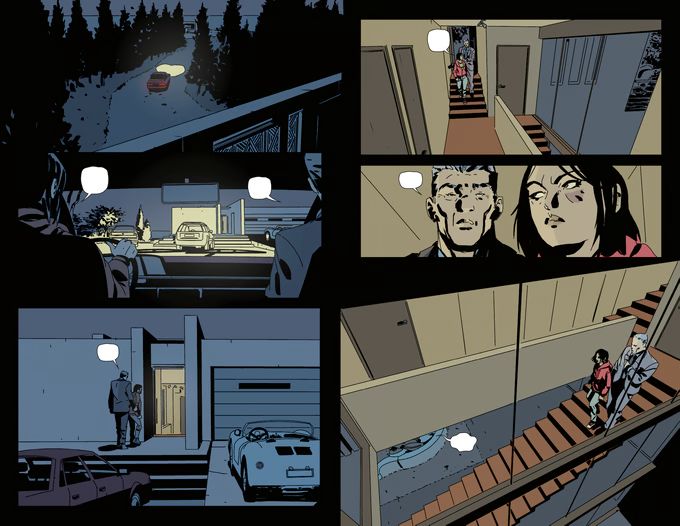
Eddie and Liz feel less like a traditional father-daughter duo and more like the same person at two different points in a long defeat. That’s a pretty specific and unromantic kind of love. Where did it come from, and what were you most scared of getting wrong?
Stephan Franck: I’m of the belief that every story ever told is about one universal thing–the greatness or wickedness of our forefathers (or mothers), and how we live up to their greatness and live down their sins–and how we compare to them. So on the big mythical level, that’s what Palomino is about.
With a smaller, more psychological lens, In Palomino, I wanted to approach the father-child relationship from both sets of experiences. I raised three awesome kids who were all old-souls in their own ways, and all became wonderful adults–including two very powerful daughters, so maybe there is a lot of personal experience that went into it. But when raising teenagers, the challenge for parents is to know when to give the kids space and when to step in–when it is OK to ignore it, and when it is a code red?! That’s the position that Eddie and Lisette are in–even as he, himself, is spinning out of control.
Then, from Lisette’s point of view, I dipped into my own experience having lost one parent at an early age, and living with the awareness that you’re running out of spares. So in both cases, I was drawing from my own experience at different stages of my life. The most challenging aspect was finding the right balance for adult Liz, between the powerful person that she is at her core, and her mild case of arrested development.
Silver is about a found family. PALOMINO is about a blood one. Both are, at their core, about people who refuse to abandon each other in a world that keeps giving them reasons to. Is that a theme you set out to explore, or is it something you keep arriving at without quite meaning to?
Stephan Franck: My stories end up exploring atypical family dynamics. In Silver, it was the creation of “a family by choice”, when three loners decide to get past their mistrust of others and indulgent sense of self-reliance to recreate a family unit. In Palomino, it is a more traditional family that has suffered a loss and that is in crisis. But in all cases, the concept of family is about a bond that is unbreakable no matter what.
An unconditional love, as well as a sense that we’re each other’s first and last line of defense–and yes, also a sense that the apple doesn’t fall far from the tree. I think that at the end of the day, whether it’s a household, a work family, a subculture…Those are all families.
RELATED: An Interview with the Creators of ‘Fort Psycho’: Matt Kindt and Brian Hurtt
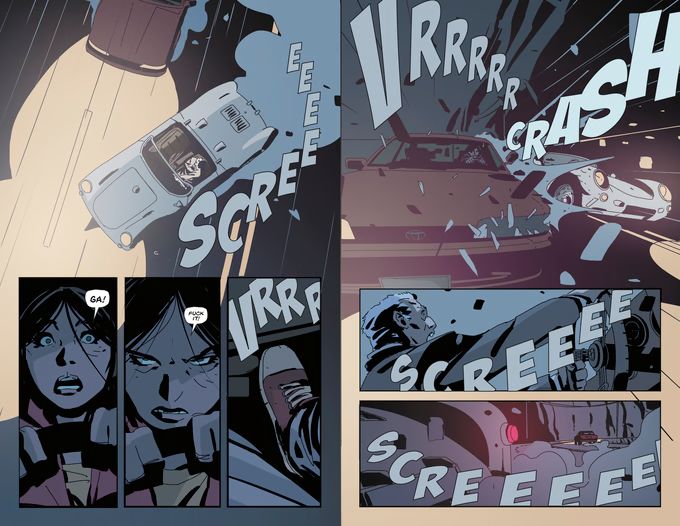
The San Fernando Valley tends to show up in stories as a punchline or a backdrop. PALOMINO treats it like it actually matters. For readers who’ve never set foot there — what do you need them to feel about that place for this story to land the way it’s supposed to?
Stephan Franck: From the 1950s to the early aughts, the Valley was the showroom of the American middle class. Palomino is a fun crime mystery, but it exists in the context of the end of the American century — the ’80s as the place where the ’50s came to die, and the ’90s as the place where the seeds of today were planted — and the image of the working club musician, a long-lost classic San Fernando Valley figure, is the canary in the coal mine of what happened to the American middle class.
Also, the Valley is a very unique place. There is a stillness under the weight of the heavy sun, and no place to hide. This is the B-side of Hollywood. This is the home of television, of animation, of Cold War–era aerospace, of the porn industry and the Rand corporation. Yet it is deeply middle class. A valley full of dreamers in a place where life always gets in the way. A place where things feel inert, yet everyone has a million things going on, and its cultural impact on the world is unparalleled.
When I was starting Palomino years ago, my daughter Madeleine was away at college, and I was sending her pages. She was like, “Dad, these pages are making me homesick!” That’s when I knew I was onto something.
PALOMINO drops you into a world of rhinestone suits, pedal steel, and stuntmen in cowboy hats — people living inside an American myth that’s slowly going out of business. Is the collision of noir and the Western as natural to you as it looks on the page, or is it actually a stranger marriage than it appears?
SF: The defining image of the American century. It is the central figure America has used to sell itself to itself and to the world. It was the symbol of both America’s power, soft and otherwise, and all of it came from the heart of the San Fernando Valley. But absolute power corrupts absolutely, and corruption breeds cynicism. In a place like that, a certain kind of unbending, hopeless romantic hard case always finds themselves running afoul of the power structure. That’s when the noir happens.
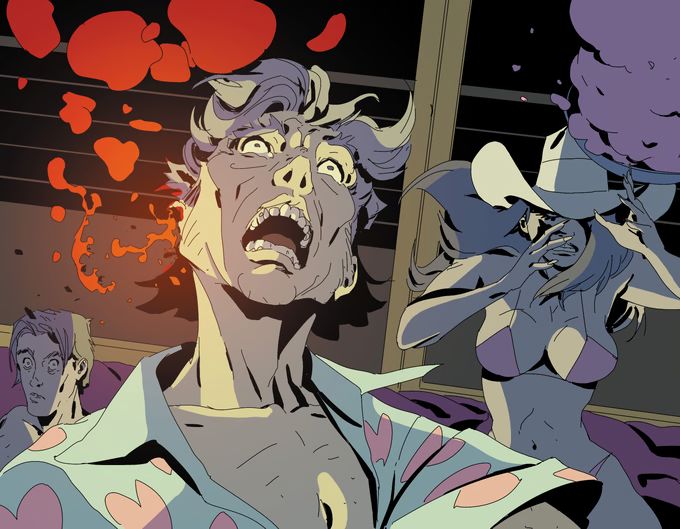
From Chandler on down, Los Angeles has had its share of great noir imagery, but in Palomino, we’re on the other side of the hills–a world away from the shadowy downtown or Hollywood dark alleys. In the Valley, it’s high noon even at midnight. Like Liz says at the end, this is cowboy town.
You wrapped Silver, and now you’re wrapping PALOMINO. As an independent creator whose actually finished two long-form stories, what does it feel like to close the door on a world you’ve been living in? And does it get easier the second time, or harder?
SF: Palomino clocks in at 661 pages (!), so the short answer is that it feels good!
That said, there is definitely a kind of comfort that comes from having an ongoing project in your life. There’s always a next page to do when you wake up in the morning. There is momentum and grounding in a long-term project.
But, to quote Robert McKee, story is about definitive and irrevocable change, so if the story lands the way it’s supposed to, there is a finality to it that makes leaving it behind satisfying. That is not to say that I don’t have new story arcs for both Palomino and Silver in the back of my mind–I do! But my only rule for sequels is to never undo or deny the characters’ growth that has been accomplished in the original. It has to build from there.
PALOMINO is full of the kind of specific, tactile detail that stops you mid-page — the exact right car, the exact right shirt, the way a certain kind of night felt in a Valley bar in 1981. Where does that level of specificity come from? And do you ever worry that nailing a lost world this precisely might make readers grieve something they never even had?
SF: I always try to make the worlds I create as immersive as possible, but the level of specificity in the environments varies with the type of story. Silver’s aesthetic was Fritz Lang meets Indiana Jones, for what I call epic Black Box Theatre. A lot of the world was hidden in shadows, or came from imagination. For a story as grounded in a relatable time and place as Palomino, you want a lot more specificity. I should point out that when I was a kid reading comics, I always felt that two things looked horribly fake — musical instruments and cowboy hats! So needless to say, I had to get that right.
But even more importantly, I think storytelling is about moments, and how they make you feel. I wanted to bring the reader into experiences that I knew intimately, and yes, that included the texture of life in the Valley, playing music in clubs, the parent-child relationship, and to create a credible enough experience for the reader to accept these characters as real people, and the stakes of their story as definitive and meaningful.
And to close the loop with your previous question, yes, when the final page is turned, there is a bittersweetness that should be a little bit delicious.
Jeff Lemire and Jimmy Palmiotti have sung your praises, which is great — but PALOMINO feels like it’s really written for a very particular kind of reader. Someone who’ll sit with atmosphere, who notices what’s not being said. When you’re deep in a page, who are you actually making it for? Is there a real person, or an imagined one, whose reaction you’re trying to earn?
SF: One of my favorite aspects of doing comics is comic book conventions, where you get to meet actual readers who share what the stories mean to them, and to watch their interaction with the books. It’s truly humbling and inspiring. And there is no better feeling than someone stopping by our booth by complete chance, buying the first volume in the series, and coming back the next day to buy all the volumes.
That’s been the consistent experience with both Silver and Palomino, and that includes readers who are die-hard comic fans and others who had never connected with comics before. The latter might be because I come from film as well as comics, so there’s a film-language type of accessibility to my pages that works for people who have struggled with the format before.
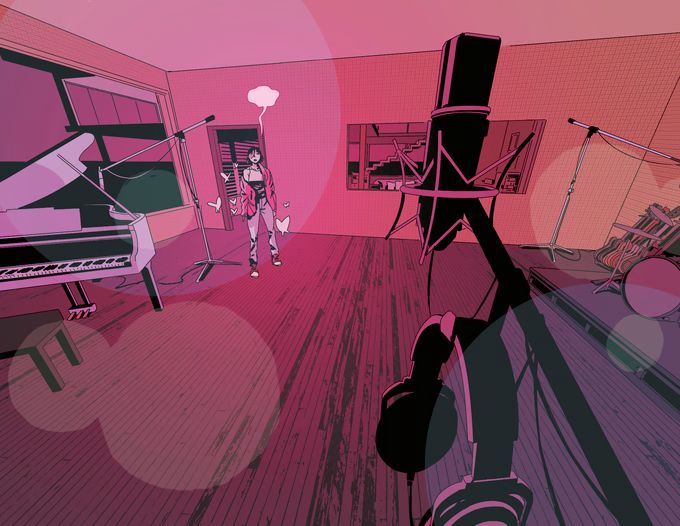
Meanwhile, when working on the books, the only people I try to write for are the characters. I just try to perform their stories honestly and without judgment. I don’t decide on character designs ahead of time either. I start with a sense of who they are, and I begin drawing the layouts. By the time I’m done with the layouts, the look of the characters has coalesced through the storytelling. The same goes for the pacing. I don’t necessarily plan those runs of double spreads in advance, for instance. I just let them happen if they feel right for the moment.
RELATED: An Interview with the creators of ‘Parapsychologist’: Taki Soma and Mark Schey
Noir runs on the inability to let things go — and Liz is basically the embodiment of that. But you’ve been living with this story for years, chasing your own version of the ending. Did writing her teach you anything about your own relationship with obsession?
SF: If you live a life in the arts, obsession is definitely a constant companion. You usually start as a child, out of curiosity and fascination, and you have to stay pointed in the same direction with enough single-mindedness for it to become a natural part of yourself. You study every word, every line to crack the code. Animation is even more obsessive than comics, because it’s down to single frames that last for 1/24 of a second sometimes. And obsession sometimes keeps you going — for instance, just as I was graduating from animation school, one seasoned animator told me, “You should find something else to do because you have absolutely no talent for this.” Had I not been obsessed with the work, I probably would have given up.
But also, sometimes you have to know when to stop. To drop a name on you, a long time ago, Don Rickles once popped into a recording studio that I was using. I was taking way too long, and he was waiting for the room, so he gave that look and said, “Hey kid, you gotta figure an end for this shit.”
Let me tell you, we wrapped it up quickly after that. These days, if I start to feel like I’m belaboring something, I ask myself, “Hey, if I stop now, will there be riots in the streets?” The answer is usually no.
Looking back at PALOMINO as a finished thing — is there a decision you made early on that you only fully understood much later? A seed you planted almost instinctively that you didn’t realise was load-bearing until you got to the end?
SF: The concept of Palomino formed in my head with Eddie as the main character. I tried a few versions before cracking the code on him — at some point he was an ex-con who had served time for killing a man as he tried to break up a bar brawl. His circumstances were different, but he was always that same guy, and always the main character.
The real breakthrough was understanding that he was the single parent of a teenage daughter, and still, he was the main character. But for some reason, when I actually started writing the final version of the script, it opens with Lisette. Eddie doesn’t come in until page 10.
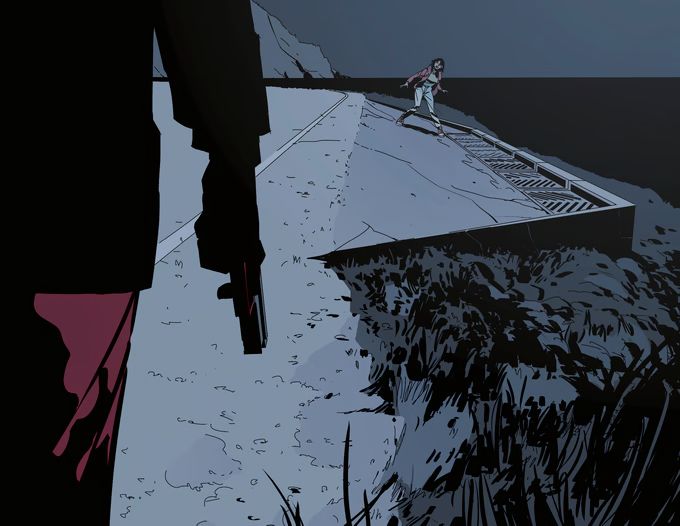
Fast forward three volumes later, when the idea of the time jump came about, and I realized that, unbeknownst to me, it had been her story all along. It’s just that, as a child, she had lacked the agency to take the lead, but all the seeds were planted — from her encounter, and quasi-spiritual quantum entanglement with Eileen right before she gets murdered, to her craving for answers about her own mom’s disappearance, and many scenes along the way where she struggles with that tension between her desire to find the truth and her inability to actualize it.
When PALOMINO is done and the dust settles — what’s next for Dark Planet Comics?
SF: My next project is a paranormal thriller, but I’m thinking of it as a short story — those are fun to do in between long series that take years of my life. I did one during the pandemic — it’s called Romance In The Age Of The Space God. It’s a post-modern dystopian thriller/political satire/slice-of-life 42-page short story, all done with adorable anthropomorphic little mice. I call it a weird comic for and about weird times.
Short stories are like randomly sitting next to someone on the bus, who volunteers some amazing tale about something that happened to them. Then it’s their stop or yours and you may never see them again, yet they’ve opened a small window into a big world that will stay with you forever.
Thanks for your time.
SF: It’s my pleasure! Thank you for having me!
What did you think of this interview?
Will you be supporting PALOMINO? Let us know on social media.
More in Comics, Interviews, Kickstarter