Previously on… Ancestral Recall
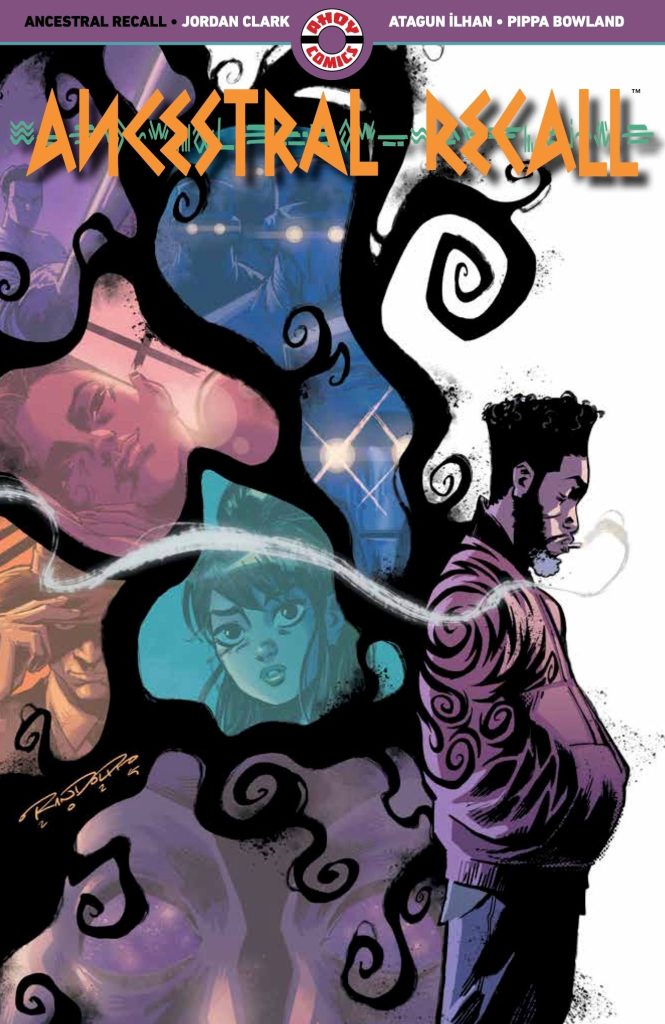
When Ancestral Recall first appeared as a monthly comic series, it quietly announced itself as something different – a story rooted in Black history, grief, creative renewal, and the supernatural, drawn with a visual sensibility that defied easy categorisation. Now collected as a trade paperback, it’s finding the wider audience it always deserved.
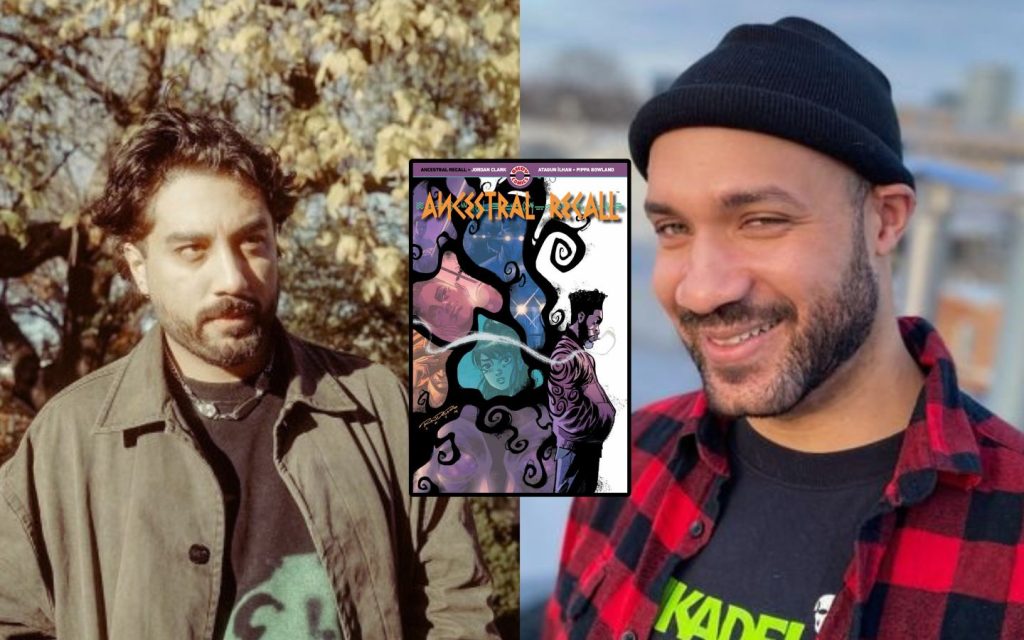
Writer Jordan Clark and artist Atagun Ilhan sat down to talk about the book’s unlikely journey from single issues to shelves at mainstream retail, the painstaking research behind its historical figures, and what it means to tell stories that resist the white gaze while existing comfortably within commercial publishing. They also discussed creative fear, cultural immersion, the quiet genius of colorist Pippa Bowland, and why the collected format might be where Ancestral Recall truly comes alive.
An Interview with Jordan Clark and Atagun Ilhan
Jordan, ‘Ancestral Recall’ is a book partly about the commodification of Black art. Black expression gets absorbed, stripped of context, sold back to people. And now here’s the trade paperback, distributed by Simon & Schuster, sitting in mainstream retail. Does the book’s own existence complicate the argument it’s making?
Jordan Clark: I’d argue it’s the opposite. The problem with the commodification of Black art has never really been about the art or the artist, but the way that people have come to it. While art never exists in a vacuum, Black art has always been about being seen on our own terms. In a commercial and capitalist society, the value we often place on things comes from dominant power structures. What is considered “good art” is often sanded down to fit into what is marketable and easy to digest, which in a corporation’s mind is never Blackness.
There’s a scene in the book in which an art critic questions why Melvin never paints white people, asking on a deeper level why hasn’t he decided to produce art that is more easily accessible? And June responds with the fact that the white gaze is always trying to limit what we consider valuable or “of merit”, Black art and stories are always resisting.
Ancestral Recall asks the reader (specifically the white reader) to step out of those limitations and see a world that is deeper and richer than what we are traditionally taught. I see it as an invitation to expand your horizons and ask what and who else is out there and to find stories that expand what you find meaningful.
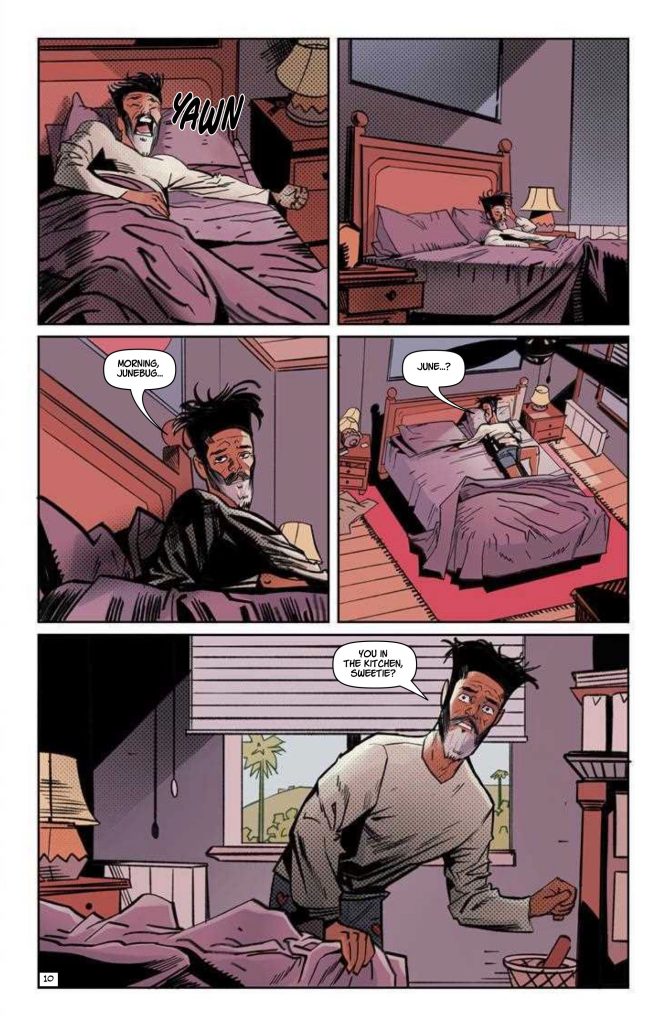
You’ve said Octavia Butler wrote to create herself, to imagine a world worth living in. Melvin is a guy who feels like his best creative years are behind him – he’s caring for a sick wife, he’s living small. How much of this story is you working through your own fears about creative longevity?
Jordan Clark: I think the creative life is one of constant rediscovery. It’s easy, especially as you get older to feel like you’re losing touch with what people care about. Old ways of doing things get phased out and new values take hold. But the beauty of being an artist is partially giving into that cycle. I think you can see the difference between an artist who desperately wants to hold on to what they see as their creative peak and those who never stop being playful and curious.
External forces of fame, money, security drive us all to some extent. We all want to live comfortably, but I also think that the more you can find internal joy and value, the easier it can be to manifest those things. Ultimately, I think Melvin comes out the other side of his journey more secure and inspired than he was going in. Following your intuition can be scary sometimes, but I think it can also lead you to unexpected places that allow your creative journey to find new life.
Atagun, Jordan has done a tonne of press for this book. You’ve done almost none. So let’s fix that. What was the specific visual problem you were trying to solve with ‘Ancestral Recall’ that ‘Poison Ivy’ or the ‘Milestone’ work just didn’t give you?
Atagun Ilhan: With DC and Milestone work, you’re operating within an established visual language – there’s a house style, a world, and a level of dynamism that superhero storytelling demands. My role there is to adapt and contribute within that framework, adjusting my style while still meeting expectations for pace, clarity, and spectacle.
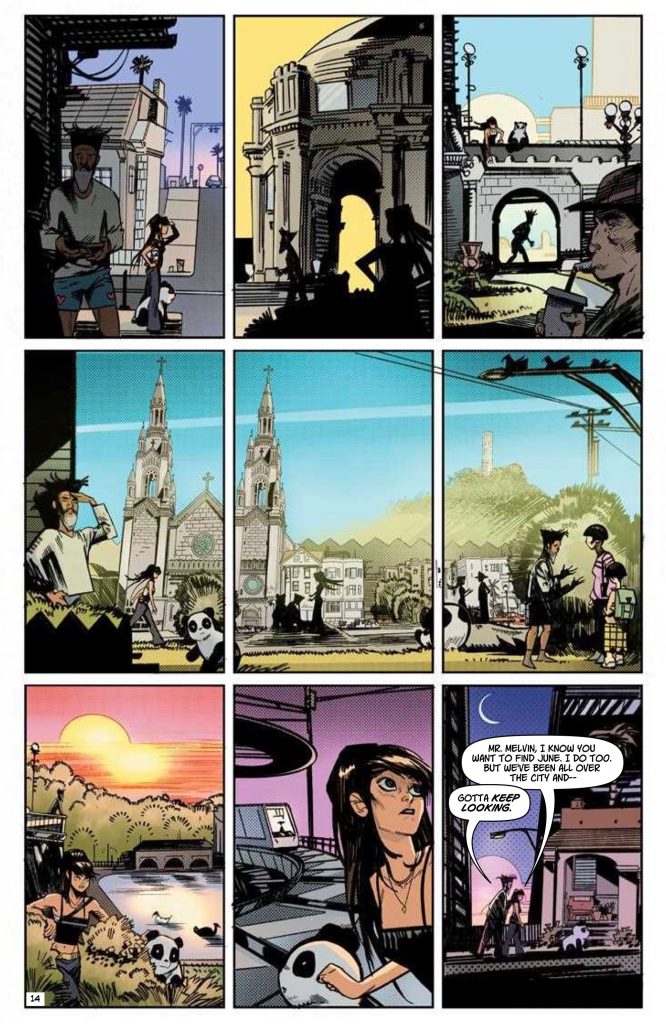
With Ancestral Recall, I was solving a different problem: how to fully control tone and authorship. I approached it more like an author-director – owning everything from staging and pacing to emotional rhythm. Instead of the fast, angular, high-impact energy of superhero books, I leaned into a slower, more dialogue-driven, character-focused approach – closer to a festival film in tone.
Visually, that also meant pushing my style further. I experimented with a blend of American comics and manga sensibilities, incorporated animal elements, and used a chalk-based inking approach to soften the line and create a more tactile, intimate atmosphere.
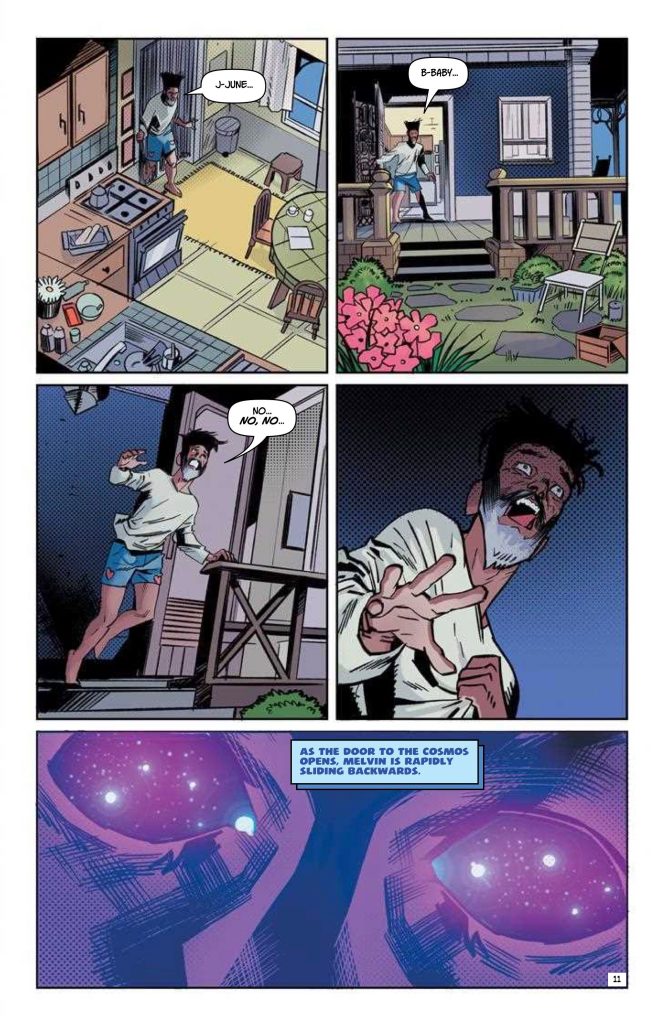
You were born in Turkey, did your MFA in Syracuse, and now you’re rendering African American historical figures with the kind of accuracy and dignity that people are genuinely noticing. What did that research process actually look like – and were there moments where you felt the weight of getting it right?
Atagun Ilhan: Most definitely! When I first came to the States as an international student, I really felt like a fish out of water. It took time to understand the cultural fabric here, so I made a conscious effort to immerse myself – attending NYCC for over six years, building relationships, and learning through community. The DC Milestone Initiative played a huge role in that. It gave me mentorship, context, and a space to engage more thoughtfully with the history and legacy behind the work.
At the same time, working closely with Carrie Mae Weems deepened that understanding even further. Her work is so rooted in African American history, memory, and social dynamics, and being part of her studio meant engaging with those ideas not just visually, but intellectually and emotionally.
So when Ancestral Recall came to me, I approached research very seriously. It wasn’t just visual reference – it was reading, looking at archival photography, studying gestures, posture, environments, and even the emotional tone of historical imagery. I wanted the characters to feel lived-in and human, not symbolic.
And yes, there were definitely moments where I felt the weight of getting it right. I was very aware that I was stepping into histories that aren’t mine. That awareness pushed me to be more careful, more attentive, and more respectful in every decision – from likeness to body language to atmosphere.
Jordan, the research clearly threw up some people who floored you – Sam Marlowe, Cheryl Linn Glass, Jean-Louis Michel. Was there anyone whose story genuinely disturbed you? Someone who shifted how you understood a time period you thought you already knew?
JC: One of our main goals with Ancestral Recall was to go deeper than the normal group of Black historical figures we learn about in school. There’s definitely some stories that don’t have happy endings. Cheryl Linn Glass for example died young after some pretty harrowing experiences late in her life.
But I also found plenty of stories that surprised me in different ways. There was Miss La La, a Black acrobat who swung on the trapeze by her teeth and toured Europe in the late 1800’s. Or Janet Collins who broke down color barriers in the world of ballet. I’m always amazed at the tenacity and the passion of those who looked at a world that tried to carve them out and refused to be erased. To stand and demand to be seen no matter what is a powerful thing, and I’m grateful for all those who pushed so that I and many others can be here today.
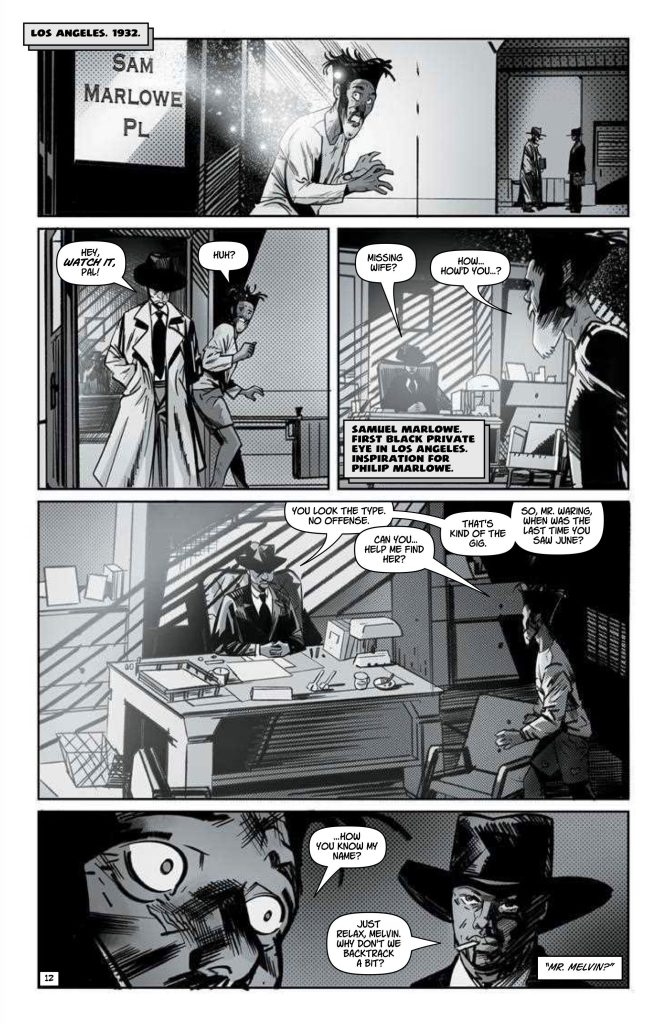
Atagun, Jordan has talked about wanting the historical figures to feel alive and present rather than like museum exhibits. How do you draw someone who’s simultaneously real, dead, and supernaturally in the room? Did you develop a visual grammar for that, or was it different every time?
AI: It felt different every time, but there were a few visual anchors I kept returning to. The most specific one was how I handled Melvin’s “avatar” state – I used his body as the bridge. His eyes would flash, energy would move through his hair like lightning, and that became a signal that something beyond the present moment was entering the space.
That effect also evolved into a storytelling device. At times, I’d let that energy open up almost like a portal – where historical figures could appear, not as distant memories, but as living presences sharing the same space. It allowed me to keep the scene grounded in the “now” without constantly shifting environments.
So rather than treating them like museum figures or flashbacks, I tried to stage them as active participants – breathing, reacting, occupying space alongside Melvin. It wasn’t a rigid system, but more of a flexible visual grammar that balanced realism with a subtle supernatural presence.
Colorist Pippa Bowland’s work is getting called out in reviews. How much of the book’s emotional register lives in decisions the two of you made together rather than separately?
AI: Honestly, when I first saw Pippa’s work, I immediately knew I could trust her instincts. That feeling only got stronger once I saw the first few colored pages – it just clicked.
From there, it became less about dividing responsibilities and more about a shared sensitivity to the tone of the book. I approached the line work with a certain emotional intention, but her color choices elevated that – she brought atmosphere, temperature, and rhythm to the scenes in a way that really completed the storytelling.
So while we weren’t constantly going back and forth on every decision, there was a kind of unspoken alignment. A lot of the book’s emotional register lives in that overlap – where my drawing sets the stage, and her color brings it fully to life.
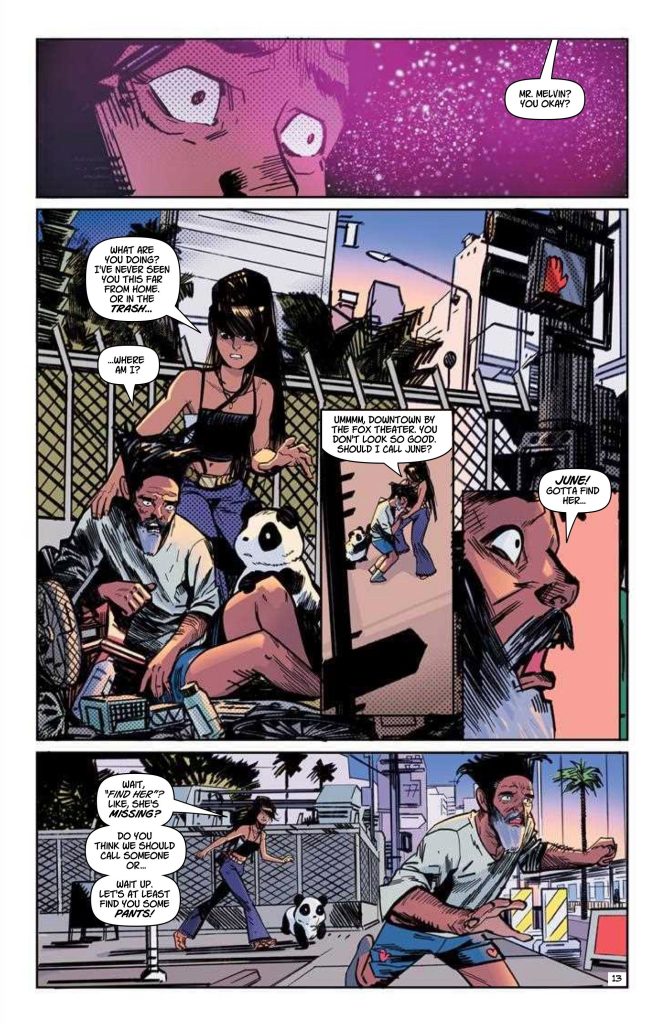
Jordan, let’s go back to you for a moment. Now that the whole story is done and collected – did it end up saying something you didn’t fully plan for? Sometimes a story knows things before the writer does.
JC: The biggest thing that always strikes me is how once a story is out in the world, how readers bring it back to you through their experience. I’ve heard a lot from older readers how the relationship between Melvin and June reflected the love they have for their partners and how they loved seeing someone like them represented in the story. I wasn’t aware how much people were looking for a character like Melvin.
A lot of other readers have said that Melvin’s journey has not just inspired them to look into Black history but into their own cultural histories which I think is beautiful. History is filled with so many wonderful stories to discover and I hope this story gives people an excuse to dive deeper.
These next few questions are for both of you. The single issues came out monthly over several months. Now readers are sitting down with the whole thing at once. Has anything about how people are responding to the TPB surprised you compared to the issue-by-issue reception – do people seem to be getting something different out of it?
AI: I actually think the book is at its most powerful in the collected format. It’s the kind of story that benefits from being experienced in one sitting, where the emotional and narrative threads can fully build on each other.
It also feels like a more personal object as a TPB – something you carry with you, leave by your bedside, bring to work or school, and share with others. That changes the way the story lives with the reader.
So I’m hoping people are connecting to it in a deeper, more continuous way now – less as individual chapters, and more as a complete emotional experience.
JC: Everything that Atagun said. Haha. I think the only thing I would add is that we added some quick biographies for the historical figures which allows for an even deeper understanding of who these people were. I think it really gives you a complete look at how all of these stories and histories connect.
If Ancestral Recall finds its audience – really finds it – what does that look like? What’s the version of this where it worked?
AI: I think success for Ancestral Recall looks like the book finding a life beyond the comic shop – living in public libraries, school libraries, and classrooms. I can really see it becoming a companion for younger readers, especially at the elementary and middle school level.
If it works, it’s not just a good read – it becomes a gateway. A book that introduces kids to comics, but also to history, identity, and storytelling in a way that feels accessible and engaging.
The ideal version of success is when it’s something kids return to, share with each other, and maybe even discover a love for reading through.
JC: Again, Atagun took the words out of my mouth. As my first creator owned work, I’m extremely proud for this to be the story I got a chance to tell alongside an incredible creative team. I’m so thankful for all the people who took a chance and supported the book as single issues, and now I think we have a chance to find an even larger audience with the trade.
I hope kids are able to find it and learn from it at schools and libraries, but I also hope it can be a conversation starter. Something that sparks conversations between parents and children, between friends, between generations. I think everyone would love for their work to be a runaway bestseller (us included) but for me, the true win is our book being something that truly resonates with a reader. That inspires and gives hope to imagine a better world.
What’s next for you? Any projects on the horizon that you’d care to plug?
AI: Jordan just sent me some of his ideas for a new project so we’ll pick a story and go from there!
JC: Yes! We’re hopefully working on something new together soon. I also have a few projects in the pitch process and some self-published non-fiction work on the way soon!
Thanks for your time. It’s been a delight.
Both: Thank you!
Have you read Ancestral Recall?
Will you be picking up this critically acclaimed trade paperback?
Thanks for reading.