Previously on Voltessa
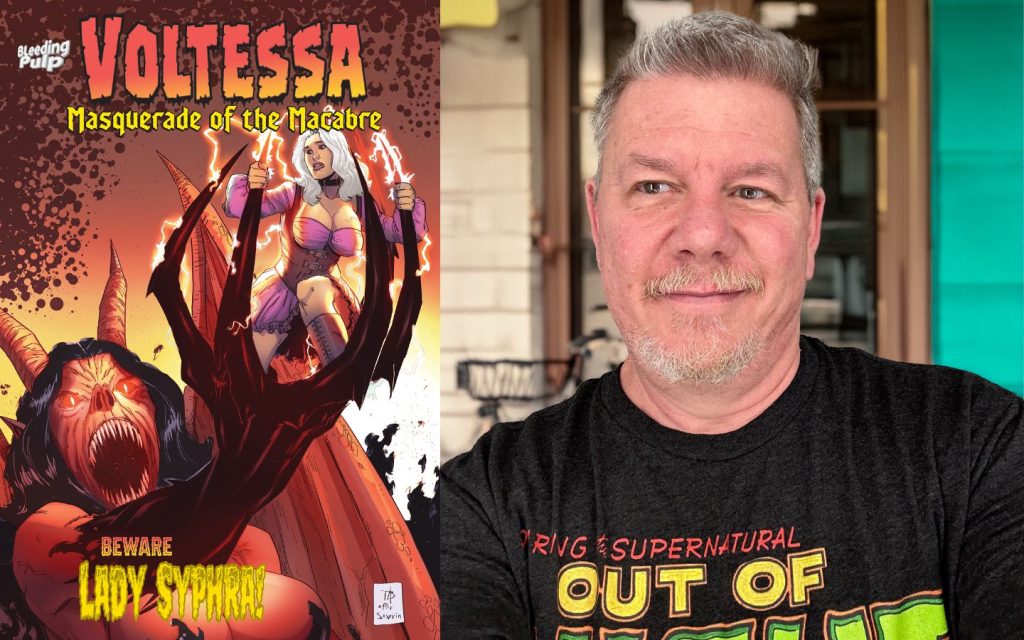
Justin Gray spent fifteen years in restaurants before he spent years writing Jonah Hex for DC, which means he understands both how to survive on instinct and how to season something until it’s exactly right. These days he runs Bleeding Pulp, a creator-owned imprint built on the kind of comics he actually wants to read — pulp adventure, mad science and gothic horror. Things that move fast and commit completely to their bizarre genre. His current Kickstarter campaign, Voltessa: Masquerade of the Macabre, has achieved smashed past 147% of its funding goal. It’s the second chapter in the ongoing story of an electricity-powered reanimated monster navigating a Victorian world that doesn’t quite know what to do with her.
What started as a Bride of Frankenstein sex comedy — has quietly become something richer and stranger than the original joke required. Voltessa: Masquerade of the Macabre plants Voltessa inside an Eyes Wide Shut gothic masquerade, introduces a villain, and pushes the character toward the kind of choices that can’t be undone. In this interview, Gray talks about discovery through writing, letting the artist cook, the EC Comics energy baked into the title, and the specific pacing philosophy that made him delete an entire atmospheric opening and start over.
Interview with Justin Gray
Voltessa is a pretty distinctive name — where did it come from, and did the character’s personality follow the name or come first?
Justin Gray: Voltessa was one of those names that appeared almost immediately once I decided I wanted to do something with the Frankenstein concept. That’s unusual for me because I generally struggle with titles and character names. Part of the challenge was that I knew I couldn’t use terminology too closely associated with the classic Universal version of Frankenstein. I’ve dealt with cease-and-desist letters before, so it was important to create something original while still communicating the character immediately.
Voltessa felt right because it suggested electricity, power, and a certain larger-than-life quality without sounding overly complicated or tongue-in-cheek. It told you something about the character before you ever opened the comic. In this case, the name definitely came first. Once I had it, the character started to take shape around it. Not every detail was there immediately, but the attitude was. The name sounded powerful, dangerous, and a little dramatic, which turned out to be a pretty good description of Voltessa herself.
How has Voltessa changed as a character from her first appearance to Masquerade of the Macabre? Did this story take her somewhere unexpected for you?
Justin Gray: The comic has been a fun creative experience because I’ve had the freedom to let the character evolve naturally. Working outside the corporate structure of Marvel and DC, I adopted a hybrid Stan Lee style of scripting and even continued writing during the lettering stage. On a creator-owned book, if I discover something that makes the story stronger, I can simply do it.
When I started The Electrifying Voltessa, I was very focused on the idea of doing a spicy Bride of Frankenstein parody. Production delays actually helped because they gave me time to keep revising the story. I added pages, rewrote scenes, and kept pushing the character further. By the time I finished it, I realized I had created a raunchy, over-the-top horror sex comedy. I still love that book because it commits completely to what it is.
What surprised me was that Voltessa turned out to have a lot more depth than the original premise required. She began as the punchline to a joke—an uncontrollable monster frustrating everyone around her—but as I wrote her, she became more interesting. Beneath all the chaos, she was someone trying to understand herself and her place in the world.
So, the biggest change from Electrifying Voltessa to Voltessa: Masquerade of the Macabre is that the focus shifts from her origin to her growth. She’s still impulsive, powerful, and driven by the same core desires, but now she’s making choices rather than simply reacting to what was done to her. The story becomes less about how she was created and more about who she’s becoming.
And yes, that was unexpected. I originally thought I was writing a fun standalone horror comedy. By the time I started Masquerade of the Macabre a week after finishing production on Electrifying, I already knew the character was leading me toward a much larger world than I had planned.
RELATED: An Interview with ‘Blam & Glam’ Creator: Richard A Morgan
She exists in this space between horror and pulp adventure — does she feel more at home in one genre than the other, or is that tension actually the point?
Justin Gray: It’s not entirely a conscious thing. I write the kinds of comics I want to read, and my primary goal is always entertainment regardless of genre. If I’m being honest, a lot of my writing is driven by boredom. I tend to mash together influences and ideas because I’m always looking for something that feels a little different from what I’m seeing elsewhere.
The pulp element is there because it naturally appeals to my sensibilities. I grew up loving larger-than-life heroes, weird adventures, monsters, mad science, and stories that moved fast. At the same time, I’ve always loved horror. One of the things I enjoy most about horror is how flexible it is. Horror can be frightening, funny, tragic, romantic, action-driven, or all of those things at once.
With Voltessa, I found myself embracing horror tropes and then twisting them into something else. She comes out of classic monster fiction, but she doesn’t behave the way those stories traditionally expect her to. She’s just as likely to cause trouble as she is to stop it.
I don’t think she feels more at home in horror or pulp adventure. The tension between those genres is the point. The horror gives the stories their monsters, atmosphere, and danger. The pulp gives them momentum, spectacle, and fun. Voltessa exists right in the middle of that intersection.
It wasn’t until I was writing the fourth story that I felt all those elements finally locked into place. What emerged was something that felt like a lost Marvel comic from the wave of 1970s supernatural antiheroes filtered through Hammer Films. Once I saw that, I knew exactly what kind of series Voltessa wanted to be.
Pulp heroines from the classic era were often defined by their relationships to men. How consciously did you push against that when building Voltessa, and where do you think she lands?
Justin Gray: This is probably me talking too much about process, but I’m a discovery writer. For those who might not know what that means, I don’t work from detailed outlines or rigid story structures. I usually start with an idea, an image, or a scene and begin writing. If things are going well, I look up and realize a few hours have disappeared. In a way, I’m the audience as much as the writer because I’m discovering the story while I write it.
Because of that, I didn’t sit down and consciously decide I was going to create a character that pushed back against the way pulp heroines were traditionally portrayed. My stories tend to circle around certain themes, and one of the biggest is heroes born from tragedy. Spider-Man, Batman, Superman — something happens that fundamentally changes who they are. Voltessa fits that tradition, except in her case she literally dies.
The original idea for Electrifying Voltessa came from Frankenstein himself. Frankenstein is famous for creating monsters he ultimately cannot control. I started wondering what would happen if he created an insatiable female monster that he desperately wanted to control but couldn’t. What if nobody could? That was the joke at the center of the character, and I committed to it completely.
What surprised me was that the more I wrote her, the more there was beneath the surface. Voltessa may attract attention, desire, and obsession from the people around her, but she isn’t defined by any of them. Men pursue her. Villains manipulate her. Allies try to guide her. None of them ultimately determine who she is or what choices she makes.
So where does she land? I think she ends up somewhere between classic pulp heroines and classic pulp antiheroes. She’s not a damsel and she’s not a role model. She’s a monster trying to figure out what kind of monster she wants to be. Her relationships matter, but they don’t define her. The story is ultimately about her.
Is there a character in Voltessa: Masquerade of the Macabre — hero, villain, or supporting — who surprised you by demanding more space on the page than you originally planned?
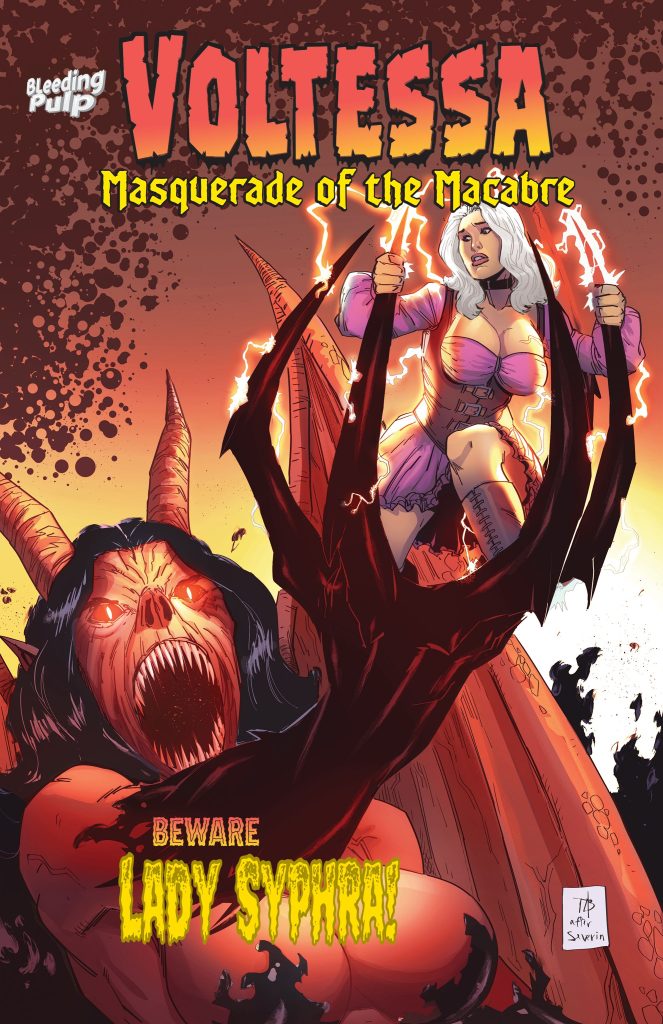
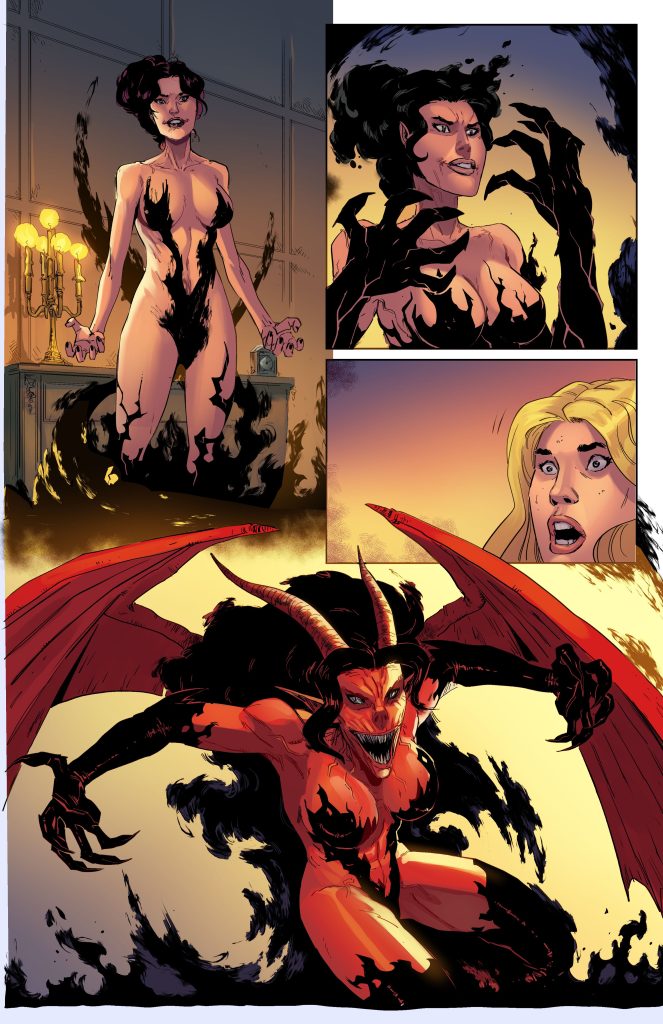
Justin Gray: Absolutely. Lady Syphra. When I started writing Voltessa: Masquerade of the Macabre, she was intended to be a foil for Voltessa and the story’s primary antagonist. At the time, I still wasn’t fully seeing the superhero and adventure elements that were gradually finding their way into the series. I thought I was writing a fun gothic horror story with a memorable villain.
What surprised me was how important she became to Voltessa’s development. Syphra isn’t just someone Voltessa fights. She challenges her, tempts her, and forces her to confront parts of herself that she would rather ignore. By the end of the story, Voltessa isn’t the same character she was when she arrived at the masquerade.
In that sense, Lady Syphra became a catalyst. She ended up helping define the larger mythology of the series and pushed both the character and the world in directions I hadn’t originally planned. Looking back, Masquerade feels like the point where the universe around Voltessa really began expanding.
The funny thing is that Masquerade was written before the ink on The Electrifying Voltessa was even dry. I had this overwhelming urge to get back to the character and see what happened next. As I continued writing subsequent stories, I realized many of the ideas that would shape the series could be traced back to what Lady Syphra set in motion. What began as a villain role grew into something much more important.
So yes, Lady Syphra definitely demanded more space on the page than I originally intended. In many ways, she helped reveal what the series was actually about.
RELATED: An Interview with the Creator of ‘Boston Metaphysical Society’: Madeleine Holly-Rosing
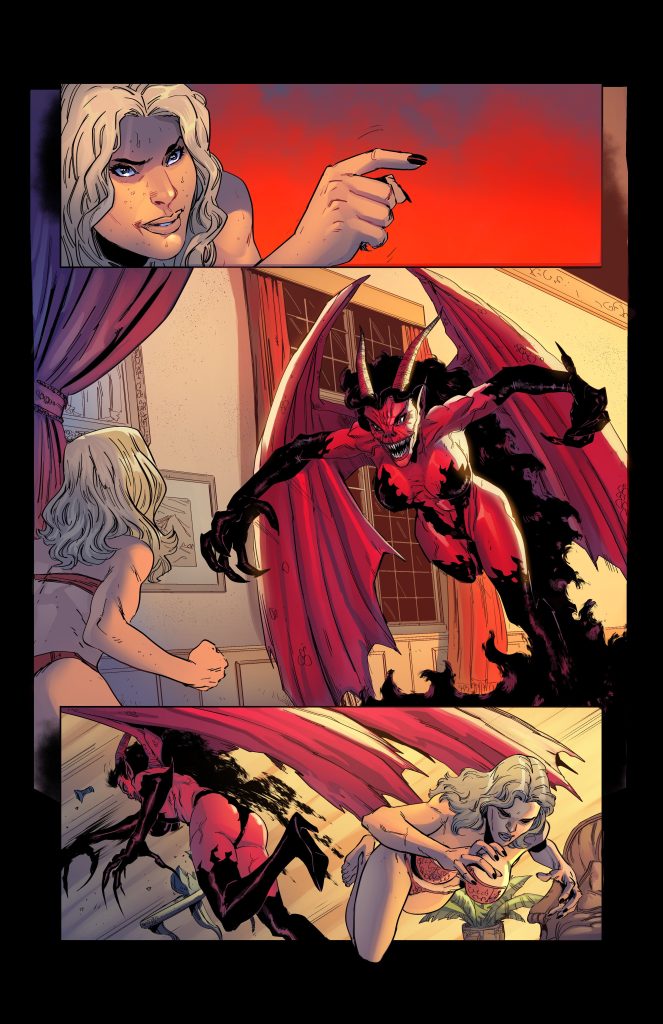
The masquerade setting is all about hidden identities and danger dressed up as glamour. What drew you to that specific setting for this chapter of her story?
Justin Gray: This story follows the origin which is a Frankenstein mashup of sex-comedy and Hammer Horror with the sex and humour driving all 28 pages as I cranked it up to eleven – trying to have as much fun as possible. I established certain elements when Frankenstein reanimated her as this insatiable sex monster where every encounter makes her stronger and more dangerous in the bedroom. It worked for one story, but I also knew any escalation beyond that would be dangerously close to turning a fun romp into a caricature or something that feels hollow and exploitative.
There is still plenty of spice to go around but as I keep mentioning had to change to stay fresh and interesting. She needs to grow. I knew a kind of Eyes Wide Shut vibe would maintain opportunities to push the subplot of her looking for sexual gratification and give me a chance to enrich her character I just had no idea it would literally change Voltessa the way it did.
Gothic horror tends to be slow and atmospheric; pulp adventure tends to be fast and visceral. How do you manage the pacing when you’re blending those two rhythms?
Justin Gray: To me, the gothic elements are more of a flavoring than a rigid set of rules. I spent fifteen years working in restaurants, so I tend to think about storytelling the same way I think about cooking. I like combining different ingredients and seeing if I can create a unique, memorable, and cohesive experience.
The gothic horror provides atmosphere, mystery, and mood. The pulp adventure provides momentum. The trick is making sure one doesn’t overwhelm the other. Because I operate largely through Kickstarter, where readers are directly supporting my work, I don’t think I can afford to give them a flavourless comic. I try to get to the good stuff as quickly as possible. If someone is backing one of my books, I want them to feel like the story starts immediately and keeps rewarding them for turning the page.
In fact, the first draft of Masquerade of the Macabre opened with this long, atmospheric sequence introducing Voltessa as if she were appearing in a gothic film. It was rainy nineteenth-century London, dramatic camera angles, lots of mood. I looked at it and thought, “Oh, you pretentious asshole. Get to the good stuff.”
So, I rewrote the opening. I started with a much bigger hook and then worked the atmosphere back into the story afterward. That’s generally how I approach pacing. I want readers to feel the gothic atmosphere, but I never want them waiting around for something interesting to happen. The atmosphere should enhance the story, not delay it.
The subtitle “Masquerade of the Macabre” has a real EC Comics energy to it — is that intentional, and how much does that era of horror comics live in your DNA as a writer?
Justin Gray: I can’t lie, this comic is a whole bunch of influences converging in a way that I hope captures the same feeling as the comics that inspired me.
Was the EC Comics energy intentional? Absolutely. “Masquerade of the Macabre” sounds like the kind of title that would have leapt off a spinner rack or a drugstore comic shelf. I love those dramatic, oversized horror titles. They immediately promise monsters, mystery, and trouble.
That said, EC is only one ingredient in the mix. The narration is a love letter to Stan Lee and Jack Kirby. The pacing and structure owe a tremendous debt to the Marvel comics of the 1960s and 1970s. Not in the way Alan Moore approached it with 1963, because Moore is a genius operating on a completely different level. I’m not trying to recreate those comics with academic precision. I’m trying to recreate the feeling they gave me.
I still remember grabbing comics off spinner racks as a kid and rushing home to watch those old Marvel animated shows. The animation was hilariously cheap. Sometimes they’d animate an arm or spin a static image and call it a day. I still remember Thor winding up his hammer with what was probably three drawings and a sound effect. None of that mattered. It felt like a doorway into another world.
That’s really what I’m chasing with Voltessa. I don’t want readers thinking about politics, the news, the economy, or whatever fresh disaster is waiting outside the front door. I want them to disappear into a strange world full of monsters, adventure, danger, and fun for twenty or thirty minutes.
If there’s any philosophy behind the book, it’s probably that. I fell in love with comics because they transported me somewhere else, and that’s what I’m trying to do for somebody else.
RELATED: An Interview with the Creator of ‘Night Ghost’: Lee Saunders
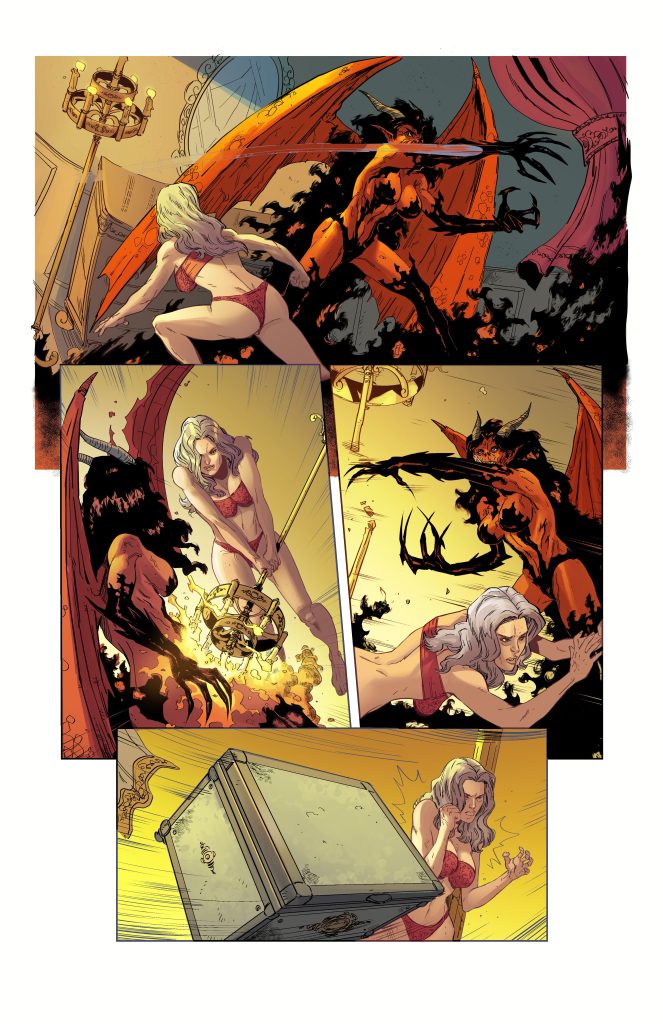
Is there a scene or moment in this book that you’re most proud of — something that really landed the way you hoped it would on the page?
Justin Gray: Let me pull the curtain back for a moment and try not to bore everyone with the mechanics of making comics.
One of the realities of the Kickstarter model is that a lot of money gets spent before there’s any guarantee a project will fund. To build a campaign properly, I have to commission teaser art, covers, and coloring. I handle building and promoting the campaign page long before the book is finished. It’s a leap of faith every time.
Right now, because the campaign is doing well, I’ve given Antonio Brandao the green light to get back to drawing pages. That’s important because of the way I work. I mentioned earlier that I’ve adopted a hybrid version of the Stan Lee method. Antonio has the script, but for me the real editing process begins when I start lettering the finished art. That’s when scenes tighten, dialogue changes, and unexpected opportunities reveal themselves.
The honest answer is that I don’t actually know what scene I’m most proud of yet because the scene I’m most excited about hasn’t been drawn.
I know exactly which sequence I’m waiting for. It’s one of the moments where everything I’ve been building toward in the story comes together. On paper, it works. In my head, it works. But comics are a visual medium, and I won’t know if it truly lands until I see what Antonio does with it and I get a chance to put the final words on the page.
Ask me again after the book is finished and I’ll probably have a different answer. Right now, I’m still looking forward to being surprised.
The campaign describes it as “spicy” — how do you think about where that element fits into the story tonally? Is it flavor, or is it load-bearing?
Justin Gray: With The Electrifying Voltessa, which readers can pick up during this campaign, the spice wasn’t just flavour — it was the story engine. Everything ran through it. The character development, the humor, the conflict, even the monsters were connected to that central idea.
It was definitely a risk. Funny comics don’t always sell, and I didn’t try to hide or downplay the sexual elements. There are monster battles, action scenes, and serious moments, but I made a conscious decision not to tiptoe around the premise. I thought, “To hell with it. If I’m going to do this, I’m going all the way.”
As the series continues, though, the role of that element changes. It’s still part of who Voltessa is. It influences her decisions, her relationships, and the situations she finds herself in. But it isn’t the only thing she is. The character has grown beyond the original joke and the original premise.
Just to climb on a soapbox for a moment, I’ve always found it interesting that we live in a culture that’s often perfectly comfortable with graphic violence while becoming uncomfortable around one of the most universal parts of the human experience. People have sex. My characters have sex. My characters also fight mummies, demons, mad scientists, and cosmic gods.
These days I’d say the spice is somewhere between flavor and load-bearing. In the first story, it was the engine. In the stories that follow, it’s one ingredient in a much larger recipe.
You’re writing this for a visual medium but you’re the writer, not the artist. How much of the gothic atmosphere is you and how much is your collaborator? Where does your job end and theirs begin on something this mood-dependent?
Justin Gray: One of the biggest lessons I learned from working on Jonah Hex and spending years in the superhero industry is this: let the artist cook.
I’m not an artist. They don’t need me sitting in the passenger seat grabbing the steering wheel every five minutes. Art direction is one thing. Writing six paragraphs describing every shadow, every facial expression, and every camera angle in a single panel is grounds for justifiable homicide.
At this point in my career, my job is to communicate the intent. Here’s the mood. Here’s the location. Here’s what’s physically happening. Here’s what’s emotionally happening. This scene needs to be funny. This scene needs to be terrifying. This scene needs to make the reader feel uncomfortable. Now show me what you’ve got.
That’s not to say I’m never specific. Sometimes a story beat depends on a particular visual and I’ll absolutely call that out. But generally speaking, I want the artist bringing their strengths to the table rather than acting as a human photocopier for whatever image exists in my head.
With Voltessa, the gothic atmosphere comes from all of us. I may establish the mood on the page, but Antonio Brandao and Thyago Brandao – no relation – bring that mood to life. Antonio and I share a lot of the same influences and tastes, so there’s a shorthand between us. He understands what we’re trying to accomplish without me having to explain every detail.
One of my favorite moments happened after Electrifying Voltessa was finished. Antonio had drawn the entire book without fully knowing what the final, lettered comic would feel like. Once everything was assembled, I sent him a PDF. He read it and told me, “Tell the team they did an amazing job.”
I laughed and said, “Buddy, you, me, and Thyago are the team.”
That’s really how I look at comics. My job doesn’t end where the artist’s begins. The best work happens when everybody trusts each other enough to contribute their best ideas. I’ve worked on projects where there was a lot of friction, and I’ve worked on projects where there wasn’t. I’ll take trust and collaboration every time.
When you sit down to write a Voltessa script, do you have a specific visual era or aesthetic in your head — a particular decade of horror films, a specific artist — that you’re writing toward?
Justin Gray: I try to give each of my Bleeding Pulp books its own identity. I don’t want everything I write to feel like the same comic wearing a different costume.
Blue Geisha is a fantasy and folklore mashup set in a fictional version of feudal Japan. I Eat Monsters is a Southern Gothic monster story built around hospitality, religion, and small-town secrets. Voltessa has its own visual DNA as well.
When I sit down to write Voltessa, I’m generally thinking about a Victorian world that is gradually sliding into steampunk. In the early stories, readers mostly see the gothic horror side of that equation, but as the series expands, more of the strange technology and larger world begin to emerge.
I don’t usually write toward a single artist or a single film. It’s more like a collection of influences bouncing around in my head. There’s Hammer Horror. There’s the supernatural Marvel Comics of the 1970s. There’s classic adventure fiction, monster movies, pulp magazines, and a healthy amount of mad science.
Antonio Brandao contributes a tremendous amount to that atmosphere. One of the things I admire about his work is his ability to do visual worldbuilding through shorthand. A few details in the background, a piece of architecture, a costume choice, a machine sitting in the corner, and suddenly the world feels larger than the page. In that sense, he reminds me a bit of John Buscema. The storytelling is clear, but the world always feels bigger than what you’re seeing.
Ideally, every Voltessa story should feel like a journey into a different corner of that world. A lot of the series takes place in Europe during the nineteenth century, but I don’t want the character trapped in one location. In Voltessa: Lightning Bride of the Gods, for example, she travels to Egypt. The goal is for each story to have its own flavor while still feeling like part of the same universe.
RELATED: An Interview with the Creator of ‘The Goblin Throne’: Mel Gillman
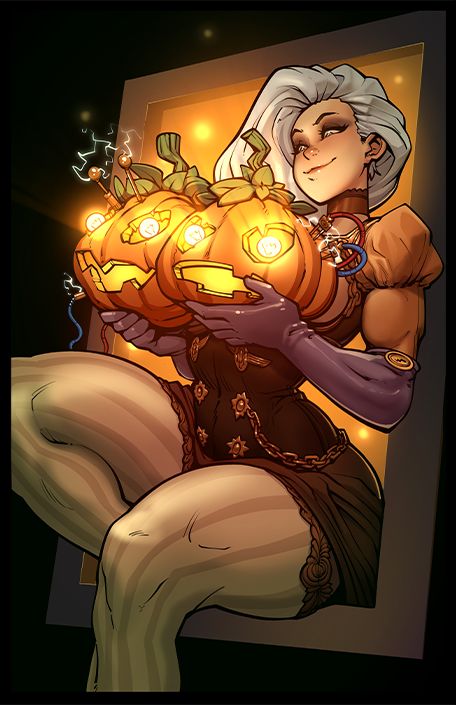
Voltessa has now appeared across multiple campaigns. Has your actual scripting approach for the character changed over time, or do you drop back into her voice immediately?
Justin Gray: I tend to write Voltessa in chunks, partly because I have so many projects competing for my attention at any given time. I’ve found it’s better for me to get a first or second draft down, set it aside, and come back to it later with fresh eyes.
The interesting thing is that I don’t really struggle to find her voice when I return. Once I’m back in a Voltessa script, she tends to show up immediately. I know how she sees the world, what amuses her, what frustrates her, and how she’s likely to react when things go sideways.
What has changed over time is my understanding of the character. In The Electrifying Voltessa, I was still discovering who she was. Every story since then has revealed another layer. So the voice is familiar, but the character keeps growing.
That’s one of the reasons I enjoy writing her. Every time I come back, I know who Voltessa is, but I usually learn something new about her.
Do you have an endpoint in mind for Voltessa’s story, or is she the kind of character who just keeps generating new adventures as long as you keep writing her?
Justin Gray: I don’t really think about Voltessa in terms of an ending.
Because these are largely standalone stories, my mindset is closer to what Jimmy Palmiotti and I did with Jonah Hex. We weren’t building toward a giant finale. We were telling complete stories that could jump around in time, location, and tone while still developing the character.
Voltessa is especially well suited to that approach because she doesn’t age the way a normal human being does. One story might take place in Victorian Europe. Another could take place somewhere else entirely. The timeline is flexible, which gives me a lot of room to explore different corners of her world.
That doesn’t mean she never changes. Quite the opposite. Every adventure leaves its mark on her. But I don’t see her story as a straight line moving toward a predetermined destination.
As long as I can think of new situations to throw her into, new monsters for her to meet, and new parts of the world to explore, I suspect there will be more Voltessa stories. If she still wants to hang out with me, I’m happy to keep writing them.
What do you want someone to walk away feeling after finishing Voltessa: Masquerade of the Macabre — and is that different from what you wanted them to feel after the first issue?
Justin Gray: With The Electrifying Voltessa, my goal was pretty simple. I wanted readers to finish the comic laughing, shaking their heads, and thinking, “I can’t believe he actually did that.”
It was an origin story, but it was also a giant swing. I took a ridiculous premise, committed to it completely, and hoped readers would come along for the ride. More than anything, I wanted them to have fun.
Masquerade of the Macabre is a little different.
I still want readers to have fun. I still want them entertained. That’s always the first priority and there’s plenty of dna from the origin still here. But I also want them to walk away feeling like Voltessa is more than the joke that introduced her.
One of the biggest surprises for me as a writer has been discovering how much depth was hiding inside what started as a fairly outrageous concept. Masquerade is where I began exploring that. The story expands the world, introduces important new characters, and pushes Voltessa into situations that challenge her in ways the first story didn’t.
If Electrifying Voltessa was meant to leave readers thinking, “That was insane,” I hope Masquerade of the Macabre leaves them thinking, “Okay, I want to see where this is going”
Not because it’s a cliffhanger, but because they realize there’s a much bigger world surrounding this character than they or I originally expected.
At the end of the day, though, I still want them to close the book with a smile. There are plenty of things in life competing for people’s attention. If someone spends fifteen minutes in a world full of monsters, mystery, adventure, and beautiful artwork and comes away entertained, then I’ve done my job.
Where can my readers find you online?
Justin Gray: I am notoriously anti-social media. I do have an Instagram but that’s largely to find artists and stay in touch with them. I have a Substack, a Patreon and there is my store. If you’re interested in Voltessa, Blue Geisha, I Eat Monsters, or any of my other creator-owned projects – that’s where you’ll find me.
Will you be picking up a copy of Voltessa: Masquerade of the Macabre?
Did this Justin Gray interview convince you to pick up an issue of Voltessa: Masquerade of the Macabre? What’s your favourite comic book series with a strong female lead?
Let me know in the comments.
More in Comics, Interviews, Kickstarter