Previously on… The Goblin Throne
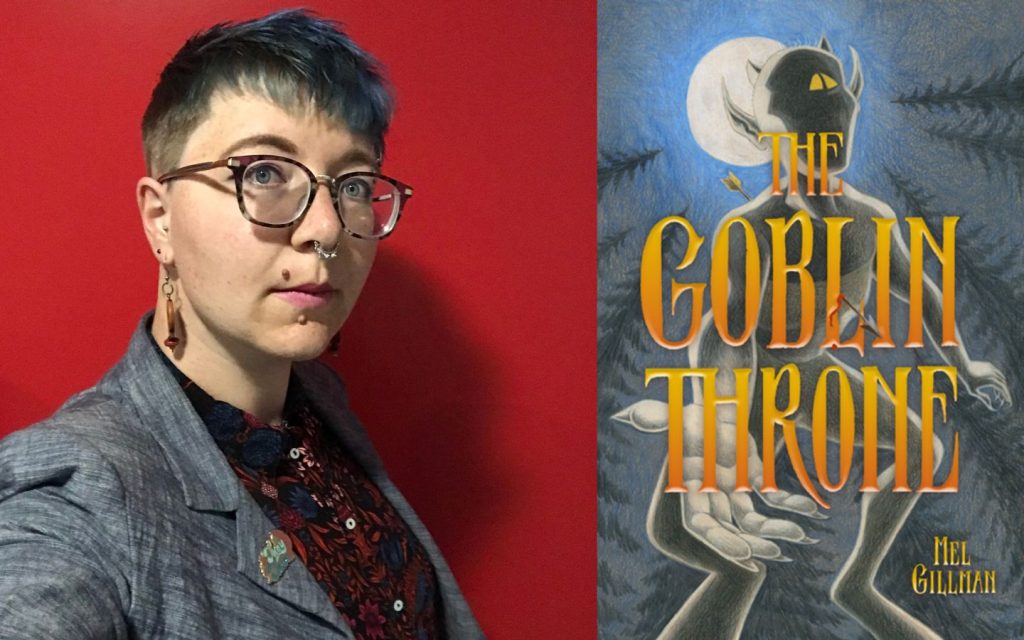
Mel Gillman has spent a career writing queer people toward softness. As the Crow Flies, Stage Dreams, Other Ever Afters — the kind of graphic novels that leave their characters in warmer places than they started. The Goblin Throne is something else. It’s a horror-romance about two older women, a contract that curdles, and a kingdom that doesn’t let people leave. It’s about what grief looks like when it has enough authority to become law. It has gore and sex and a Chekhov’s bow, and it probably won’t be on the shelf at a Big Five publisher anytime soon — which is, Gillman will tell you, sort of the point.
We talked about moral complexity that veers into the unforgivable zone, about drawing the woods as a character with an agenda, and about what it means to retell the same story three times from three different angles until the reader starts to feel the walls closing in.
An Interview with Mel Gillman
The Goblin Throne started life as your annual horror webcomic — chapters posted on Tumblr and Bluesky over the course of a few years, watched and reacted to in real time. What changes when you take a serialized story you’ve been releasing in pieces to a live audience and rebuild it as a single 100-page hardcover? What survives the rebuild, and what gets quietly rewritten?
Mel Gillman: Very little got changed for the print version, to be honest! There were a few small tweaks I made, but most of them were just fixing little art errors that I didn’t catch on the first round. For example – readers pointed out to me that the dad’s bald spot magically regrew on a couple pages in part one! Whoops.
Most fairy-tale antagonists pursue out of malice. The Goblin Queen seems to pursue out of something closer to grief, or insistence, or love that’s curdled into law. How did you find the line between making her terrifying and making her, in some unsettling way, sympathetic?
Mel Gillman: Oh, walking that blurry line between fear and empathy is one of the best things about horror! A lot of classic monster stories play with that exact ambiguity – Frankenstein, Phantom of the Opera, The Creature from the Black Lagoon, take your pick. I actually think unambiguously evil monsters tend to be less scary on balance – because at least you know what they stand for and how you’re supposed to feel about them! That certainty is comforting, in a way. And the point of horror is to deliberately find ways to make your reader feel uncomfortable.
RELATED: An Interview with the Creator of ‘Urbance’ : Joël Dos Reis Viegas
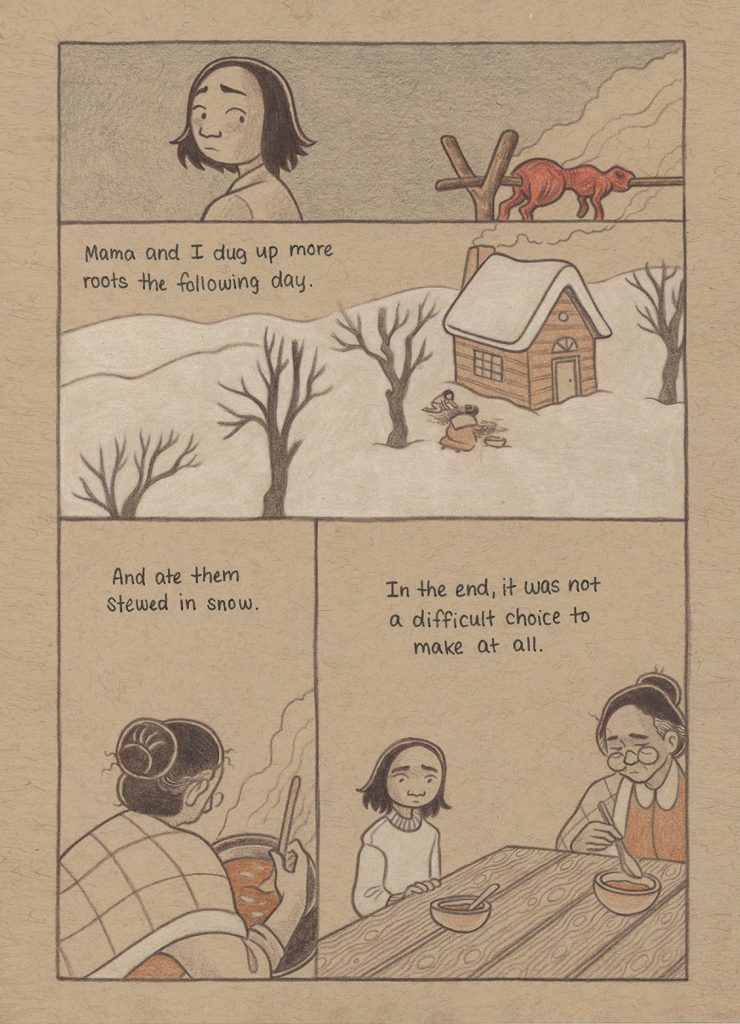
“All deer paths lead to the Goblin Kingdom” is the kind of line that does enormous structural work for a hundred-page book — it’s geography, it’s prophecy, and it’s a trap, all at once. When did that idea arrive, and did the world bend around it, or did it bend around the world?
Mel Gillman: I can’t say too much here without making one of the big allegories of the book feel painfully blunt and obvious, haha — but I will say this is a book that plays around with hunter-prey dynamics in a very particular way. And there’s a lot of deer in this book, both literally and figuratively.
The story pivots, brutally, from the woman to her son — from the one who broke a promise to the one who made one. That’s a very particular kind of inheritance, and a very fairy-tale kind of cruelty. What were you most afraid of getting wrong in that handoff?
Mel Gillman: Honestly, for me, it was a delicious treat getting to re-tell the same story over again three times, from three different perspectives – each version unfolding the story a little more, and giving the reader new information or new context on the facts they already knew (or thought they knew.) There’s so much you can do with this sort of story structure, especially from a tension-building perspective. What the reader knows is coming becomes a specter, haunting the narrative.
You’ve spent a career building things that end somewhere kind — As the Crow Flies, Stage Dreams, Other Ever Afters all leave their characters in a softer place than they started. The Goblin Throne is being marketed as bloody, eerie, quiet horror. What does horror let you say about queerness, or about people, that the kinder modes can’t?
Mel Gillman: I’ve made a lot of sweet happily-ever-after romances over the years, and the thing I started finding a bit constricting about them is that all the romantic leads’ flaws can only ever get so bad. At the end of the day, everything they do needs to be somehow forgivable, or else the happily-ever-after doesn’t feel right.
With horror-romance on the other hand, you’ve got a lot more runway to explore moral complexity that veers into that unforgivable zone. What happens to intense emotional relationships when you’re dealing with problems that can’t be easily brushed aside?
RELATED: An Interview with Cover Artist Howie Noel about the ‘Dick Tracy: 1961-1964’ Collection
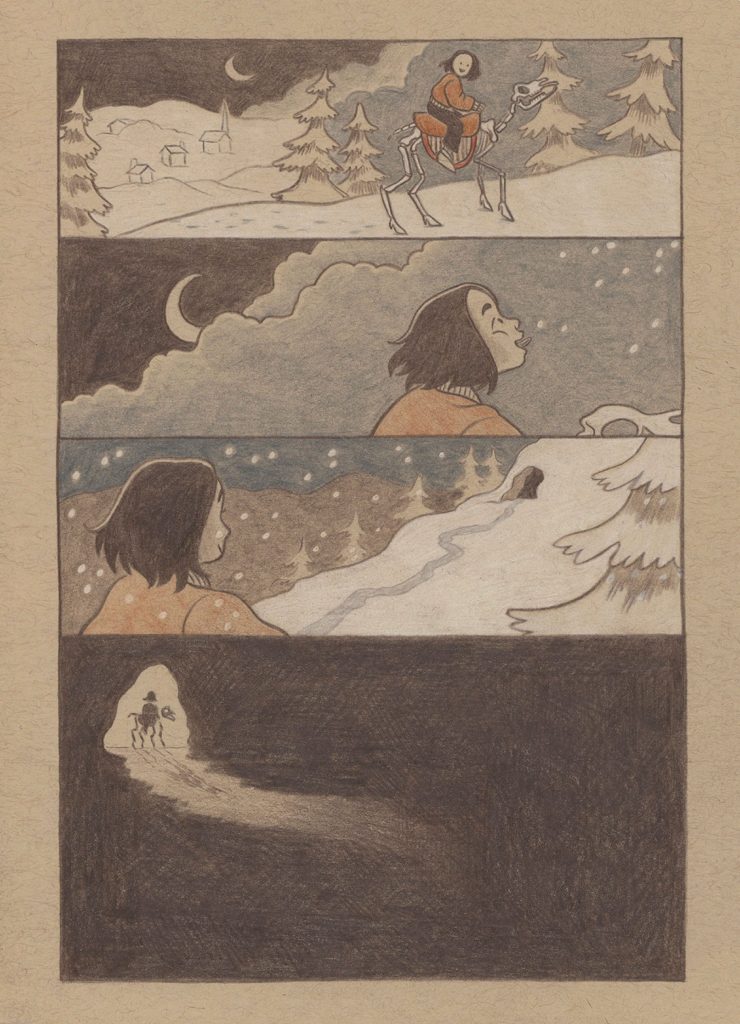
“Shoot slow” is a beautiful and terrible promise — the kind of thing a parent says to a child that becomes load-bearing in a way neither of them could’ve predicted. Was that line in the book from the beginning, or did it arrive late and reorganize everything around it?
MG: It was there from the beginning! It’s sort of the Chekov’s gun of the book. If there’s a kid with a bow and a revenge wish in act one…
Stage Dreams was a Western, As the Crow Flies was a road story through the woods, and THE GOBLIN THRONE sends people down deer roads to a kingdom that won’t let them leave. Your characters keep ending up in landscapes that are doing real psychological work. Is that a deliberate signature at this point, or something you only notice in retrospect?
MG: I think I’m just a grubby outdoors kid who loves drawing plants and always sees the environment as an important character in the story! The Goblin Throne is a folk horror comic in some ways, and it plays on the classic pastoral tension between the farm and the woods. In an allegorical sense, the farm is humble and reliable but boring – and the woods are dangerous and wild but alluring. It’s not hard to guess how someone would play with those concepts in romance comic. [laughs]
Spike described this as a story about “divorced moms and craven lesbian desire” — which is a very specific kind of sapphic fairy tale. Not princesses, not a meet-cute, but two adult women bound by a soured contract. What drew you to writing older queer women, in a genre that rarely lets them be the center of the story?
MG: The world always needs a lot more lesbian stories with older women front and center! The older I get, the more interested I am in the rich complexities of romance stories for queer women who aren’t strictly in their teens and twenties. Romantic leads who are older and more experienced may bring different things to the narrative — more history, more baggage, or more emotional burdens they’ve calcified over time.
And at the same time, they may also be sharper, more self-aware, more grounded, and more perceptive. There’s a lot you can do with that, when you’re interested in exploring some complex relationship issues in fiction.
RELATED: An Interview with the Creators of ‘Fort Psycho’: Matt Kindt and Brian Hurtt
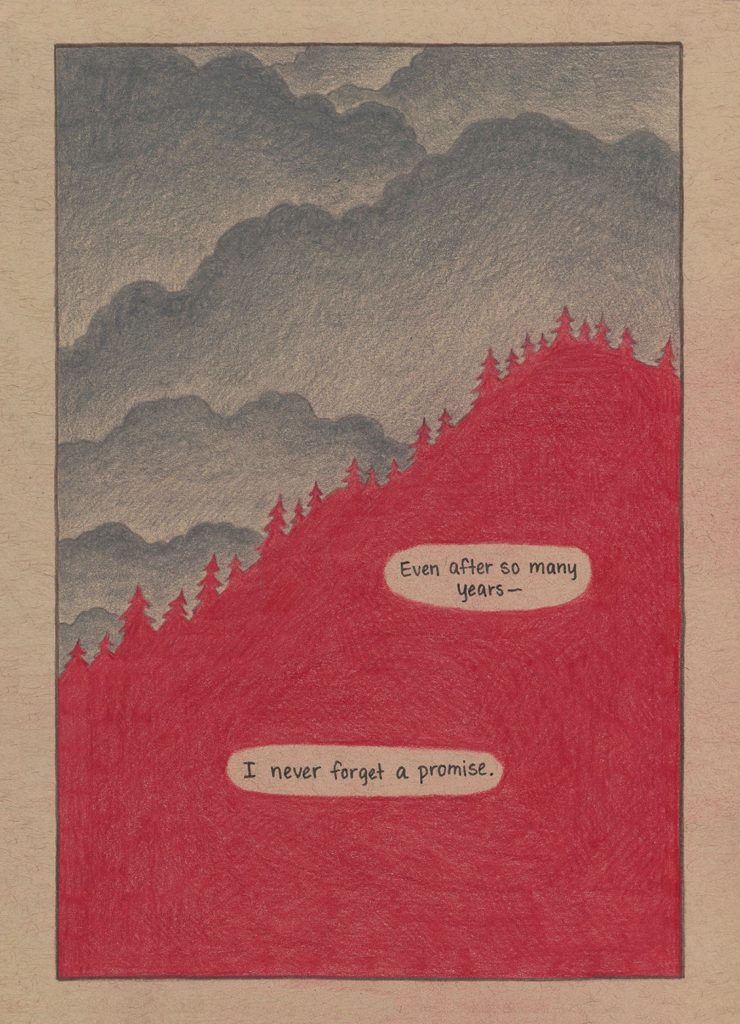
Other Ever Afters lived at Random House Graphic, with all the trade infrastructure and softness that implies. THE GOBLIN THRONE is back at Iron Circus — Kickstarter, hardcover, adult-leaning, bloodier. What does coming back to Spike for this specific story let you do that you couldn’t do at a Big Five imprint?
MG: I’ve been lucky enough to get to work with lots of different publishers for lots of different books over the course of my career! Every publisher regardless of size has certain market demographics they’re hoping to reach with the books they put out. Generally, at the bigger publishers, it matters a lot how broad that potential market is. Something I like about working with smaller indie publishers like Iron Circus is, they’re generally more willing to take risks on weirder stories with smaller, more niche audiences in mind.
Nasty adult lesbian horror-romance with lots of gore and sex probably wouldn’t fly with a lot of big corporate publishers who are trying to sell as many copies as possible to the broadest swath of readers they can get. Smaller, weirder publishers do a whole lot of good in the world, in that sense.
When the Kickstarter wraps and THE GOBLIN THRONE is out in the world — what’s next on the drawing board for Mel Gillman?
MG: Almost every time I finish a graphic novel, I end up wanting to jump into a completely different genre for the next one. There’s a pretty good chance I’m gonna be leaping over to nonfiction for my next big book! I’m in the very early stages of writing a graphic memoir about my experiences learning how to forage as an adult, and how foraging completely rewrote all my core beliefs on our food system, private land ownership, agriculture, humans’ relationship with wild spaces, and more. It’s a manifesto on why we should all be eating a lot more weeds!
What did you think of this Interview?
Will you be supporting The Goblin Throne? Let us know on social media.
More in Comics, Horror, Kickstarter, Romance