Previously on… Boston Metaphysical Society
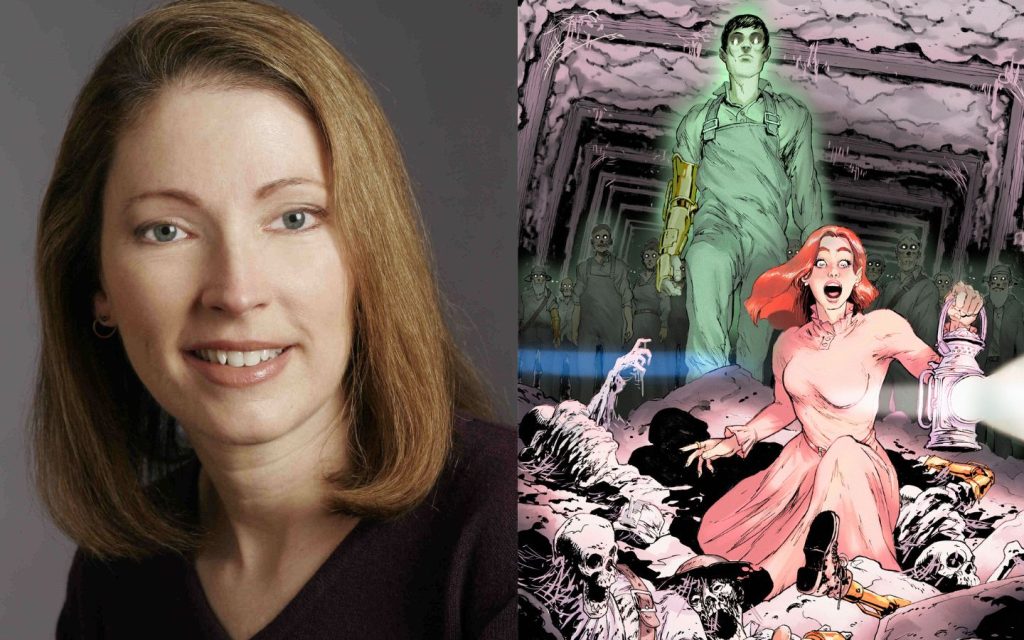
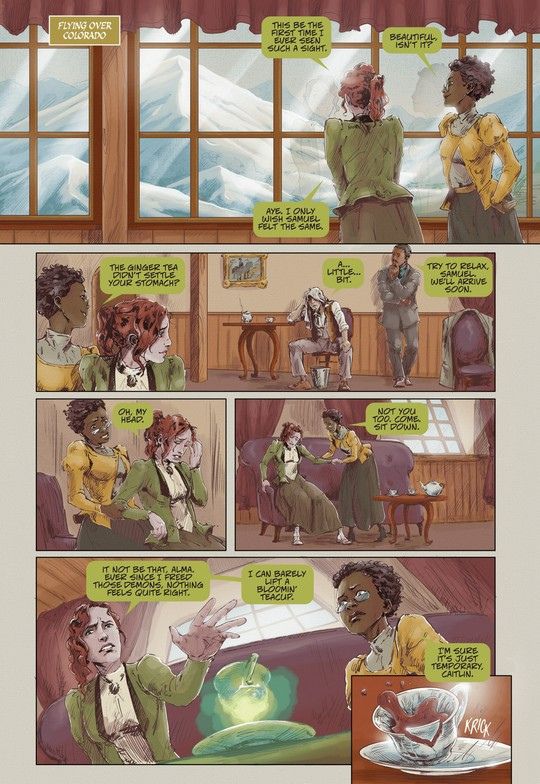
Boston Metaphysical Society is paranormal investigation for people who find the X-Files a little too clean. Madeleine Holly-Rosing has been building her alternate-history 1800s Boston — ex-Pinkerton detective, spirit photographer, genius scientist, and a power structure of Great Houses humming underneath all of it — for over a decade. Vol. 3 collects the arc where everything goes sideways: the team flees the city, lands at Nikola Tesla’s experimental station in Colorado Springs as fugitives, and picks up a new scientist named Meihui Zhou who quietly cracks the world open to the American West.
Holly-Rosing came up through UCLA’s MFA screenwriting program, won the Sloan Fellowship, wrote for TV and film, and then built one of independent comics’ more durable crowdfunded series — the Vol. 3 campaign hit over 237%.
We talked about what it costs to give a character a gift that becomes a liability, how you keep visual coherence across a rotating roster of artists, and why the Mulder-and-Scully elevator pitch she used to use has finally been retired.
An Interview with Madeleine Holly-Rosing
“Before Mulder and Scully, there was Hunter and O’Sullivan” is your formulation, and it does real work as a pitch. But after more than a decade of building this world, what does that comparison still get right — and what has the series outgrown?
Madeleine Holly-Rosing: That was my old pitch, and I no longer use it. The series has definitely outgrown it. The current pitch is “An ex-Pinkerton detective, a spirit photographer, and a genius scientist battle supernatural forces in late 1800s Boston.” The first few issues focused on Samuel and Caitlin, but as the original mini-series finished its arc, it made sense to include Granville in the pitch.
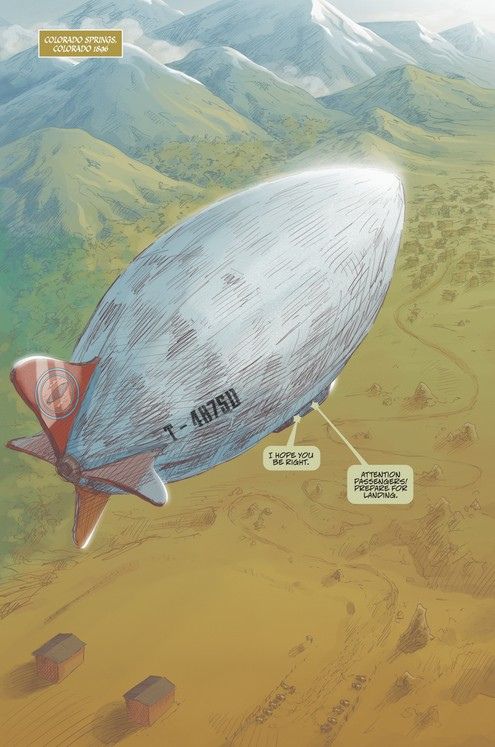
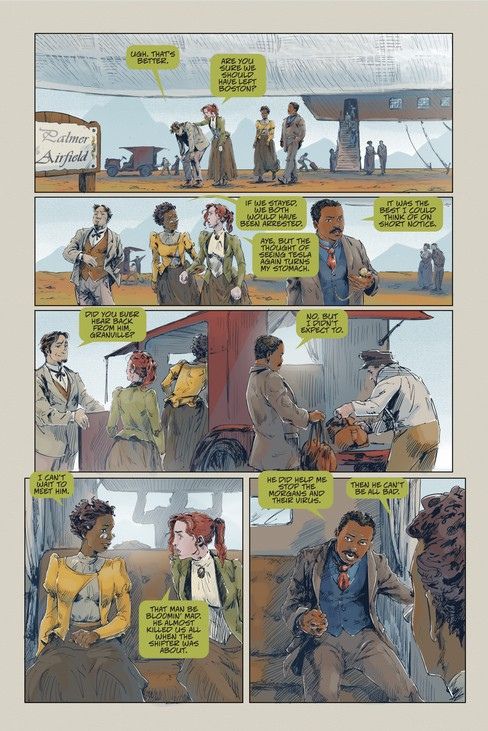
Vol. 3 collects the complete Mystery at Pikes Peak arc — a story where your team flees Boston and washes up at Nikola Tesla’s experimental station in Colorado Springs. Fleeing arrest is a pretty major gear-shift for a paranormal investigator squad. What happens to a group’s dynamic when their base of operations stops being a city they know and becomes a borrowed safe house belonging to one of the most famous eccentric minds in history?
Madeleine Holly-Rosing: It makes everyone uncomfortable, which is great. They have new things to learn, not only about the place, but each other as well. And in the BMS universe, there are always paranormal events to be investigated no matter where you land.
Meihui Zhou, a scientist from the Great House Zhou in California, enters the story here as Tesla’s most unlikely partner. Introducing a new major character in what’s effectively a crisis-arc is a specific structural risk. What does she bring to the story that couldn’t have arrived any other way?
Madeleine Holly-Rosing: The universe of BMS has always been larger than Boston or the east coast. Meihui brings in a specific world view that is different than the major characters but is still a part of the universe I created. She also opens up the narrative to explore aspects of American history that were particular to the west. This isn’t the first time I have written about Great Houses from other areas of the country. In my novel, A Storm of Secrets, readers were first introduced to House Zhou and other Great Houses, though only briefly.
Caitlin’s psychic abilities take a dangerous turn in this arc. There’s a particular kind of dramatic tension that comes from a character’s gift becoming a liability — where the thing that makes them valuable to the group is also the thing putting everyone in danger. How did you write toward that without it feeling like a punishment?
Madeleine Holly-Rosing: I never thought of it as a punishment, but rather introducing organic obstacles and conflict the team must overcome. It also develops character and story.
RELATED: An Interview with the Creator of ‘Night Ghost’: Lee Saunders
The bonus story exclusive to Vol. 3 is ‘The Wraith of Mechanics Hall’, with art by Roberta Ingranata. What does an eleven-page story let you do that the main arc couldn’t? And why that story, for this collection?
MHR: I don’t want to give away spoilers, but I wanted to come back to two of my favorite villains: Emily and Travis Morgan. It’s always so much fun to write them since it’s not how I normally write dialogue. And though I have a ton of research on Boston, it wasn’t until a few months ago I learned about the Mechanics Hall. It did exist, and I was thrilled to discover it. The setting is exactly where someone like Granville would go. Plus, it was a great place to set a story!
You came up through UCLA’s MFA screenwriting program, won the Sloan Fellowship, wrote for TV and film — and then built one of the more durable independent comic series running entirely through crowdfunding. That’s not the obvious career trajectory. What did screenwriting teach you about making comics, and what did it take you a while to unlearn?
MHR: Both screenwriting and comics are visual writing, so they do compliment each other up to a point. The thing I had to unlearn was that I could now write shots, direction, color palettes, and even leave notes to my artist/colorist/letterer which in screenwriting is a big no-no.
This campaign has achieved over 237%. You’ve run over a dozen of these now — at what point does a number like that stop being a surprise and start being a signal about something specific? What do you think it’s telling you about where this audience is right now?
MHR: [laughs] They want more, and I can’t keep up.
When you think about the readers who have followed Samuel, Caitlin, Granville, and Alma across every arc — what do you think they’re actually coming back for?
MHR: I think readers come back for the characters. Specifically, to see what trouble they’re going to get into next and where it takes them.
A 132-page hardcover with new pin-up art, all previous variant covers, and an exclusive story is a very specific object to put in someone’s hands. What’s the difference, for you, between releasing issues as they come out and releasing a collected hardback edition like this? Does the story read differently as a single volume?
MHR: We’re actually up to 144 pages now for Vol. 3. We were able to add more pin ups through stretch goals. And to answer your question, I think the collected edition does read differently in that the reader can remember things better and piece all the little things that are going on in the background more easily. I love single issues, but there’s definite advantage to having the story all in one volume.
RELATED: An Interview with the Creator of ‘The Goblin Throne’: Mel Gillman
You’ve built an alternate history 19th-century America where paranormal investigation is a profession and the Great Houses operate as power structures. How much of this world exists fully-formed in your head versus how much gets discovered in the writing of each arc?
MHR: Since this has been an ongoing series for over a decade, the power structure and political dynamics are firmly in place. The things that are discovered during the writing of each arc have more to do with character development, and occasionally, something will surprise me.
Murder plots tend to have a fairly visible set of suspects and motives — but layering one on top of a psychic-ability crisis, a fugitive situation, and a location that belongs to an already-famous and unstable historical figure is a lot of spinning plates. How do you track which plates are in the air?
MHR: I multi-task really well. I also write down copious notes on the who, what, where, and when.
Vol. 3 features art by Daniela Rivera, Roberta Ingranata, Claudia Ianniciello, and Alejandro Lee, among others. You’ve worked with a rotating cast of artists across the series. What does that ongoing collaboration process look like — and how do you maintain visual coherence in a world with a specific aesthetic identity when the hands drawing it keep changing?
MHR: In the case of Mystery at Pikes Peak, I kept the original colorist on board for consistency when Daniela took over for issues three and four. It worked out well.
However, I review A LOT of portfolios to find the right artist. Most everyone I have reviewed are great in their own way, but I have to see something in their art that I think will capture Boston Metaphysical. I’m not sure I could describe what it is, but I know it when I see it.
You’ve taught crowdfunding classes, guest lectured at DreamWorks Animation and UCLA. There’s clearly a version of your work that’s about passing the framework down. What’s the one thing independent comics creators consistently get wrong about Kickstarter that you find yourself correcting every time?
MHR: I don’t think there’s any one thing every independent creator gets wrong. It really runs the gamut from poor pricing to lack of pre-launch preparation, though the latter has improved considerably over the years. What I’m seeing now is a preponderance of overpriced pdfs and not stating page counts clearly. It can really drag an otherwise excellent campaign down. And that’s a super easy fix. There is so much good information on running a Kickstarter out there right now that a creator can take advantage of. It just takes a little time and research.
More in Comics, Interviews, Kickstarter