Howie Noel’s relationship with Dick Tracy
Howie Noel has been drawing Dick Tracy since before he had the words for why. As a kid, he didn’t just read the strip — he redrew it, put his father in the panels and lived inside it until it started to feel like his own. He was completely devoted to Dick Tracy and his myriad of cases. The kind of devotion that doesn’t fade when you grow up and get a job with a desk and other comics on it. The kind that sits at the arm’s length from your art desk in a stack of volumes you study every day.
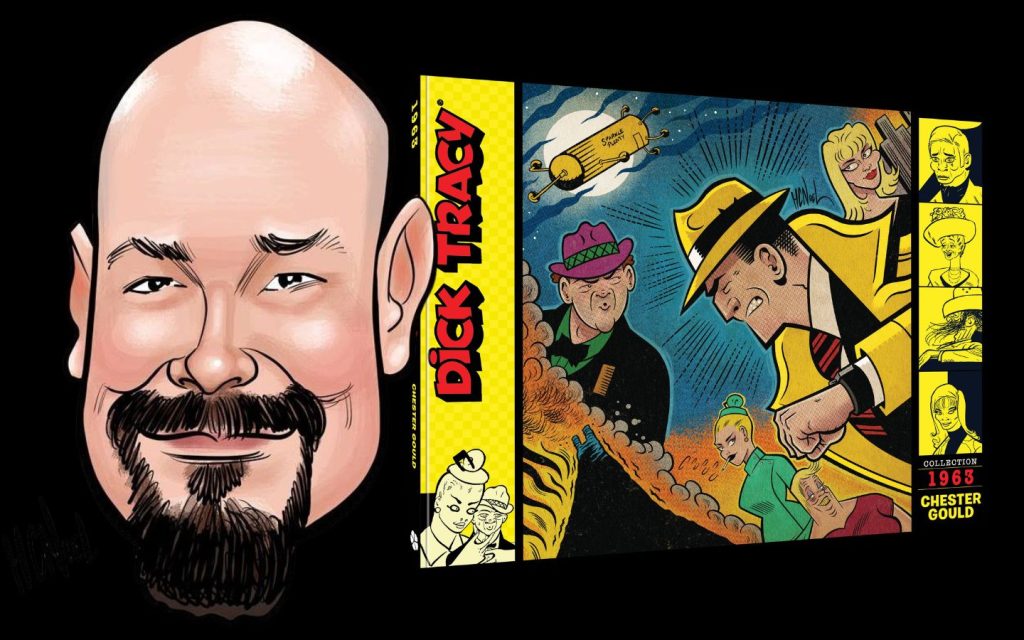
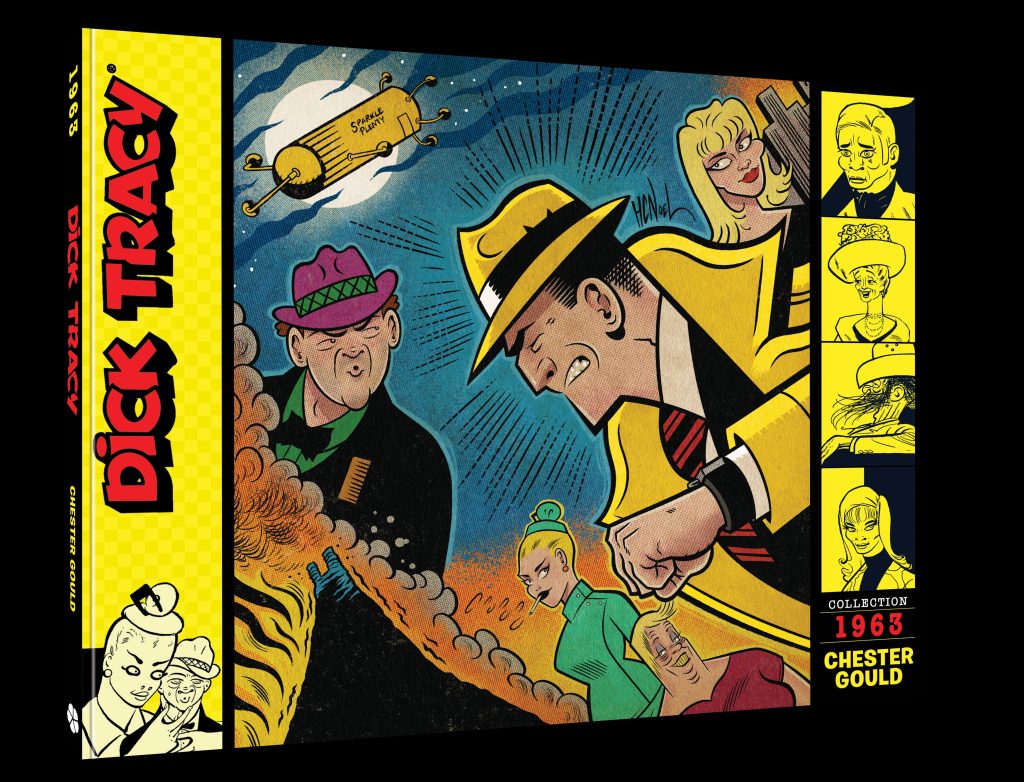
Now, Clover Press is bringing Chester Gould’s run back into print — and they tapped Noel to create one of four covers for the collection’s slipcase. Which is definitely the right call. Noel doesn’t approach this material like a hired hand. He approaches it like someone revisiting an old romance. The cover he built carries mood the way the original strip always did — complete with drama, suspense, noir and a little weirdness. It’s the work of an artist honouring a timeless legacy.
I spoke with Noel about villains, fathers, cover designs, and why the world needs more people discovering Chet’s version of Dick Tracy.
An Interview with Cover Artist Howie Noel
There’s something specific about a kid who doesn’t just read a comic strip but ‘redraws’ it — who puts his dad in the panels, who has to live inside the thing to understand it. What was it about Dick Tracy that demanded that from you?
Howie Noel: I just connected with the strip on some deep level. I’ve found through the years a lot of Tracy fans connected the character to their fathers. There’s something wonderful about that – that they saw their Dads in this good heroic character.
The Rogues’ Gallery might be the greatest collection of villains in the history of American popular culture, full stop. Who’s yours — and who’s the one you think nobody talks about enough?
Howie Noel: My favourite rogue is the Brow. I wish he lived longer in the 1990 movie as he looked perfect. I think he has one of the greatest stories and I just love how cold of a villain he is. I want the character Scardol. He’s one of Gould’s earliest grotesque designs. I adore how he looks.
RELATED: An Interview with the Creator of ‘Halloween Boy’ : Dave Baker
A cover has maybe three seconds to do everything. It has to speak to the person who’s been reading Tracy since 1962 and the person who’s never heard of him and somehow not betray either of them. Where did you come in on this one — what was the first image or instinct that started pulling the design into focus?
Howie Noel: I wanted it to have a mood to it. I wanted it to convey drama and suspense and I knew I wanted to showcase as many of the Rogues as I could. I also wanted the slipcase to work with my art and for Tracy to be the image featured in that set up.
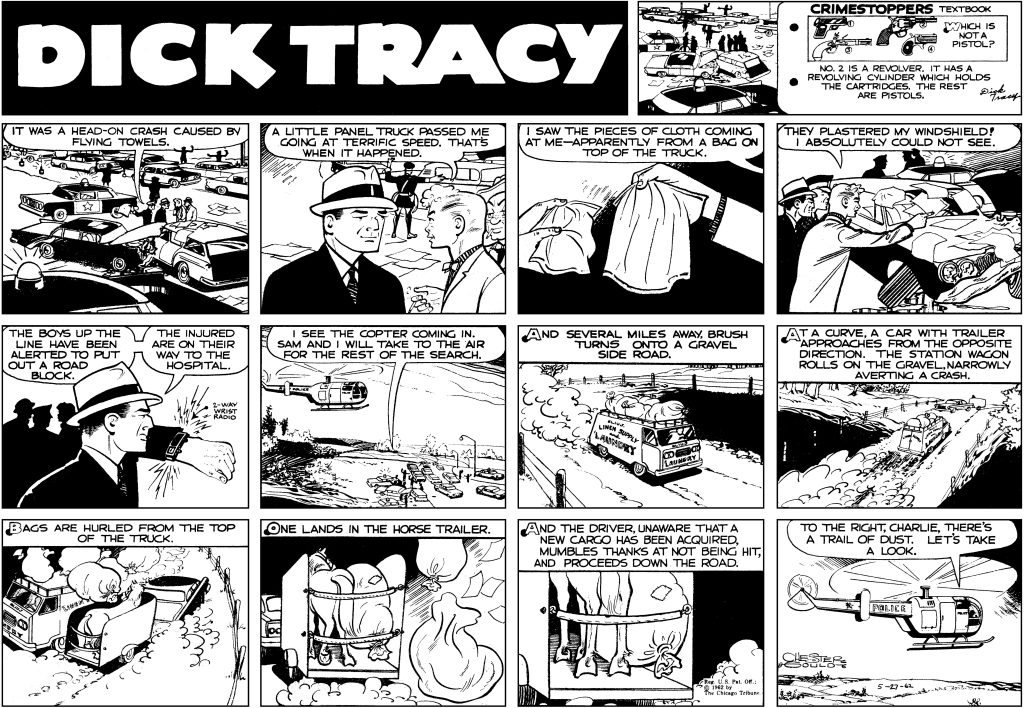
The early ’60s strips are genuinely strange in the best possible way — Gould saw the Space Race happening and just went there, Moon Maid and all of it. Did that weirdness find its way into your cover, or were you working against it?
HN: Oh, I embraced it. I also always view the 60s as James Bond’s era so I wanted some of that vibe in my cover. I made sure to include a bit of the moon saga in my cover.
Gould’s ’60s work sits in this interesting place where it’s pulling toward pulp-noir with one hand and pop-art with the other. Which one of those has more of a hold on you?
HN: I’m a huge fan of noir and pulp art. I think that side always will have a hold on my heart. There’s something about a classic detective story that is what makes me happiest. But I adore how Chet continued to evolve his style and work within the constraints of the evolving newspaper funny pages.
RELATED: An Interview with the Creator of ‘PALOMINO’ : Stephan Franck
Ninety-plus years of visual history is a lot of weight to carry into a single image. How do you figure out where the line is — between honouring what the thing already is and actually showing up as yourself?
HN: I somehow manage to always do it as drawing Dick Tracy comes naturally to me as I adored and studied it my whole life. It just feels right to me. And everything I create always feels like my work so it’s like a certain magic.
You’ve got Cat Staggs, Brent Schoonover, Daniel Hillyard, and you — four covers, four completely different relationships to this material. Did you see what the others were doing? And what does it feel like to be part of something that’s also, quietly, a portrait of four different artistic sensibilities at once?
HN: I had no idea what the other artists were doing or who was chosen for the project at that time. I’m honored to do something official for Dick Tracy and honored to create a tribute to Gould’s creations. He’s inspired my whole life so this is a truly special project to me.
Part of what Clover Press is doing here is just making these things “findable” again — affordable, back in print, on a shelf instead of in a back-issue bin at a price nobody can justify. As someone who spent their childhood hunting down every reprint they could find, what does that mission mean to you?
HN: It’s very important that we create new fans of Dick Tracy so they can see how special of a character he is. It’s also extremely important to me that people discover Chet’s version of Tracy as that’s the true character. A truly good man looking to make his city safer. We need more heroes like that. And I want current fans of Tracy to be able to read all of his adventures and Clover Press is working to make that happen. It’s wonderful.
Speaking of hunting — what was the find? The reprint you tracked down that felt like actually striking something?
HN: Completing the Complete Dick Tracy library was a huge accomplishment for me as a Dick Tracy collector. I’m glad I could get each volume as I study them each day. They’re all an arm length from my art desk.
RELATED: An Interview with the Creators of ‘Fort Psycho’: Matt Kindt and Brian Hurtt
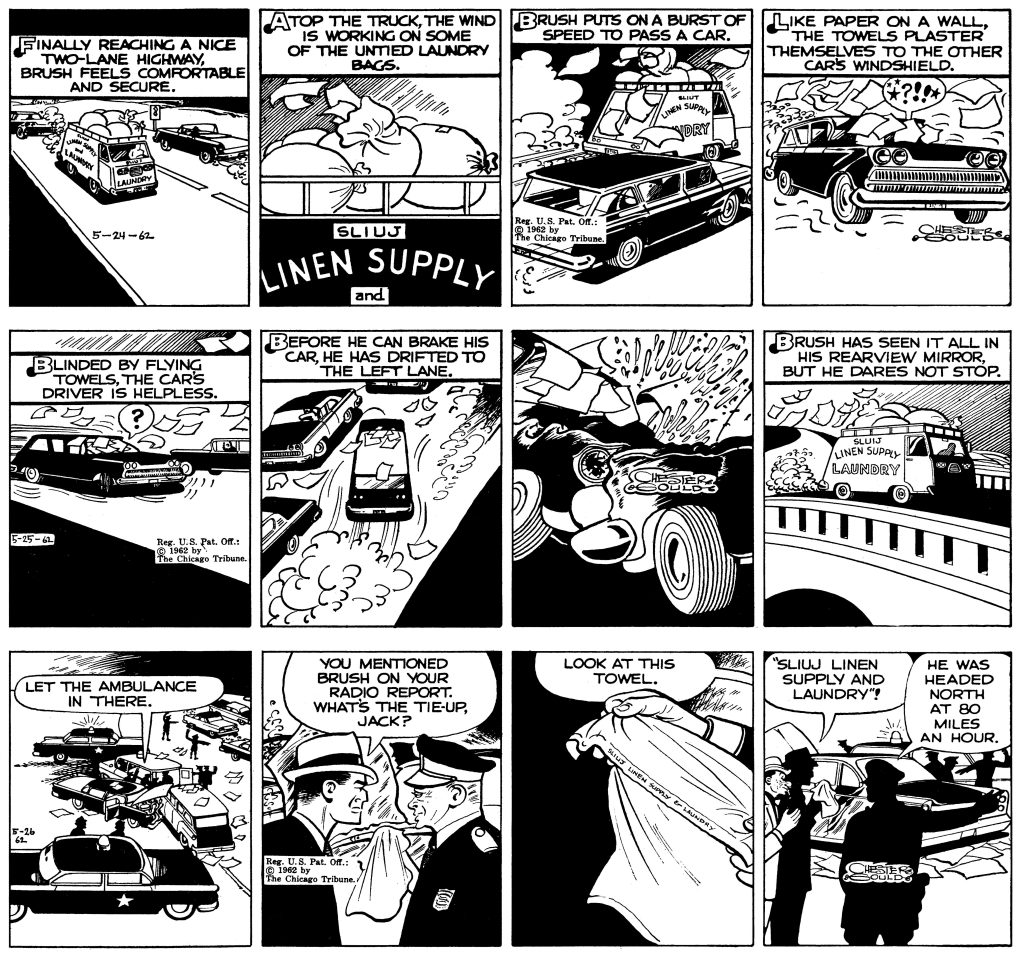
Gould drew this strip for nearly five decades, almost entirely by himself. He completely devoted himself to the comics craft. What do you do with that as a working artist — does it intimidate you, does it inspire you, does it do both at once?
HN: I’m also inspired by hard working artists. It reminds me to get off the couch and get back to work. [laughs]
Dick Tracy is the fixed point but you clearly live in a much bigger world of newspaper strips and classic comics. What else do you keep coming back to — not for research, just for the love of it?
HN: I think that medium helped shape me as an artist as that’s the first things I can remember being inspired by as a child. Snoopy, Garfield and Dick Tracy were very early inspirations to me. I’ve always loved the art form of newspaper strips and the storytelling and artistry each creator brings to their titles.
Someone reads this and they’ve never once picked up a Dick Tracy strip. They’re curious but they don’t know where to start. What do you tell them — and what do you want them to feel when they get there?
HN: I would start at the beginning with Volume One of Dick Tracy from Clover Press. I love the era of the 30s and if you’re going to start – start with the beginning.
What are you working on that you can actually talk about?
HN: I’m currently always working on my personal comic strip Clew – available to read at my website – but as far as professionally – I have a big project I can’t talk about yet. But it’s another dream come true if you can believe that.
Thanks for your time.
HN: Thank you! It’s my pleasure.
What did you think of this Interview?
Will you be picking up the Dick Tracy: 1961-1964 Collection? Let me know on social media.
More in Comics, Interviews