The Origin of the Xenomorph
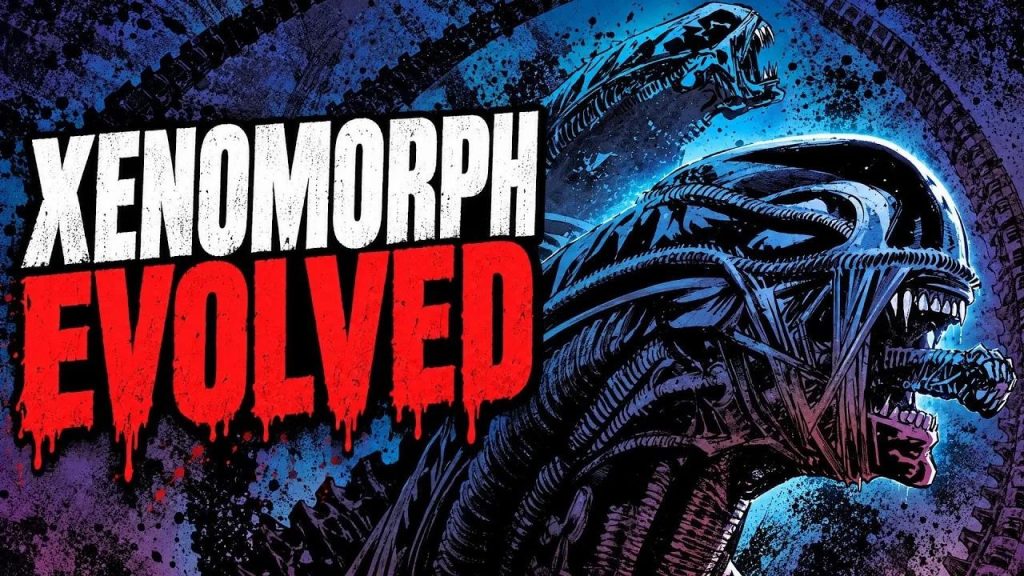
When Ridley Scott’s Alien crawled out of the derelict on LV-426 in 1979, it gave science fiction one of its most perfect monsters. But the film franchise has always been sporadic, arriving at random points throughout the decades. What kept the Xenomorph alive and expanded its universe was the comics. It was the sticking point that filled out the gaps between each consecutive Alien film.
For more than thirty-five years, two publishers have carried the Aliens torch: Dark Horse Comics, which held the license from 1988 to roughly 2020, and Marvel Comics, which inherited it after Disney’s acquisition of 20th Century Fox and launched its own line in 2021. Between them, they’ve transformed a movie monster into a sprawling literary saga. So in this episode I’m gonna dive into what makes the Xenomorph so great and how comic books have evolved the original terror that wreaked havoc on the Nostromo.
Dark Horse was a young company in 1988 when writer Mark Verheiden and artist Mark A. Nelson launched the first Aliens series. It was a landmark for two reasons. First, it treated a film tie-in not as disposable merchandise but as a serious, high-stakes narrative. A narrative which arguably set the blueprint for prestige licensed comics. Second, it dared to continue the story of the 1986 Aliens film, following Corporal Dwayne Hicks and a grown-up Newt years after Hadley’s Hope.
The Original Trilogy
That original trilogy — Outbreak, Nightmare Asylum, and Earth War — expanded the franchise’s scope enormously. Where the films kept the Xenomorph contained to isolated ships and colonies, the comics unleashed it on Earth itself, imagining a planet overrun and half-destroyed by infestation. They introduced the concept of a Xenomorph homeworld and even reintroduced Ellen Ripley to complete the arc. Then, of course, the reality had to go and screw everything up.
In 1983, Alien 3 killed off Hicks, Newt, and left Ripley stranded on Fiorina 161. Which meant that Dark Horse had to retrofit its now-contradictory stories. In reprints, Hicks became a new character named Wilks, Newt became the streetwise young woman Billie, and Ripley was rewritten as a synthetic duplicate. It was an awkward save, but it inadvertently birthed Wilks and Billie — original protagonists who carried subsequent stories on their own backs. And the Aliens comic book lore didn’t stop there.
In 1991, Aliens: Genocide, by John Arcudi and Mike Richardson, was released upon the industry. And it remains one of the most influential entries of the whole Aliens adaptation line. It depicted a civil war on the Alien homeworld between two rival hives, the black Xenomorphs and a striking red-hued strain led by their own Queen. During which it established “Royal Jelly,” a substance secreted by Queens that humans distil into an addictive narcotic called Xeno-Zip.
That single idea — that the creature could be a resource to be harvested, not just a threat to be survived — reframed Weyland-Yutani’s obsessive greed. It also added to the motive of possessing an Alien Xenomorph. Other Dark Horse books like Labyrinth probed the creature’s psychology and biology through the lens of a deranged researcher, while dozens of miniseries explored corporate conspiracies, hive social structures, and the ethics of weaponizing a living apocalypse. By the time Dark Horse’s tenure ended, it had published more than seventy distinct Aliens stories.
Crucially, Dark Horse also gave the franchise its first truly iconic original character. In 1990’s Aliens vs. Predator — the crossover that launched an entire subgenre — writer Randy Stradley introduced Machiko Noguchi, a corporate administrator on the colony world of Ryushi who fights alongside a Predator clan and earns their respect. Mortally wounded, the Predator leader “bloods” her, marking her with his clan symbol. Machiko became a recurring protagonist across multiple series, a human who straddled two monstrous worlds, and remains one of the most beloved figures the Alien comics ever produced. The fact that she was born on the page, not the screen, speaks to how much creative ownership the comics had earned.
RELATED: ‘Jessica Jones: Alias’ Returns in Five Issue Mini-Series
Marvel taking over the Reins
When Marvel took over in 2021, fans worried the House of Ideas might sand down the franchise’s brutal edges. Those fears were quickly dispelled. The debut arc, “Bloodlines”, written by Phillip Kennedy Johnson with art by Salvador Larroca, was as bleak, gory, and mean-spirited as anything Dark Horse had produced. It also demonstrated Marvel’s strategy: rather than retread Ripley, they decided to build new characters and new corners of the Alien universe.
Bloodlines introduced Gabriel Cruz, a retiring Weyland-Yutani security chief haunted by a decades-old Xenomorph encounter he barely survived. Estranged from his son Danny — now part of an anti-corporate radical group that storms Cruz’s old station — Cruz is dragged back into hell to save him. The story leaned into a theme the films had only hinted at: synthetics as the Xenomorph’s true counterweight. Cruz’s closest companion is a Bishop-model android, and Marvel’s run repeatedly positions synthetic life as the one thing capable of standing against the creature, a thread that would become central to later arcs set on colonies of synths hiding on backwater moons.
Marvel’s most significant original contribution to the lore is stranger and more metaphysical and the name alone will send chills down your spine. “The Woman in the Dark”, as she’s referred to, was introduced in Bloodlines and expanded across Johnson’s later series, including Icarus. She’s a spectral, Queen-like figure that facehugging victims glimpse during implantation — and afterward, in recurring nightmares. And that’s assuming “if” they survive.
Cruz describes her as a goddess presiding over the Aliens, blind-eyed and lifeless yet somehow aware of him. Whether literal or psychological, she injects a religious, almost cosmic-horror dimension into a creature that had always been defined by cold biology. It’s the boldest reinterpretation of the Xenomorph’s nature in years, suggesting a guiding intelligence behind the swarm.
Alongside the flagship series, Marvel has pursued an aggressive publishing slate: the black-and-white anthology “Alien: Black, White & Blood”, the miniseries “Alien: Paradiso”, a comics adaptation of the film “Alien: Romulus”, and a wave of high-concept crossovers pitting the Xenomorphs against Marvel’s superheroes, including Aliens vs. Avengers, Alien vs. Captain America, and Aliens vs. X-Men. Marvel has also honored the past. Reprinting the entire Dark Horse catalogue in deluxe Omnibus and Epic Collection editions — ensuring the two eras sit on the same shelf as a continuous legacy rather than playing the game of “what is canon and what’s not?”
The Evolution of an Icon
So… has the Xenomorph grown more dangerous?
In a word: yes, and in more directions than one. The films largely kept the creature as a fixed apex predator, but the comics have relentlessly experimented. Dark Horse gave us competing Queens and colored strains, the towering matriarchal “Queen Mother,” and King Aliens ruling entire hives. It imagined the species scaling from a haunted-house menace to a planet-consuming ecological force capable of gutting the Earth. The Royal Jelly concept even made the creature dangerous in a new, insidious way — as a commodity potent enough to corrupt corporations and militaries from within.
With the acquisition of Fox, Marvel has pushed the Xenomorph biology even further into unexplored territory. Its stories emphasize enhanced and hybrid Aliens strains, the fraught interplay between synthetics and Xenomorphs, and — through the Woman in the Dark — the unsettling possibility that the swarm answers to something with will and purpose. The horror has expanded from physical to existential. The creature is no longer just faster or tougher; it may be knowing. Escalating the Alien threat from cosmic horror to existential terror.
Machiko Noguchi remains one of the greatest gifts to the franchise — a hero created entirely in comics who now feels inseparable from the mythos. Wilks and Billie, born from an accident of continuity, became genuine fan favorites. And Marvel’s Gabriel Cruz has emerged as a worthy modern successor: a guilt-ridden company man whose personal reckoning grounds the cosmic horror in something human. The Woman in the Dark, meanwhile, is less a character than a new deity for the setting — an icon of dread rather than heroism.
What the comics prove is that the Xenomorph was never a finished creation. From Verheiden’s Earth-shattering invasions to Genocide’s narcotic hives, from Machiko’s blooded honor to Cruz’s haunted retirement and the goddess lurking in the dark, the licensed Alien and Aliens comics have spent more than three decades doing what the films couldn’t do fast enough: keeping the monster alive, hungry, and forever changing. In space, no one can hear you scream — and, thanks to Dark Horse and Marvel, the screaming has never stopped.
So, in a nutshell, that’s the legacy of Aliens and the Xenomorphs in comics. Are there any horror or science fiction icons you’d like to see in our next episode? Let me in know in the comments. Hype this video if you can. Every little bit helps. But that’s it for now. I’ll see you guys next time for the next List of the damned.