
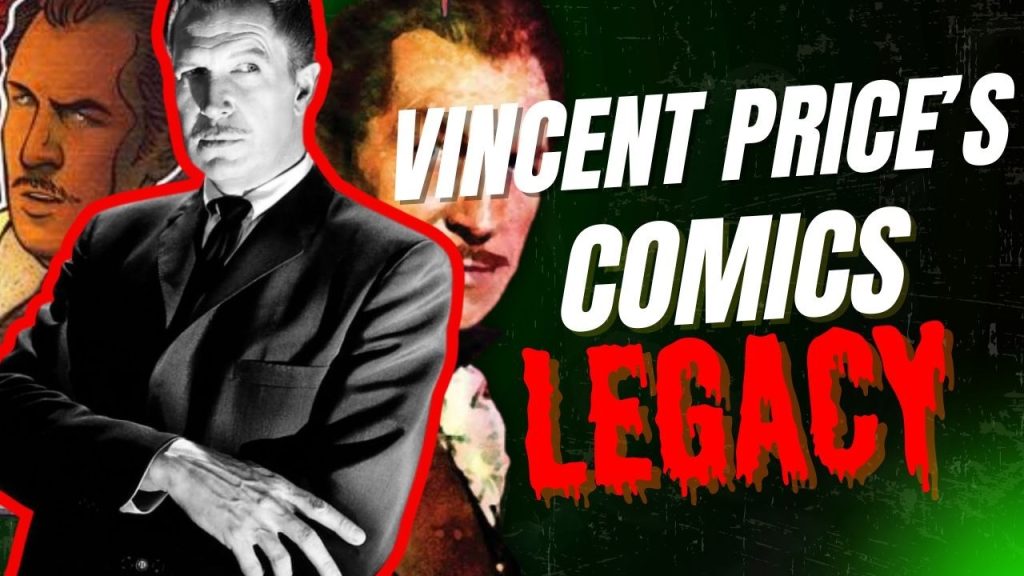
His voice could chill your spine with a single syllable. His presence commanded the screen in over one hundred films. But before Vincent Price became the undisputed king of horror cinema, he was something else entirely. And decades after his death, his image would find new immortality — not just on celluloid, but in the pages of comic books, inspiring artists and terrifying readers in ways that would make the Master of Macabre himself smile from beyond the grave.
This is the story of how a wealthy St. Louis boy who studied art history at Yale became the visual inspiration for Doctor Strange, how his gothic film performances influenced an entire generation of comic book artists, and how his legacy continues to haunt comic book pages more than three decades after his death.
Welcome to ‘The Evolution of an Icon: Vincent Price’s Comic Book Legacy.’
To understand Vincent Price’s impact on comic books, we first need to understand the man himself—because Vincent Leonard Price Jr. was never supposed to be a horror icon at all.
Born on May 27, 1911, in St. Louis, Missouri, Vincent Price came from considerable wealth. His father was president of the National Candy Company, and his grandfather had invented Dr. Price’s Baking Powder, a revolutionary cream of tartar-based product that made the family fortune. This wasn’t a man destined for penny dreadfuls and B-movies — at least, not according to the expectations of his upbringing.
Price attended Yale University, graduating in 1933 with a Bachelor of Arts in English with a minor in art history. But it was art, not literature, that truly captured his imagination. After a brief stint as a schoolteacher — which he later admitted made him realize ‘I knew nothing’ — Price enrolled at the University of London’s Courtauld Institute, intending to pursue a master’s degree in fine arts. But London offered Price something else: the theater.
In 1935, at the Gate Theatre in London, Price took the stage for the first time professionally, playing Prince Albert in Victoria Regina opposite the legendary Helen Hayes. The performance was so remarkable that producer Gilbert Miller immediately brought the play to Broadway. Vincent Price, at just 24 years old, was a leading man on the Great White Way.
His trajectory seemed set: sophisticated theater actor, perhaps some dramatic film roles, the kind of refined career befitting a Yale-educated art historian. Throughout his life, Price would pursue his passion for art with the same intensity he brought to acting, eventually becoming one of the most sophisticated art collectors and advocates in Hollywood history, donating millions of dollars worth of artwork and establishing the Vincent Price Art Museum at East Los Angeles College.
And for a while, that refined acting career is exactly what happened.
In 1938, Price made his film debut in ‘Service de Luxe,’ followed by a stint with Orson Welles’ prestigious Mercury Theatre. Throughout the 1940s, he built a respectable career as a character actor in prestige pictures — the noir classic Laura in 1944, the technicolor melodrama Leave Her to Heaven in 1945, even Cecil B. DeMille’s biblical epic The Ten Commandments in 1956.
But horror kept calling.
His first brush with the genre came in 1940 with The Invisible Man Returns, followed by Dragonwick in 1946. A gothic melodrama that gave Price his first taste of the dark, atmospheric roles he would make his own. It was a role he had to fight for, and it changed everything.
Then, in 1953, came the film that would redefine his career forever.
House of Wax was more than just a horror film — it was a spectacle. One of the first major films shot in 3D, it cast Price as Professor Henry Jarrod, a murderous sculptor who populates his wax museum with the bodies of his victims. The film was a massive success, becoming one of the first 3D films to land in the year’s top ten at the North American box office, and it cemented Vincent Price as America’s new master of horror.
But here’s what’s fascinating for comic book fans: House of Wax arrived just three years before the Comics Code Authority would crush the horror comic boom of the 1950s.
In the early 1950s, EC Comics was publishing some of the most influential horror comics ever created — Tales from the Crypt, The Vault of Horror, The Haunt of Fear. These weren’t just scary stories; they were sophisticated, twist-ending morality tales with some of the most stunning artwork the medium had ever seen. Artists like Graham Ingels, Jack Davis, and Wally Wood created a visual language for horror that mixed gothic atmosphere with gruesome reality.
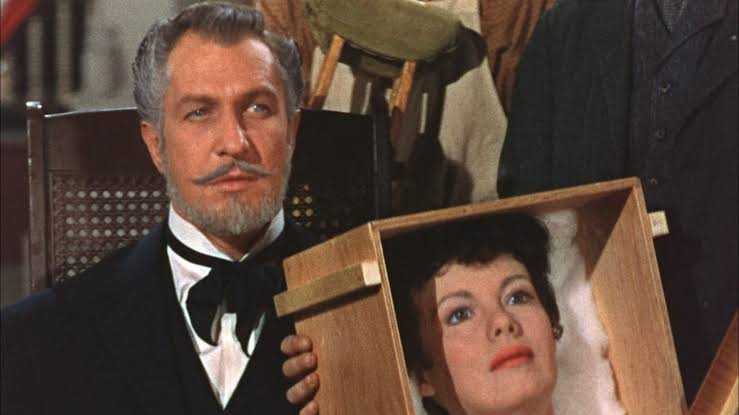
And there’s a remarkable synchronicity here. In a review of one EC Comics story called The Works…In Wax! from Tales from the Crypt #25, a critic noted that the main character — a wax museum owner — looked like Vincent Price a full decade before he became famous in such roles. The visual vocabulary of horror was being established simultaneously in cinema and comics, and Price’s aesthetic — tall, gaunt, aristocratic, simultaneously refined and sinister — fit perfectly into both mediums.
When Fredric Wertham’s Seduction of the Innocent and the subsequent Senate hearings destroyed the horror comic industry in 1954, forcing publishers to adopt the restrictive Comics Code, something interesting happened. Horror didn’t die — it just moved. It moved to the drive-in theaters, to the television sets, and most importantly for our story, it moved to American International Pictures and a director named Roger Corman.
In 1960, Corman convinced AIP executives to take a gamble. Instead of making two cheap black-and-white horror films, why not combine the budgets and make one color film in widescreen? Why not adapt Edgar Allan Poe, whose stories were in the public domain and had built-in name recognition from being taught in every high school? And why not cast Vincent Price, who could bring sophistication and genuine menace to roles that might otherwise seem camp?
The result was House of Usher, and it changed everything. The film earned over two million dollars at the box office in the United States — a massive return on its modest budget — proving that gothic horror could be both artistically ambitious and commercially successful.
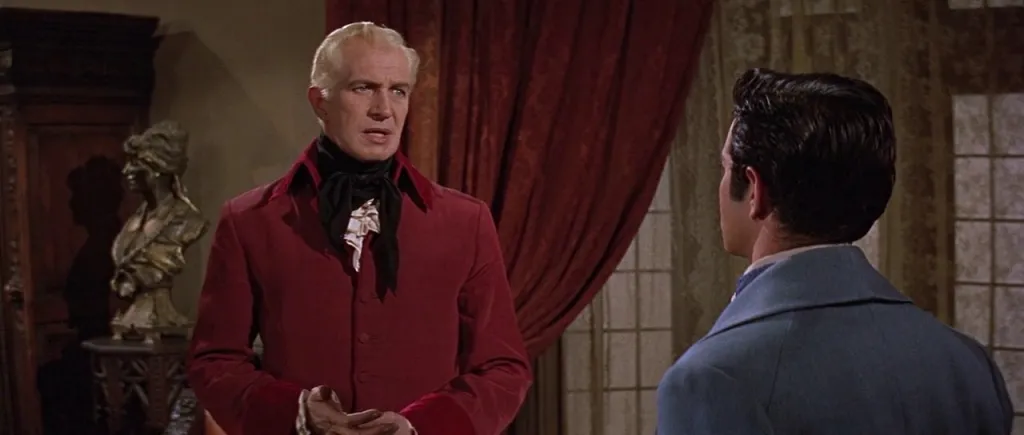
Between 1960 and 1964, Corman directed eight Poe adaptations — seven of them starring Vincent Price. These weren’t just horror films; they were gothic tone poems, dripping with atmosphere, saturated with bold colors, and featuring Price at his absolute peak. House of Usher, The Pit and the Pendulum, Tales of Terror, The Raven, The Masque of the Red Death, The Haunted Palace, The Tomb of Ligeia — each one a masterclass in visual horror storytelling.
And here’s where the comic book connection becomes explicit: Roger Corman himself acknowledged that he was drawing inspiration from EC horror comics. In a Criterion Collection essay, film historian Geoffrey O’Brien wrote that Corman’s Poe films deployed “psychoanalytic fragments mixed with elements of everything from Grand Guignol to EC horror comics, tossed together precisely as in a dream.”
Price’s performances in these films — the arched eyebrow, the theatrical gestures, the way he could make the most purple dialogue sound both ridiculous and terrifying — created a template that comic book artists would reference for decades to come. His physical appearance, with his swept-back dark hair touched with white at the temples, his angular features, and his ability to look both debonair and demonic, became shorthand for a certain type of aristocratic villain.
And then came 1963 — a year that would cement Vincent Price’s influence on comics forever.
In January of that year, Price starred in The Raven, Roger Corman’s comedy-horror take on Poe’s famous poem. Price played Dr. Erasmus Craven, a sorcerer mourning his dead wife, complete with a cape, mystical powers, and that distinctive look — the swept-back hair with white temples, the goatee, the aristocratic bearing.
Six months later, in July 1963, a new character debuted in Marvel Comics’ Strange Tales #110. His name was Doctor Stephen Strange, Master of the Mystic Arts. And he looked exactly like Vincent Price.
Artist Steve Ditko and writer Stan Lee never officially confirmed it, but the visual resemblance is undeniable — and according to multiple sources, including IMDB and various comic historians, Price was indeed the visual inspiration for Doctor Strange. The character was even given the middle name ‘Vincent’ — Doctor Stephen Vincent Strange — as a subtle acknowledgment of the inspiration.
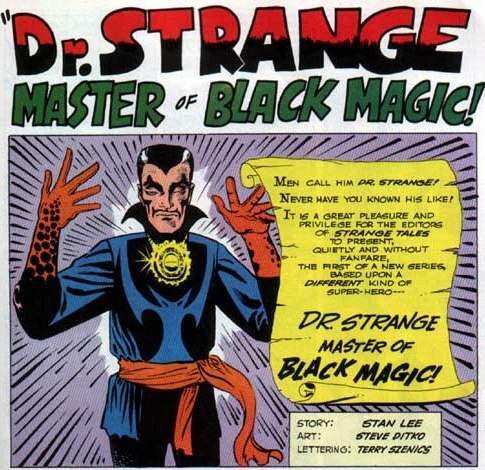
Think about that for a moment. One of Marvel’s most enduring characters, a superhero who would eventually become a cornerstone of the Marvel Cinematic Universe, was modeled after a horror movie icon. And it makes perfect sense. Doctor Strange wasn’t a typical superhero—he dealt with eldritch dimensions, supernatural threats, psychological horror. He needed to look like someone who could command dark forces, someone sophisticated enough to study the mystic arts, someone who could be both hero and, potentially, something darker.
Vincent Price’s face gave them exactly that.
And Price knew about it. Years later, he would voice a character on The 13 Ghosts of Scooby-Doo named Vincent Van Ghoul — a deliberate homage to both himself and Doctor Strange, complete with the swept-back hair, the mystical powers, and even the white temples. The circle was complete: Price had inspired a comic character who inspired an animated character that Price himself would voice.
But Doctor Strange was just the beginning of Price’s comic book influence. Throughout the 1960s and into the 1970s, as horror made a comeback in comics — now repackaged as black-and-white magazines to avoid Comics Code restrictions — Vincent Price’s aesthetic was everywhere. Warren Publishing’s Creepy, Eerie, and Vampirella magazines featured stories dripping with the kind of gothic atmosphere Price had perfected. Skywald Publications pushed things even further with Nightmare, Psycho, and Scream.
The influence went beyond just visual style. Price’s roles always had a theatrical quality, a self-awareness that could tip into dark comedy without losing their menace. This became a template for horror comics, especially the horror host tradition. Witty narrators who introduced tales of terror with puns and gallows humor, descended directly from Price’s performances and the EC Comics tradition he unknowingly paralleled.
Vincent Price died on October 25, 1993, from lung cancer, at the age of 82. His influence on horror cinema was already secured, his art collection had enriched museums across America, and his voice had narrated everything from Michael Jackson’s Thriller to Tim Burton’s animated short Vincent. But his comic book legacy was just beginning.
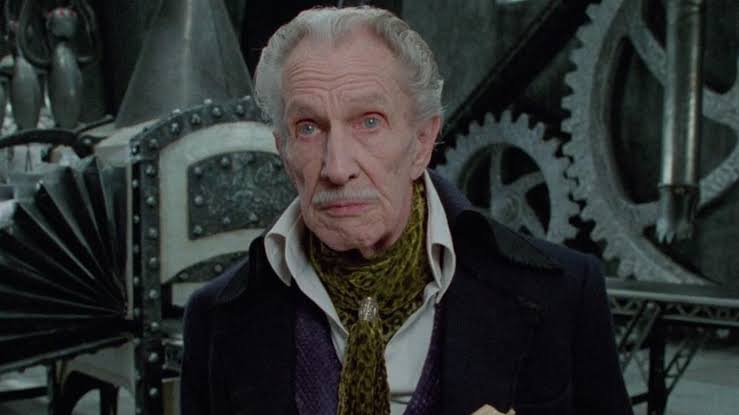
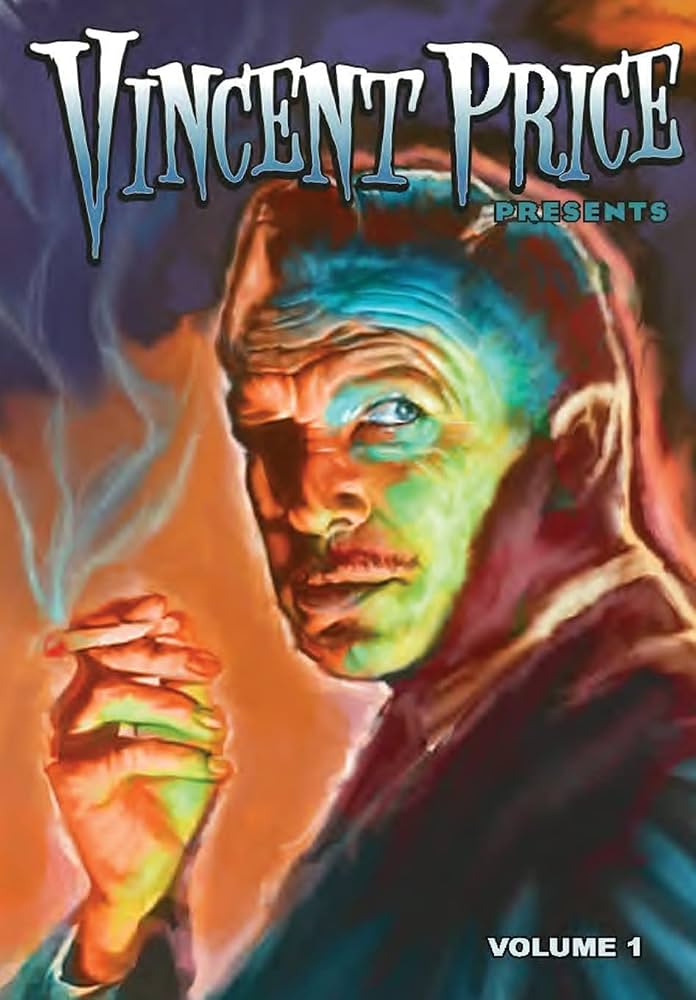
In 2008 — fifteen years after his death and coinciding with what would have been his 100th birthday celebration in 2010 — Bluewater Productions, in partnership with Price’s estate and his daughter Victoria, launched Vincent Price Presents, an ongoing comic book series that would run for 37 issues until 2011.
This wasn’t just a cash-grab. Victoria Price, who had become the guardian of her father’s legacy, was instrumental in making the deal happen. As she explained at the time:
“I’m really touched and excited about the series because it will help energize my father’s legacy for a new generation.”
Vincent Price Presents was a fascinating hybrid. Price appeared as both a character and a host, sometimes in the foreground, sometimes in the background, always serving as the connective tissue for gothic horror stories that mixed adaptations of his films with entirely new tales. Issues featured everything from sequels to The Abominable Dr. Phibes to original stories about demon dogs, cursed scarecrows, and supernatural detectives.
The series was explicitly inspired by the EC Comics tradition — one review called it “bringing back the old EC Comics feel” — with Price serving in the role of the Crypt-Keeper or the Vault-Keeper, a sophisticated host guiding readers through tales of terror. Writers like Chad Helder, who would go on to win a Bram Stoker Award, crafted stories that captured both the gothic atmosphere of Price’s films and the twist-ending morality of classic horror comics.
The artwork varied wildly across the 37-issue run, from painters like Jim McDermott creating moody, atmospheric covers to various interior artists adapting their styles to match the tone of each story. Some issues leaned heavily into Price’s film legacy, adapting The Witchfinder General, The Last Man on Earth, and The Tingler. Others ventured into entirely new territory — fantasy worlds, noir mysteries, zombie apocalypses — all united by Price’s presence and the gothic sensibility he represented.
In 2021, the posthumous comic book appearances continued with Elvira Meets Vincent Price, published by Dynamite Entertainment. The premise was pure comic book fun: the ghost of Vincent Price teams up with Elvira, Mistress of the Dark, to prevent the apocalypse by finding a lost movie. It was meta, it was funny, and it was a perfect encapsulation of how Price had transcended his own filmography to become an icon, a symbol, a piece of pop culture mythology that could be endlessly remixed and reimagined.
The fact that these comics were being published decades after Price’s death speaks to something remarkable: Vincent Price had become more than an actor. He had become a archetype, a visual and aesthetic language that comic creators could deploy to immediately signal gothic horror, theatrical menace, and sophisticated scares.
So what is Vincent Price’s true legacy in comics?
It’s not just that he inspired one of Marvel’s most important characters, though that alone would be significant. It’s not just that his films paralleled and influenced the visual language of horror comics in their golden age. And it’s not just that his image continues to appear in comic books decades after his death.
Vincent Price’s comic book legacy is about the intersection of high art and popular culture, of sophistication and schlock, of genuine talent lending gravitas to genres that were often dismissed.
Remember, this was a man with a degree in art history from Yale. A man who founded art galleries and donated millions to museums. A man who could discuss Renaissance painting with the same passion he brought to reading Poe or playing a mad scientist. He never looked down on horror. He elevated it.
That’s exactly what the best horror comics have always done. EC Comics didn’t just throw gore at readers—they crafted morality plays with twist endings and stunning artwork. Warren Publishing didn’t just reprint monster movie publicity stills — they commissioned original art from some of the medium’s greatest talents. And Vincent Price Presents didn’t just slap his name on generic scary stories—it tried to capture the gothic sophistication he brought to everything he touched.
In a way, Vincent Price was always perfectly suited for comics. Both mediums traffic in archetypes, in larger-than-life characters, in the power of visual storytelling. Price’s face — those arched eyebrows, that knowing smile, those eyes that could convey both warmth and menace — was as expressive as any comic book panel. His voice, which could make the most absurd dialogue sound profound, was the equivalent of a great comic book writer’s narrative captions.
And perhaps most importantly, both Price and the best comic creators understood that horror works best when it’s aware of its own artificiality. Price never played his roles completely straight—there was always a glimmer of theatricality, a sense that he was enjoying himself even as he terrorized his victims. The best horror comics do the same thing, using the medium’s inherent unreality to create scares that work precisely because we know they’re not real.
Today, Vincent Price’s influence on comics continues in ways both obvious and subtle. Every aristocratic villain with a cape and a goatee owes something to Price’s Doctor Strange inspiration. Every horror host who introduces tales with dark humor is descended from Price’s theatrical tradition. Every comic that balances genuine scares with self-aware camp is walking the tightrope Price mastered.
When Benedict Cumberbatch plays Doctor Strange in the Marvel Cinematic Universe, millions of viewers see a character whose visual DNA traces back to a horror actor from the 1960s. When new horror comics launch with sophisticated twist endings and gothic atmosphere, they’re building on a tradition that Price helped establish. When comic artists draw supernatural characters with commanding presence and aristocratic bearing, they’re using a visual language Price refined.
So, Vincent Price never wrote a comic book. He never drew one. But his face, his voice, his presence, his aesthetic understanding of what makes horror work — all of that soaked into the medium’s DNA and never left.
From a wealthy St. Louis childhood to the stages of London and Broadway, from film noir to gothic horror, from inspiring Doctor Strange to hosting his own comic series posthumously, Vincent Price’s journey through popular culture has been nothing short of extraordinary.
He was more than the Master of Macabre. He was a Renaissance man in an era of increasing specialization, an artist who understood that high culture and pop culture weren’t opposites but partners in the human experience of storytelling. And in the pages of comic books — a medium he probably never imagined would become one of his most enduring legacies — his presence continues to inspire, terrify, and delight new generations of readers.
As Price himself once said:
“A man who limits his interests limits his life.”
Vincent Price never limited his interests, and his life — and afterlife — has been all the richer for it.
Thanks for watching. If you enjoyed this deep dive into Vincent Price’s comic book legacy, please like, subscribe, and hit that notification bell. Let me know in the comments: what’s your favourite Vincent Price film, and have you read any of the ‘Vincent Price Presents’ comics? I’d love to hear your thoughts. Be sure to head on over to my video about Elvira: Mistress of the Dark’s comic book legacy. Until next time, keep reading, keep watching, and remember: the best monsters are always the ones who know they’re monsters.