Previously on… Night Ghost
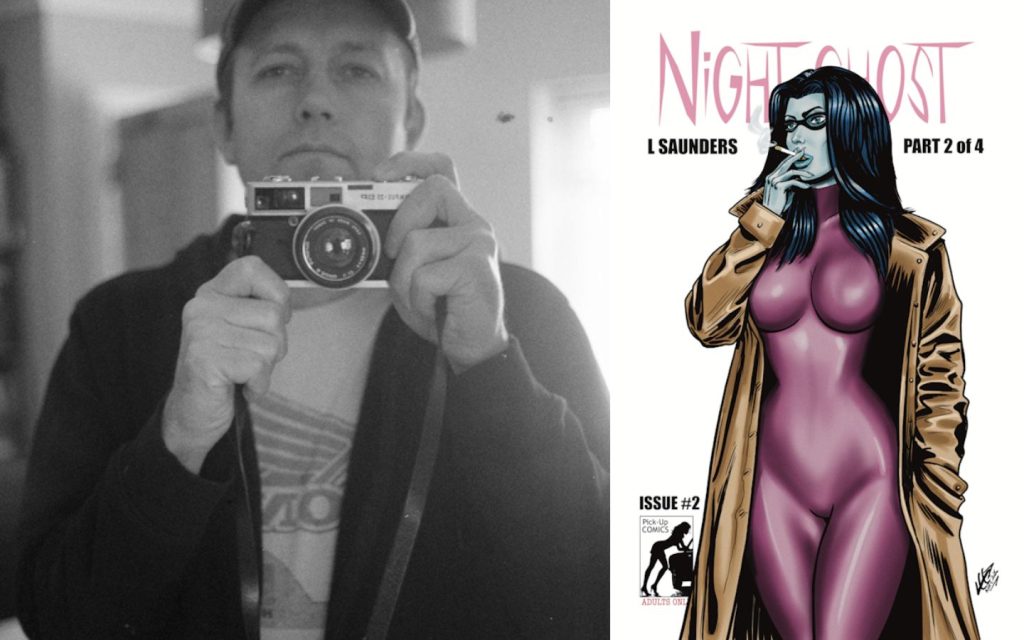
There’s a specific kind of stubbornness that makes indie comics work. Lee Saunders is the writer, artist, publisher, marketer, and shipping department behind Night Ghost — a crime horror book set in the burning Bronx of 1978 — and he’s constitutionally uninterested in softening any of it for you. His protagonist is an ex-prostitute, a survivor, and something older and stranger than either. Issue #1 funded at 237% and Issue #2 has surpassed that benchmark with over 400%.
What follows is a conversation about halftone dots and Frank Miller. About the specific rot that made 1970s New York the only possible setting for this story, and about why going fully independent means never having to ask permission to shock anyone. He’s got four issues to finish this arc and doesn’t plan to stop there.
An Interview with Lee Saunders
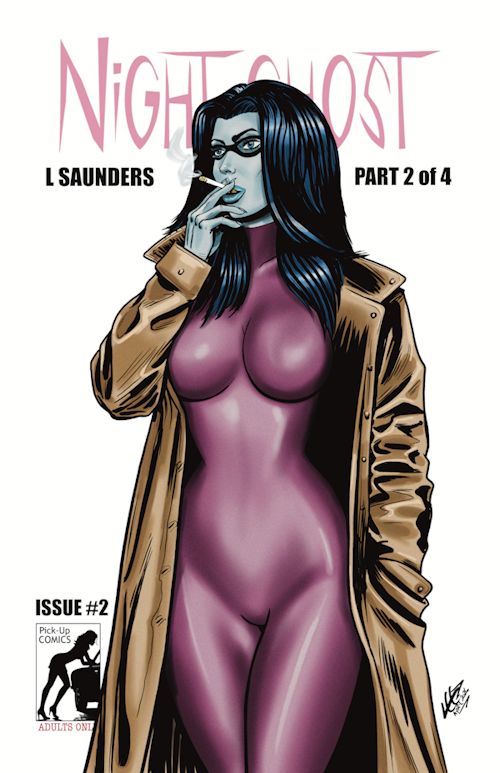
Night Ghost #2 is subtitled ‘She’s Changing’ — which is doing a lot of work for three words. Adriana Volkov has already survived prison, the streets, and whatever unholy thing she stumbled into in Issue #1. What kind of change are we talking about here — is it transformation in the body-horror sense, or something closer to the dawning realisation that she was always this thing, and the world is only now catching up?
Lee Saunders: Well, without starting the interview off by sounding like a pedantic twat, I’d say that was two words. But to answer this question in particular would definitely spoil the second half of Issue #1 and first half of Issue #2. What I will say is that her body changing may have eventually happened without the intervention of what occurs in the last part of Issue #1 and for the answers to that question you would have to look deeper into her recurring nightmares. For anyone that has read the comic, look a little deeper at that particular panel!
The Bronx in 1978 is a very specific choice — a city that was literally burning, a borough that the rest of New York had written off. Most creators who reach for a period setting reach for the aesthetics and leave the politics on the shelf. How much of that particular rot and resilience is load-bearing for Adriana’s story, and how much of it is atmosphere?
Lee Saunders: When I started writing Night Ghost, the only place this character was ever going to be brought to life in was always going to be the ’70s Bronx. I’ve never actually been to the Bronx or even New York for that matter. My trips to America have always been on the West Coast. But as a young teenager back in the early ’80s I became engrossed in movies like The French Connection, Taxi Driver, Midnight Cowboy, The Godfather, Raging Bull, The Warriors, Mean Streets etc.
So when it came to writing the script for Night Ghost I did quite a bit of extensive research which opened up a whole load of scenarios within the story I hadn’t originally conceived. The gangs running the place, the fires of the ’70s when it was better to burn your house down to claim off the insurance than try to sell or rent it out, the big corporations moving in with the bulldozers.
I wanted her to be in the heart of all this mayhem and chaos, without money or gadgets, just an intelligent woman born to Russian immigrants without a pot to piss in, and working the streets for a crime family – and from this hell, my plan was always to try to get the reader to slowly watch her rise from this pile of shit and do what was so impossible to do in reality.
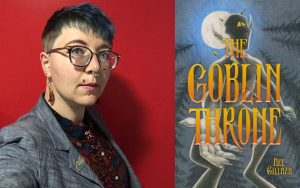
RELATED: An Interview with the Creator of ‘The Goblin Throne’: Mel Gillman
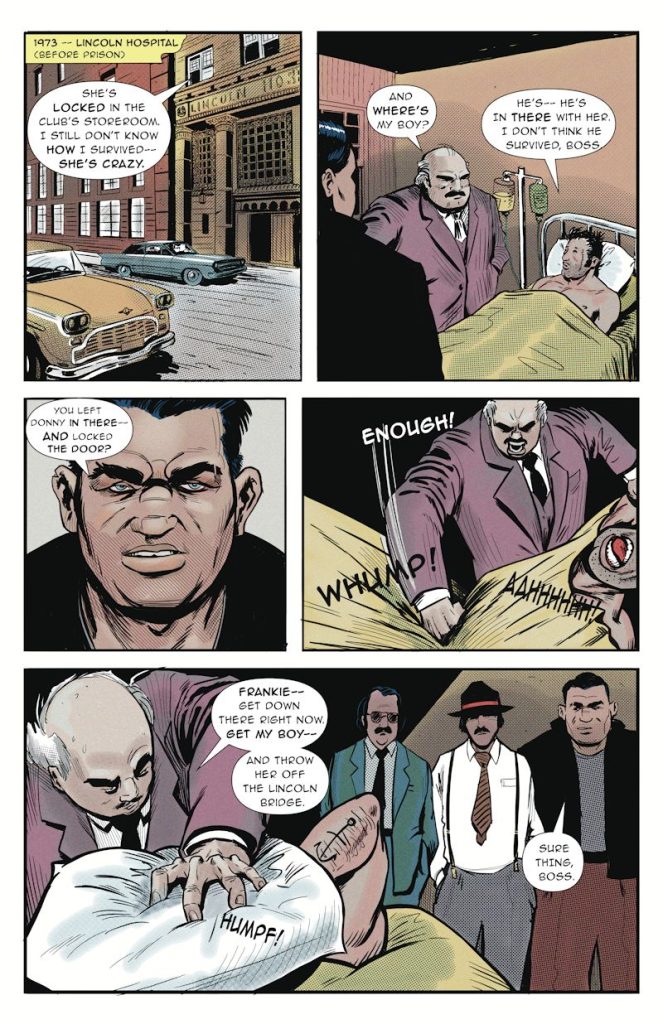
Night Ghost sits at the intersection of street crime, detective noir, and something ancient and supernatural that predates all of it. That’s a difficult tonal marriage to hold together — too much pulp and the horror gets campy, too much horror and the grit loses its texture. Where’s the spine of the book for you — the thing that keeps all three registers honest?
Lee Saunders: It works because I’m pacing every panel as if I was shooting a movie. Issue #1 starts out as a simple detective case, it moves straight into the action around page 3 and doesn’t let up until the last few pages and then BAM! Something completely supernatural happens and then it’s over within 1 page, but what happens in that 1 page is what pretty much most of my readers have said was totally unpredictable and brilliant. Moving forward into Issue #2, Night Ghost will never become campy because I know when to put on the brakes a little and let things drop an octave or two.
You describe something ‘ancient’ waking up inside Adriana — which is a phrase that carries enormous weight depending on what you mean by it. Are we building toward a mythology with its own internal logic, or is the supernatural more of a pressure system — something that externalises what’s already been happening to her since long before Issue #1?
Lee Saunders: As I mentioned, I can’t go into too many details without spoilers but as I’ve already said – I’ve placed a few clues in Issue #1 with regards to her dreams and there are more to come in Issue #2.
You write and draw Night Ghost solo — which means every decision about pacing, tone, and visual rhythm lands entirely on you, with no editor or collaborator to push back. Do you script it fully before you draw a single panel, or does the story mutate as you start making marks on the page?
Lee Saunders: Yes, I wrote the initial story over a few days and then ideas would continuously pop into my head, or I’d research something. Recently I was looking at female prisons and I’d get lucky and find that Bedford Hills had a rebellion on August 29, 1974 and about 200 incarcerated women took over parts of the prison and held several guards hostage for a few hours – well to me that’s just gold, so in it goes. The story keeps growing but I’ve had the same ending in sight since day one!
RELATED: An Interview with the Creator of ‘Urbance’ : Joël Dos Reis Viegas
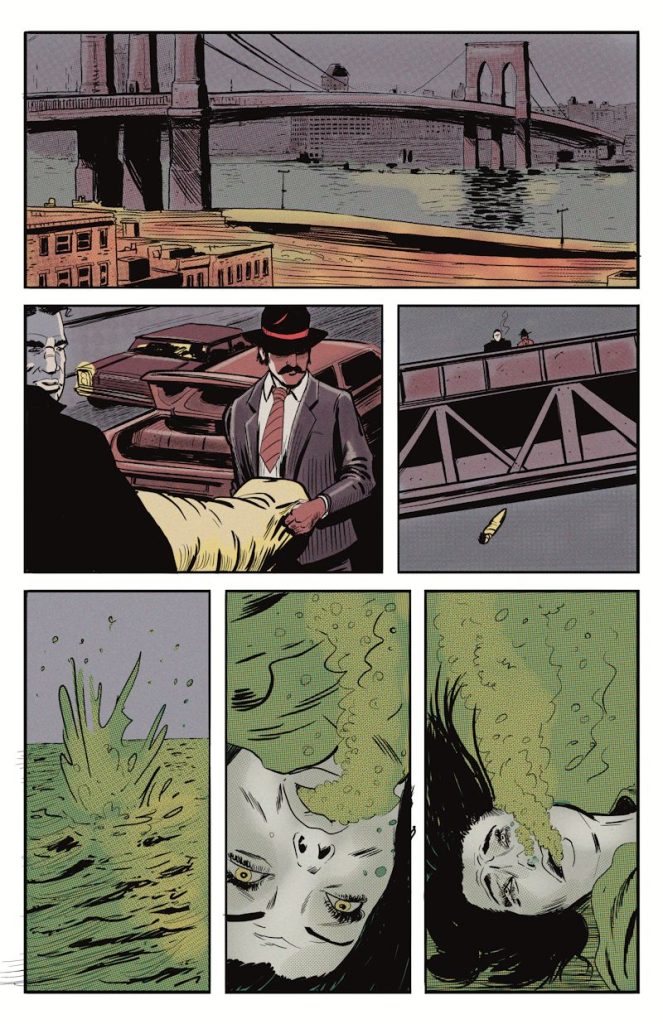
The halftone work and Ben-Day dots in Night Ghost are a deliberate throwback to a printing technology most contemporary comics have abandoned entirely. That’s not just aesthetics — it’s a statement about what kind of object this is and where it comes from. Which specific artists or comics from that era are you actually in conversation with when you make those choices?
LS: I grew up reading comics from the bronze age and I was lucky enough to be young when Frank Miller started his Daredevil run. Night Ghost is from a similar universe and so the dots are me paying homage to my childhood along with most of my readers I think.
Issue #1 funded at 237% of goal. Issue #2 is already at 409%. That kind of response from a debut is rare, and it has a way of either liberating a creator or quietly installing a new kind of pressure. Did knowing the audience existed and was watching change anything about how you approached this issue — the ambition of it, the risks you were willing to take?
LS: No, not at all. I have a story to tell and without having a film crew or lots of money I’m telling it the only way I can. The audience has certainly given me more confidence with the great reviews I’ve received, but I think you have to write for yourself first otherwise by trying to please everyone, I would lose a hell of a lot of shock value!
Pick-Up Comics is, as far as the public record shows, entirely you — writing, drawing, publishing, marketing, shipping. Most creators who go fully independent either underestimate the logistics or burn out inside two issues. What part of that operation has been the hardest to hold together without becoming the thing that swallows the creative work?
LS: I don’t think any of those things could swallow my creative work, it’s real life and working a ‘normal’ job that gets in my way. But if I had to choose one thing I don’t like, it has to be the marketing stuff and I’m talking about giving money to Meta in particular. With Issue #1 I spent around £1,500 on Meta ads because I had zero followers on social media or Kickstarter. With Issue #2 I really appreciate that most of my audience have returned along with a whole new bunch too.
In your pre-launch updates you described the current comics landscape as full of ‘generic, re-rinsed stories and awful AI art.’ That’s a position, not just a complaint. What does Night Ghost represent in opposition to that — not just in terms of what it looks like, but in terms of what it’s actually willing to do?
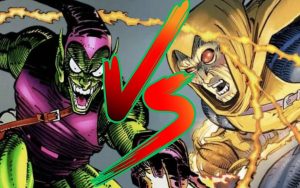
LS: Well, it’s true. Spider-Man can only fight the Green Goblin so many times, right? I think readers want more and I think there’s a massive shortage of writers willing to take risks in a world that’s gone ‘woke’. I’m from the old school I guess and I’m not willing to be told what I can or can’t do. Night Ghost was an ex-prostitute and she goes through a horrific ordeal in Issue #1. It’s pretty shocking and I probably lost some of my audience due to it but I’m going to keep on moving forward with similar themes until it’s done.
RELATED: The Adult Performer Defying Expectations: An Interview with Lady LorReign
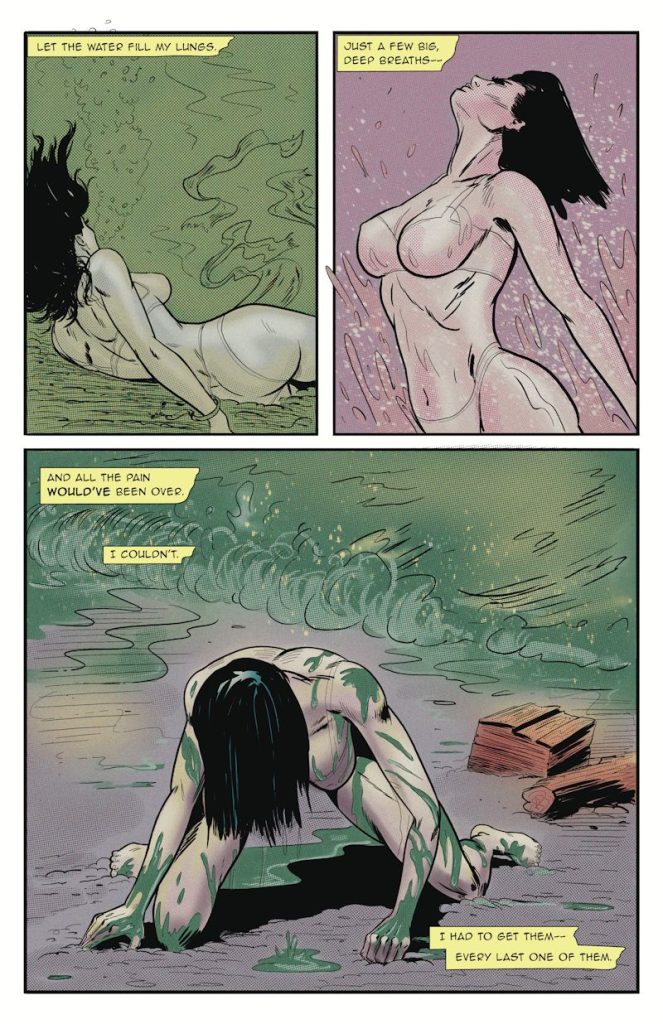
The physical object matters to Night Ghost — you’ve talked about the weight of the paper, the variant covers, the signed posters. In an era where most indie comics exist primarily as digital files or POD paperbacks, there’s something almost confrontational about insisting on a book that feels like something. Is that a deliberate act, or just a reflection of what you want to hold in your hands?
LS: As long as readers want to collect physical comics I’d love to be a part of it.
Night Ghost has the architecture of something that knows where it’s going — a protagonist with a mythology attached to her, a setting with real historical texture, a supernatural premise that feels like it has rules even if we haven’t seen all of them yet. How many issues are you building toward, and is the ending already written somewhere, even loosely?
LS: There are going to be 4 issues to complete this story arc. I’ve already written another two issues and they’ll more than likely turn into another 4. I don’t really want to stop with Adriana. I have a whole back story planned with regards to her father’s death – and even her grandfather might make an appearance!
When Night Ghost is done — whenever that is — what does success actually look like for this book? Not the Kickstarter metrics. The thing you’d want a reader to feel when they put the last issue down.
LS: Shocked, would work for me!
More in Comics, Interviews, Kickstarter