
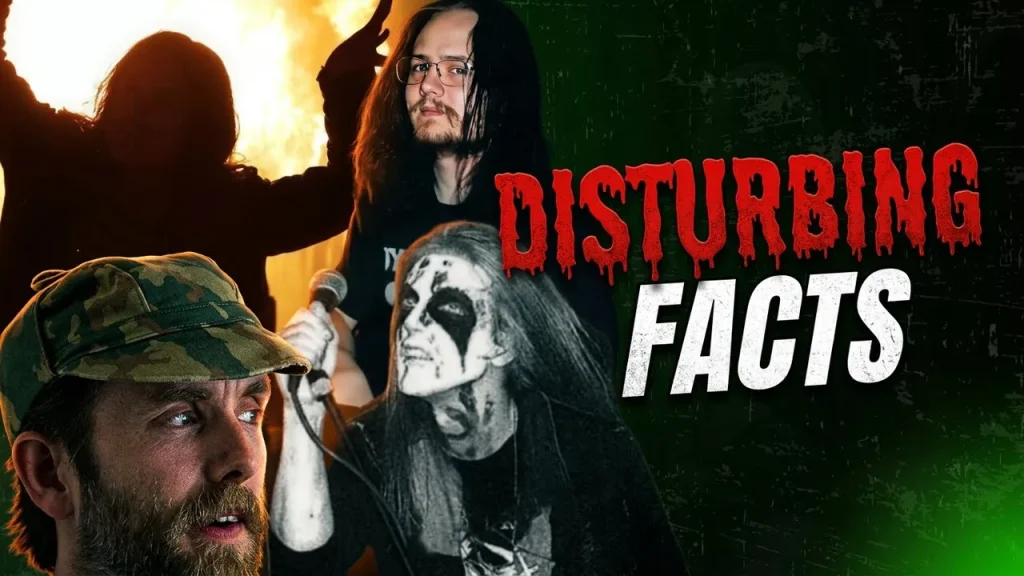
About Black Metal History
Here’s something that doesn’t get said enough about Norwegian Black Metal: the people involved weren’t playing characters.
That’s the thing you need to hold onto for the next however-long this video runs. Because we’re not talking about shock tactics or edgy marketing or teenagers who wanted to seem dangerous. We’re talking about a small group of people in one of the quietest, most comfortable countries on earth who looked at the world and decided the only honest response was to burn it down.
These are 13 moments that explain how Norwegian Black Metal stopped being a music scene and became something else entirely. And if some of this sounds like it can’t possibly be real — it is. All of it.
#13. The Birth of Mayhem
This part of the story kicks off in Langhus, Norway — 1984
Most bands start because someone gets a guitar for Christmas and their friends think it’d be cool to jam. Mayhem started with a manifesto.
Euronymous — born Øystein Aarseth, which is a name that doesn’t have the same ring to it — formed the band in 1984 in Langhus, a suburb south of Oslo so unremarkable it barely registers on a map. He’s joined by bassist Necrobutcher and drummer Manheim. They’re teenagers at the time.
And from day one, Euronymous isn’t trying to make extreme music. At least – not what we recognise as extreme music. Instead, he’s trying to be genuinely, philosophically evil. Not as branding. Not as a pose. As a committed worldview that he intends to actually live by.
Which sounds like exactly the kind of thing a teenager in a boring suburb would say. Except this particular teenager meant it. And that’s the thing about this whole story — it only works if you believe that from the very start. Because everything else that follows from it gets batshit insane very quickly.
#12. ‘Dead’ arrives from Sweden
In 1988, Mayhem adds a vocalist. His name is Per Yngve Ohlin. Stage name: Dead.
And look — a lot of metal vocalists go by names like that. It’s a whole tradition. But here’s where Per Yngve Ohlin is different from basically every other person who has ever put on corpse paint: he genuinely believes he is not a human being. His conviction, held sincerely, is that he’s an alien consciousness that ended up in the wrong body on the wrong planet, and that he doesn’t belong alive.
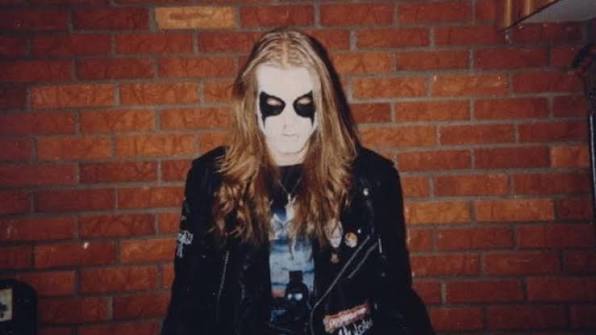
Before shows he buries his stage clothes in the ground, lets them rot, and digs them back up to wear. He carries dead crows in sealed plastic bags and holds them to his face backstage — inhaling them, essentially — so that he smells like death when he walks onstage. He cuts himself with broken glass mid-set and those cuts are very real.
There’s a very specific kind of unsettling that comes from someone who has completely stopped distinguishing between what they’re doing and what they believe. Dead had been there for a long time before anyone around him understood that.
#11. Euronymous opens Helvete
In 1991, Euronymous opens a record shop in Oslo. He calls it Helvete, which is Norwegian for Hell, and yes — that’s the point.
On paper it’s a record store. In practice it’s the physical headquarters of an ideology that now has an address. The shop is deliberately stark, the shelves stocked with music most stores wouldn’t touch, and it starts pulling in a very specific kind of person — teenagers who feel wrong, who feel monstrous, who are looking for a community that reflects that back at them.
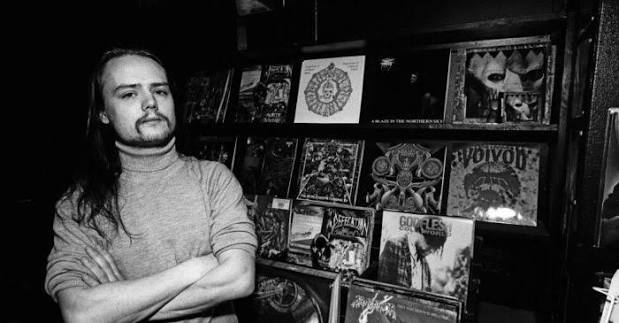
They find one in this record store. And the conversations that happen in Helvete aren’t really about music at all. They’re about what a commitment to darkness actually looks like when you take it seriously. What it requires of you.
Here’s a thing worth understanding: a scene is basically harmless when it stays a scene. When it gets a headquarters, a hierarchy, and a shared set of expectations about what membership means — that’s when it becomes something with consequences.
#10. The Black Circle Forms
Around Helvete, Euronymous starts assembling what he considers an inner circle. Not fans. Not even really musicians. True believers.
Among them is Varg Vikernes, a young guy from Bergen recording solo under the name Burzum. Bård “Faust” Eithun, the drummer from Emperor. Samoth. Ihsahn. And a rotating cast of others.
The terms of membership are unspoken but completely understood: you are not playing a character. You don’t go home and become a normal person. The ideology isn’t an aesthetic choice — it’s actual. The group calls itself The Black Circle, or sometimes just the Inner Circle, and the conversations inside it move — gradually and then very fast — from music to doctrine to what doctrine demands in practice.
This is the moment in the story where the direction changes. Not because anything has happened yet – but because of what’s been agreed upon.
#9. Dead Takes His Own Life
On April 8th, 1991, Per Yngve Ohlin is found dead at the house the band shared in Kråkstad. He left a note. The first line reads: “Excuse all the blood.” He cut his wrists. He cut his throat. Then he used a shotgun.
When Euronymous finds the body, he doesn’t call an ambulance. He doesn’t call the police. He goes to a nearby shop, buys a disposable camera, and comes back to take photographs of the scene. He later uses one of those photographs as the cover of an unofficial Mayhem bootleg called Dawn of the Black Hearts. He reportedly makes necklaces from fragments of skull.
Now if you’re asking yourself why — and you should be — the answer is that in the internal logic of what Euronymous was building, Dead’s death was proof. Dead had said his whole life that he didn’t belong alive. Now Euronymous had a photograph that confirmed the ideology was real. That this wasn’t theatre.
And that framing is genuinely disturbing. But it’s also completely consistent with everything Euronymous had been saying since 1984. This is the first moment the scene ruptures through into the real world, and the response to it tells you everything about where things are headed.
#8. Fantoft Stave Church Burns
In the early hours of June 6th, 1992, the Fantoft Stave Church in Bergen burns to the ground.
It was built around 1150 AD and had been standing for more than 850 years.
Varg Vikernes is the primary suspect. He’s charged. And then, in 1994, the jury comes back not guilty on Fantoft specifically — he’s acquitted. He will eventually be convicted of four other church arsons, but not this one. Which means the ruins that end up on the cover of his Burzum EP, Aske — which means “ash”, in case that wasn’t clear enough — are the ruins of a crime he walked free from.
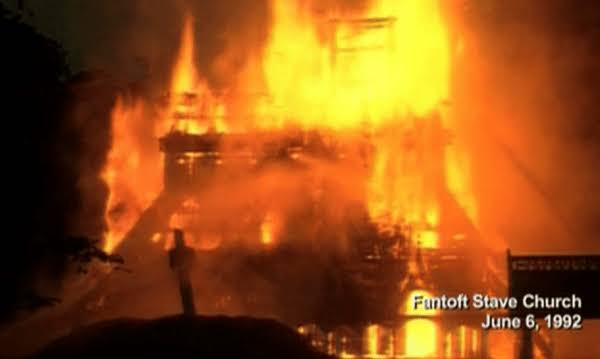
Think about that for a second. He puts the crime scene on the album cover, gets charged, and gets acquitted. That’s not just dark. That’s a provocation with impunity. That’s someone who understood exactly how far they could push and pushed there anyway.
The message to Norway is deliberate: we’re coming for your history. For the buildings that tell you what this country is. An 850-year-old church is a symbol, and burning it is a statement.
#7. The Wave: 50+ Churches Burn
Fantoft isn’t a one-off. Between 1992 and 1996, approximately fifty churches are set on fire across Norway. Some of them are medieval. Most are reduced to ash. Inside the Inner Circle, committing arson becomes a credential — something that proves you’re not just talking about the ideology but actually living it.
The Norwegian government is completely blindsided. When they eventually figure out that the fires are connected to a music scene, it sounds so absurd that it takes a while to be taken seriously. And this is the part that really shouldn’t surprise you by now but somehow still does — when the mainstream press shows up looking for answers, the Inner Circle doesn’t go quiet.
They give interviews. They confirm the fires. Euronymous goes on camera and talks about real evil. They seem genuinely convinced that the press attention is evidence of their power. It’s not. It’s the beginning of the end. But they can’t see that yet.
#6. Faust Commits Murder
On August 21st, 1992, Bård “Faust” Eithun — 18 years old, drummer for Emperor — is in a park near the Lillehammer Olympic site when a man approaches him and makes a pass at him. In response, Faust stabs him thirty-seven times.
Afterwards, Faust tells Euronymous what happened. The reaction inside the Inner Circle is not horror or revulsion or any recognition that a line has been crossed. It functions as a credential. As proof of commitment. Nobody reports it. The murder stays secret for years, until investigators untangling the church arsons start pulling on threads that lead somewhere much darker.
This is the moment the scene crosses a line it cannot walk back from. Not because the ideology changed — the ideology was always pointing here. Because now it’s arrived.
#5. The Press Descends
By 1993, Norwegian TV and newspapers are investigating the church fires in earnest. There are arrests. There are searches. There’s the slow, public assembly of a picture that most people find almost impossible to believe is real. A sensible group of people, at this point, says nothing. Gets lawyers. And then waits.
However, The Inner Circle doesn’t do this. Members go on camera. Euronymous gives interviews about genuine evil, about what the scene represents, about the fires. They seem to believe that the attention is a kind of victory — that being publicly feared is the same thing as being powerful.
What it actually does is drag everything into the light. The scene stops being a secret network and becomes a public spectacle, which attracts scrutiny, law enforcement, and — critically — rival egos who now have an audience. As a result – everything speeds up – and nothing good comes from it.
#4. Varg’s Ideology Radicalises
Varg Vikernes isn’t a fringe figure in the Black Circle. He’s one of its most committed members — prolific, ideologically serious, producing Burzum recordings with a cold, strange atmosphere that genuinely sound like someone who means it. But by 1992 and into 1993, his ideology starts pulling away from the rest of the scene. He’s writing publicly about Odinism, Norse paganism, racial nationalism. He’s come to see the Black Circle’s Satanic framing as aesthetics borrowed from somewhere else — not genuine, not rooted in anything Norse or real. A pose.
And he starts saying so. Loudly, and in public. He calls Euronymous a communist, a fraud, a seenster who talks about evil but has become exactly the kind of person he claimed to despise. Varg’s position is that only he represents the true ideology, and that the scene has lost its way.
The man who built the Black Circle now has a rival who wants to tear it down and rebuild it around himself. The conflict is ideological, personal, and — as it turns out — financial.
#3. The Dispute
It’s somewhere between Spring and Summer, 1993…
During this time the tension between Euronymous and Varg stops being abstract and gets very concrete. Varg’s Burzum recordings had come out through Euronymous’s label, Deathlike Silence Productions. Varg’s position is that Euronymous owes him significant unpaid royalties — thousands of kroner. Euronymous disputes this, or just ignores it, which in this context might be the more dangerous response.
On the surface it’s a business disagreement. Underneath it’s two people who both built their entire identities around being more committed, more extreme, more genuinely serious than anyone else — now pointed directly at each other with nowhere to go. Then Varg gets information — the source and reliability of which has never been fully established — that Euronymous is planning to have him tortured, filmed, and have the footage released.
Whether that was true, a rumour, or a justification that came after the fact, Varg decides he’s not going to wait to find out.
#2. The Night Drive to Oslo
It’s August 10, 1993 — after midnight
Varg Vikernes and a companion — Snorre “Blackthorn” Ruch — get into a car in Bergen sometime after midnight. Bergen to Oslo is seven hours. They drive through the night, through the mountains, through the dark. We don’t know what they talked about, or if they just sat in complete silence. We just know they made the drive.
Then they arrive at Euronymous’s apartment building in Oslo at around 4am. Varg buzzes the intercom. Euronymous lets him in.
#1. The Murder
Varg Vikernes stabs Euronymous twenty-three times — twice in the head, five times in the neck, sixteen times in the back — in the stairwell of his own apartment building. Euronymous is 25 years old.
Varg is arrested shortly after. He’s eventually convicted of the murder and arson charges for four church fires, and serves nearly fifteen years before being released in 2009. But here’s the thing that makes this more than a true crime story. Here’s the thing I keep coming back to.
Euronymous spent the better part of a decade building a very specific mythology — not just musically, but philosophically and publicly. His argument, made in interviews, in the shop, in the circle he assembled around himself, was that Norwegian Black Metal was not theatre. Not provocation. Not a pose. That the darkness was real. That the people involved actually meant it.
He was right. He just didn’t account for the fact that if the darkness is real, it’s real for everyone in the room — including him. The ideology he created and spent years making credible consumed him. He was killed in his own stairwell by someone who had been his most committed believer, in an act that was completely consistent with everything he’d preached.
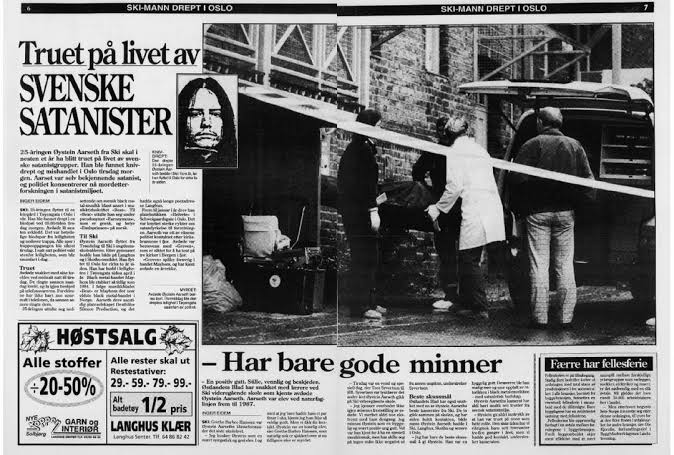
Norwegian Black Metal’s darkness was never fictional. Euronymous built a world where it couldn’t be. He just never considered that he’d be the one to prove it.
The people involved either served their time or are still out there — Varg is still polarising, the surviving bands are still touring, and the scene is still breathing — but the real irony is the movement which screamed loudest about being genuine ended up as one of music history’s most copied aesthetics. For most bands, corpse paint became a stylised costume – whilst others still treat it as serious as ever. Meanwhile – the ideology became a vibe. So in the end – Euronymous wanted black metal to be real. But instead – it became a genre.
Anyway, that’s it for now. Please like and subscribe if you’ve enjoyed this video. Leave a comment with what you think I should cover next. But for now – see you in the next episode.
More Heavy Music on Soda and Telepaths
- Excuse For An Exit Announce Debut EP ‘Glitter & Grief’ with New Single “Black Cat Superstar”
- Rock N Roll Dive Bar “Wings & Tins” Plans To Put Northern Beaches on the Aussie Touring Map
- RinRin Signs to Fearless Records, Releases ‘fever dream’, Touring with Windwaker
- Bad Wolves Recorded a Metal “Jolene” With Dolly Parton’s Blessing — Now It’s a Tribute