An Interview with Christian Ward
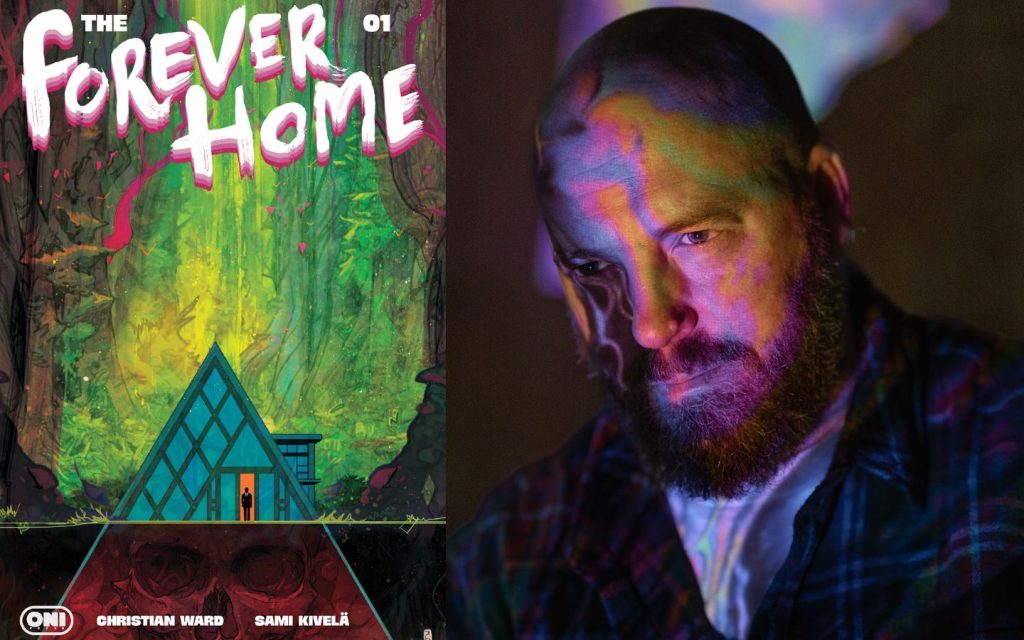
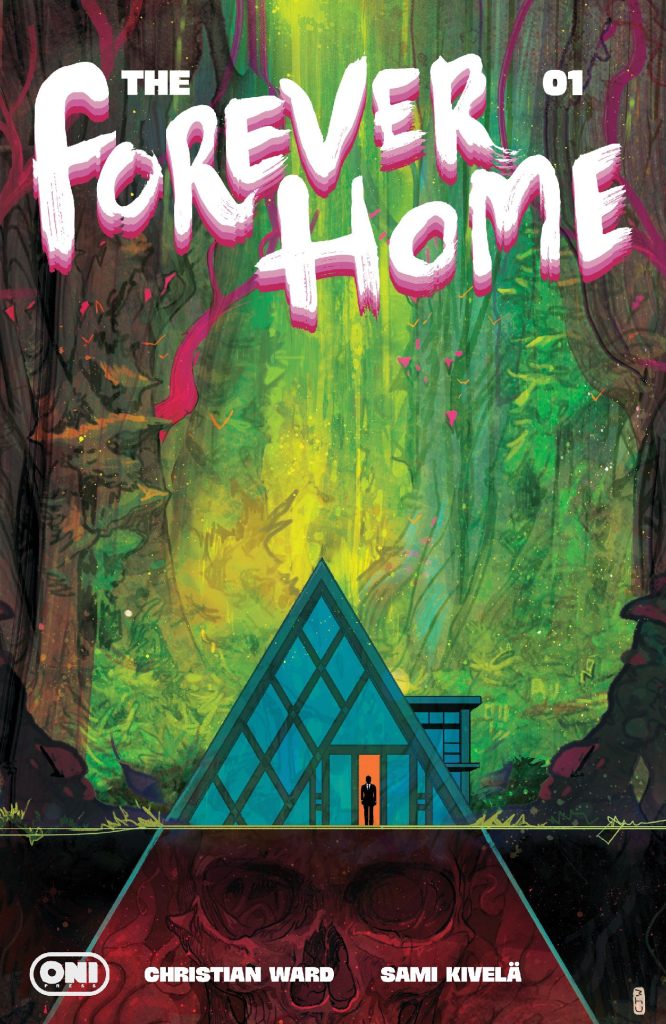
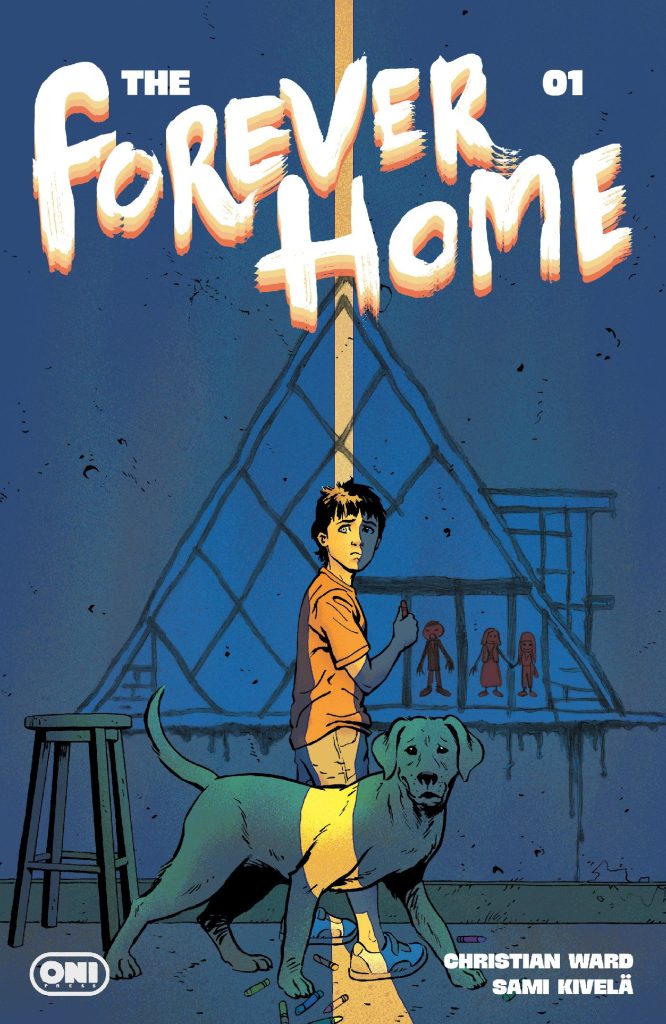
Christian Ward has spent two decades in comics as both artist and writer, but he calls his new Oni Press series, The Forever Home, one of the books he’s most proud of. The premise is deceptively simple and immediately unsettling: a family takes shelter in a house built to withstand climate catastrophe, only to discover the house is immune to time itself — twenty minutes inside for every year outside. When a child’s mistake breaks the barrier between the house and the world beyond, the family is forced to reckon with both what’s changed outside and what’s been waiting for them.
Ward describes the series as growing from an “angry seed” — real anxieties about climate change, billionaire bunker culture, and the world his own children stand to inherit — filtered through touchstones as varied as Ray Bradbury, Parasite, and The Time Machine. It’s his second collaboration with artist Sami Kivelä after Machine Gun Wizards, joined by colorist Jason Wordie and letterer Hassan Otsmane-Elhaou, and Ward promises cliffhangers he hopes live up to comparisons to Brian K. Vaughan.
I spoke with Christian who talks about writing a protagonist whose defining act is abandonment, the mid-century futurism baked into the book’s visual language, and why the difference between creator-owned work and writing characters like Two-Face comes down to freedom.
Christian Ward reveals all in ‘The Forever Home’
You’ve described the “angry seed” of this story as coming from real anxieties about climate change and billionaire bunker culture. How did you balance writing something that’s politically charged with making it work as a horror-thriller first and foremost?
Christian Ward: You never want some to feel like they’re at your TED TALK… but for me, all the best horror is about something real, and often it’s angry about something real. It’s very true that anger fuels this story, but it was also, aptly, fear. The fear of the world my children are set to inherit. Ultimately though, that balance between the substance of a story and its ability to entertain comes down to just that… does it entertain? You can deal with weighty important issues as long as it isn’t at the expense of entertainment.
I think Ryan Coogler said it best recently when talking about this excellent film Sinners with his excellent croissant metaphor. “Some people, they bake, they’re gonna cut the croissant open. They’re going to count how many layers are in it. They’re going to taste the quality of the butter and all that shit. And that’s cool for some people. Like most people, just want to eat…they just want something quick for breakfast. What I was trying to do was make a movie that worked for everybody who was hungry.
The Forever Home compresses time dramatically inside its walls — twenty minutes for every year outside. What drew you to that specific device, and how did it shape the way you structured the story across six issues?
Christian Ward: The idea behind the house came first. I was thinking about billionaires’ climate bunkers, leading to thinking about a house built to withstand climate change but which ended up being immune to time itself. I don’t want to give too much away, but we’ll be spending time both inside and outside the house.
Henry D’mour “could have saved the world” but chose to save his family instead. How much sympathy do you want readers to have for him, and how did you approach writing a protagonist whose central act is essentially abandonment?
Christian Ward: He may have abandoned the world, but in his mind it was what he needed to do to save his family. That’s the key here, he doesn’t think he’s a bad guy (because in the real world even the worst people don’t), and the reader will certainly agree with some of the things he does. To me, in this sort of story that’s far more interesting than a moustache-twirling villain.
This is a story about a family, including two children, trapped in a crisis caused by an adult’s decisions. What was it like writing from the kids’ perspective, especially given that it’s a child’s “misstep” that breaks the barrier?
Christian Ward: “Children trapped in a crisis caused by an adult’s decisions” — isn’t that a perfect way to describe the world today? And really, that’s what the book is about. I’m primarily a horror writer. Or perhaps, I just like writing scary stories and when I think about the world that my kids might be inheriting, well, that’s fucking terrifying. So, they, being the children, absolutely had to be the characters leading the story. And by thinking about my kids, it wasn’t hard to put myself in their shoes.
You’ve compared the premise to a Ray Bradbury short story by way of Parasite. What specifically about those touchstones felt right for this story, and were there other influences — literary, cinematic, or otherwise — that shaped it?
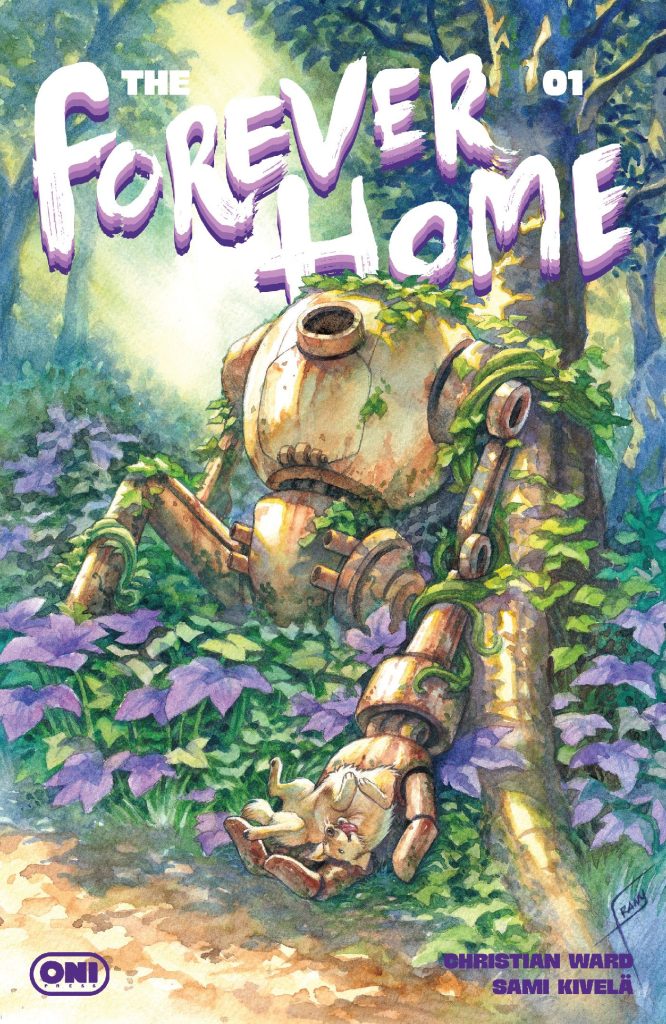
Christian Ward: Parasite is an easy fit; it involves a house split into two, a downstairs and an upstairs in the same way ours is an inside and an outside. Beyond that I would say The Forever Home shares some DNA with the 1960’s movie The Time Machine, based of course on HG Wells novel. Especially how it uses time travel to explore society.
This is your second collaboration with Sami Kivelä after Machine Gun Wizards. How did that prior creative shorthand change the way you developed this book together, from initial pitch to finished pages?
Christian Ward: Honestly, not by much. Put simply, I was just able to relax and completely trust Sami. He’s an incredible artist and I knew from working within that he’d sell the drama, nail the horror, and even elevate the script.
Sami mentioned designing a world where “the past meets the future,” blending retro sci-fi with familiar modern details. How involved were you in shaping that visual language, and how did it influence your scripting?
Christian Ward: That was something that’s baked into the scripts. We talked a lot. A big influence on the story was mid century futurism. A period in the US after WW2 where society imagined this future utopia. It’s one of the many reasons why Sami was perfect for this; his style straddles that line between feeling both modern and retro.
The title itself, The Forever Home, carries a real-estate connotation alongside something more sinister. Can you talk about how that double meaning informs the tone of the series?
Christian Ward: Well obviously the story deals with time, but it also explores the falsities of the idea of forever. A lot of the older generation (and even my own) are skeptical about climate change being a real thing. In many ways this book is about how quickly things can change.
Without spoiling anything, what can you tell us about what’s been “waiting eons” outside? How early in development did you know what that threat actually was?
Christian Ward: All I can say is that what’s going on outside of the house is as important as what’s occurring inside.
You’re writing Event Horizon for IDW and recently wrote Two Face for DC, alongside creator-owned work like this. How does your approach to scripting change between licensed superhero work and a creator-owned sci-fi horror series like this one?
Christian Ward: I would say it doesn’t. I approach all stories with vigour and since most of my income comes from being an artist, I’m very fortunate that I only need to take writing gigs that I’m passionate about. Stories that I feel like I could bring myself to say something with and be proud to have my name on the cover. I would say the key difference, however, is freedom. In books like Two Face and Event Horizon, I’m writing characters that I don’t own and so there are certain parameters I have abided by. Whereas with creator-owned, as they’re my own stories, anything goes.
You’ve called this one of the books you’re most proud of in two decades of comics. What about The Forever Home specifically earned that distinction compared to your other work?
Christian Ward: The stars have perfectly aligned with Forever Home. When the idea sprung into my head it was almost fully formed. It’s a perfect thrill ride about something very close to my heart. I found the perfect collaborator in Sami, perfect colours from Jason and letters from Hass, and the perfect publishing partners in Oni Press.
The solicitation promises cliffhangers “worthy of Brian K Vaughan.” How do you think about pacing and cliffhangers when you know the story has a hard endpoint at six issues?
Christian Ward: As a huge BKV fan, that comparison blows me away. Pacing and structure is one of my favourite things to do in comics. But my love of cliff-hangers specifically, goes back to reading comics as a kid. I love monthly comics and when I was a kid, I used to have a UK Transformers comic delivered Saturday and nothing was better than that last page and then the wait to see how the story continued! The cliff-hanger is the secret sauce of comics and I really wanted to lean into that.
Apocalyptic and post-apocalyptic fiction is a crowded genre right now. What did you want The Forever Home to do differently from other entries in that space?
Christian Ward: Because for all the wider post-apocalyptic scale of this book, the hook is clear and concise and the emotionality is rich. It all comes down to a house where time runs differently, a family trapped inside, and something outside wanting in. Best of all, it is wildly unpredictable and is unlike any other comic out there.
The press release ends with a half-joking warning: “please, make sure to close the door after you.” What kind of reading experience are you hoping fans have with this book — pure dread, something more contemplative, or a mix?
Christian Ward: I want readers to question what they would do in the situation our characters find themselves in, and they might find that changes from issue to issue. We’re about to take readers on one hell of a ride.
Follow Christian Ward on Social Media
More in Comics, Interviews