An Interview with Creators of Cryptid Combat
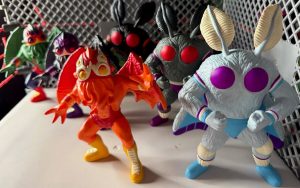
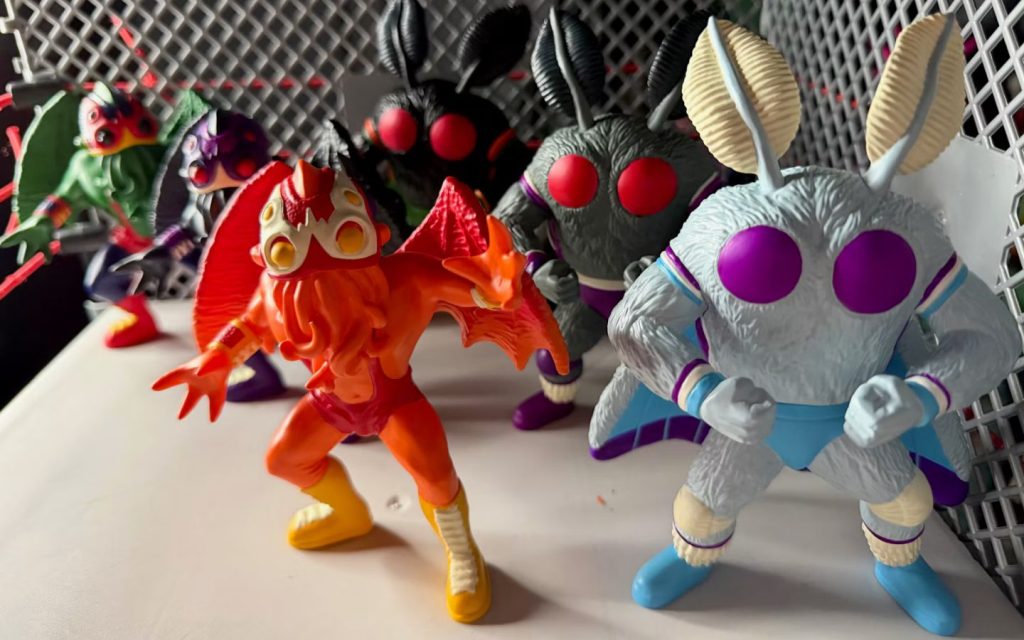
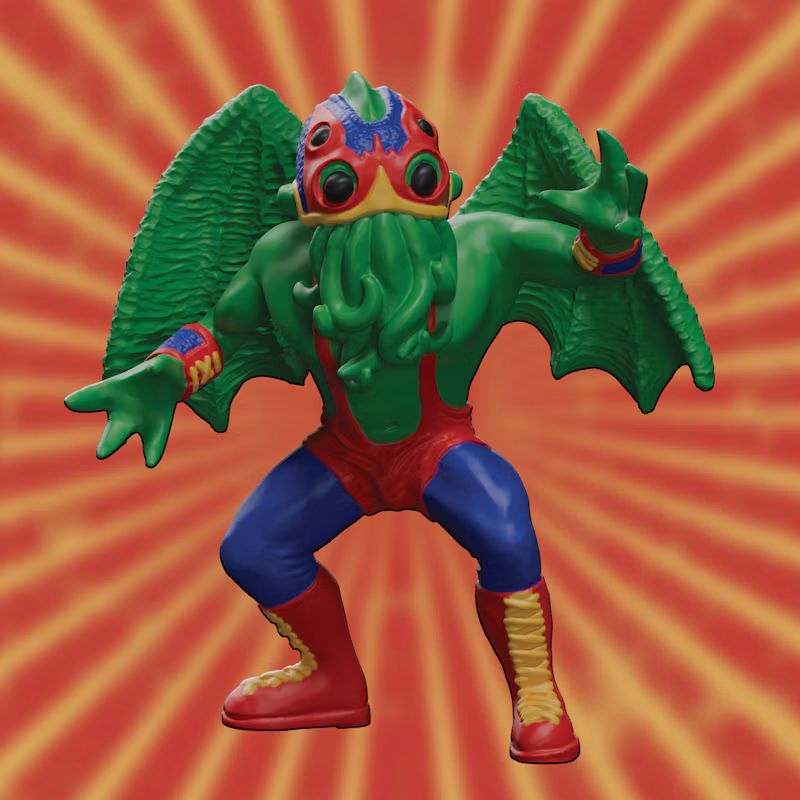
Cthulhu has traded his tentacled throne for a lucha mask, and Mothman has stepped into the ring with Ultimate Warrior aggression. Cryptid Combat is a pair of hand-sculpted sofubi wrestling figures from sculptor Velikan and indie toy company Wandering Planet. Picture 1930s pulp horror crashing into 1980s wrestling and Japanese vinyl kaiju.
For those unfamiliar, Velikan has been sculpting since the early ’90s. He made both figures for himself before anyone offered to produce them. Then, Chris “Doc” Wyatt of Wandering Planet saw them online and stepped in, almost instantly. The figures themselves are now crowdfunding on Backerkit until November 20th, 2026.
I spoke to both of them about luchador Elder Gods, why soft vinyl costs what it does, and who’s next on their insane monster roster.
Key takeaways
- Two figures: Cthulhu as a luchador and Mothman as an Ultimate Warrior–style brawler
- Velikan’s 7-inch Sculpey originals were 3D-scanned down to 5 inches with no detail lost
- Every figure is cast and painted by hand by sofubi craftsmen
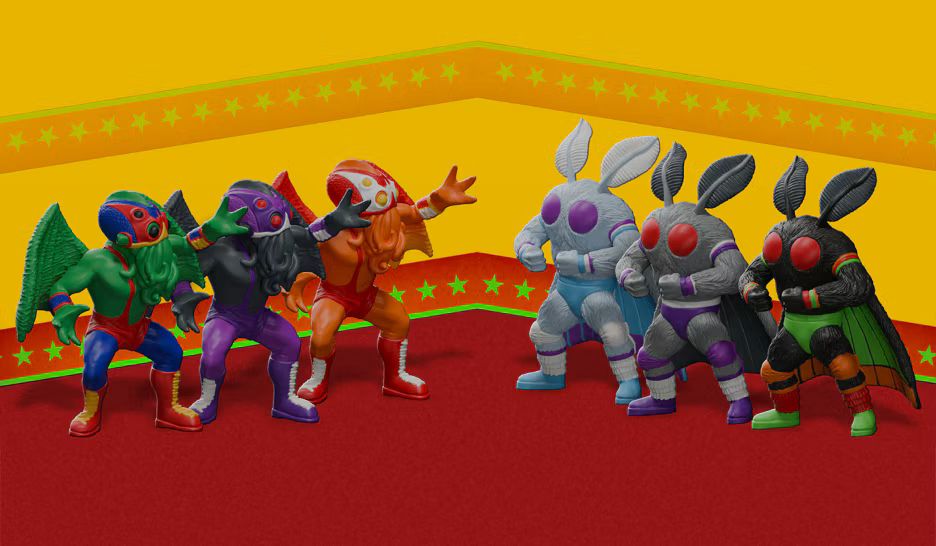
- $49 each or $85 for the pair, in three colourways: The Insanity Smackdown, The Midnight Matchup and Fire Versus Ice
- More fighters are in development, including an Andre the Giant–inspired Shoggoth
How a Cthulhu luchador was born
Every wrestler needs a gimmick. For Velikan, Cthulhu’s started as a bit of wordplay and grew into a full ring persona, helped along by a mask his son wore to a WWE show.
You’ve said you combined your childhood love of WWE with your later interest in Lovecraft and cryptids. Was there a moment when you first realised Cthulhu could be a luchador?
Velikan: I do something Cthulhu a couple times a year for a Kickstarter and I was playing around with some ideas. Cthulabubu, Hulacthulhu (which I did make) and CthuLuchador. It crept in, and over the week I found myself walking around saying “CathuuuuuLUUUUUUUUchador!!!” like an announcer. It just kind of stuck and grew!
How did you decide on each fighter’s wrestling persona? Who were the real wrestlers you had in mind?
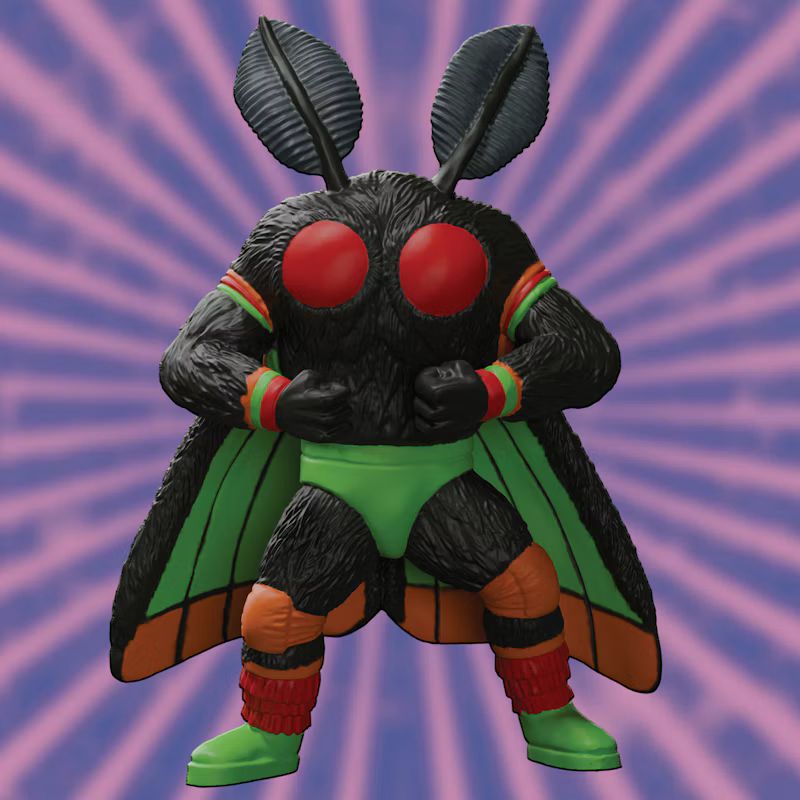
Velikan: My son has been a wrestling fan since he was little. I took him to a WWE match and of course he had his Sin Cara lucha mask. LUCHA LUCHA! So that one was easy. The Mothman was a must. The Ultimate Warrior was the impetus for his name. With his crazy colours and huge chest, he was perfect. People love Mothman.
How Wandering Planet found Velikan’s work
Cryptid Combat wasn’t made to order. Velikan had already sculpted both wrestlers when Doc came across them online and took them to his business partner.
Where did you first see Velikan’s figures, and how quickly did you decide to produce them?
Doc: I saw Velikan’s work online. I brought it to my partner Gavin. How quickly did we decide we wanted to be involved with Velikan? Like, under 2 seconds.
You’ve described Cryptid Combat as 1930s pulp fiction colliding with 1980s wrestling and Japanese vinyl kaiju. Why does that mash-up resonate with collectors right now?
Doc: Does it resonate with collectors? We’ll find out soon! I can’t speak for all collectors, but I’m a collector and I know what resonates with me. Why I loved Velikan’s work so much is because it represents so much that I enjoy and crystallises into one object I can put on my shelf. Pulp fiction? Check. ’80s pop culture? Check. Sofubi culture? Check.
Hand-sculpting the figures in Sculpey
Both originals were sculpted by hand in Sculpey polymer clay. That means a week of baking, sanding and reworking per figure, and a lot of planning for the mould before the clay comes out.
You’ve said the hard resin cast outlasts anything else you’ve tried. What else did you try? And what’s the hardest part of getting these figures right?
Velikan: Oh, I’ve tried it all. It all breaks. Even resin, but it is castable and reproduces even the most minute creases. A sculpt takes about a week if I’m into it. There’s a lot of baking with Sculpey, and a lot of sanding and redoing things that didn’t work. Honestly, the hardest part is making a sculpt that will function correctly in a mould. There’s a lot of thought that goes into the pose and how to part it out.
Velikan spent decades as a graphic designer, but sculpting has been the constant since he picked it up in the early ’90s. Selling the work has always come second. If a piece finds buyers or Kickstarter backers to fund moulds and copies, great. If not, he keeps it. He calls that “win, win” and the secret to happiness.
“You can’t make things to sell, you have to make things you WANT to make. People can tell you made something for yourself.” — Velikan
From 7-inch sculpt to 5-inch sofubi
Velikan’s originals stand seven inches tall, and the production figures are five. Doc 3D-scanned the sculpts to scale them down. The final pieces are then cast and painted by hand by sofubi craftsmen.
What details did you fight hardest to keep through the reduction? Was anything lost or changed?
Velikan: Nothing was lost or changed. Doc 3D-scanned the pieces and they are amazingly accurate reproductions of the larger figures. I was a little worried, but when I saw the scans, I was thrilled. The tech keeps getting better.
What was it like seeing your sculpts interpreted by another set of hands? Were there surprises?
Velikan: None that I see. I do think it’s wonderful that they are reproduced by skilled people instead of plastic injected by robots. I feel they are more artistic. Especially the paint! They are all hand-painted, which blows my mind. EVEN I DON’T PAINT MY STUFF. I find I am too detailed for my patience. I can sculpt all day, but have no time for a brush.
What is sofubi, and why is it so expensive?
Sofubi is Japanese soft vinyl: hollow figures made by pouring liquid vinyl into a mould. It’s the format behind classic kaiju toys and much of today’s designer-toy scene. Doc explains why it suits small makers, and why it’s so hard to price fairly at indie scale.
Why sofubi? What does soft vinyl offer that other formats don’t, and what challenges come with producing it as an independent company?
Doc: Vinyl offers a lot. It’s lightweight, very malleable, not very breakable, and has a lower boiling point, so it can be used in silicone moulds instead of metal moulds, cutting the costs of production.
The challenge with producing independently is a question of scale. Indie artists can hand-produce by pulling one figure at a time out of moulds in their workshops, but that is really labour-intensive and results in really small runs with really high prices. $150 or $200 for a 6-inch toy. That’s inaccessible to many collectors. On the other hand, big companies can pour plastic all day in massive factories, but there are large minimum order quantities for those.
They have to make THOUSANDS of Stormtroopers, or whatever they’re making in the run, to make the runs work. But for a company like us, we have the challenge of making enough pieces to be able to lower the costs, but we can never handle the volume of a big company like Hasbro or Mattel. It’s a balancing act.
Pricing and why Cryptid Combat is crowdfunded
At $49 a figure, Cryptid Combat comes in well under the $150–$200 that Doc says hand-pulled indie sofubi often costs. The production run is what makes that possible.
The figures are $49 each or $85 for a pair. How did you arrive at that pricing, and what are backers getting for that in terms of craftsmanship?
Doc: Pricing is more or less just a math problem involving the costs from the factory divided by the projected number of units. There’s only so much you can do to make it work. In terms of the craftsmanship, it’s masterful. Velikan is a damn good sculptor, and our factory partners are insanely good at their jobs.
Rather than pitching to retailers, Wandering Planet is taking the figures straight to collectors through Backerkit. For Doc, that’s not a side detail. It’s the whole model. “It makes everything possible,” he says. “These are for collectors. Crowdfunding allows us to be direct-to-consumer.”
The colourways and fairground poster art
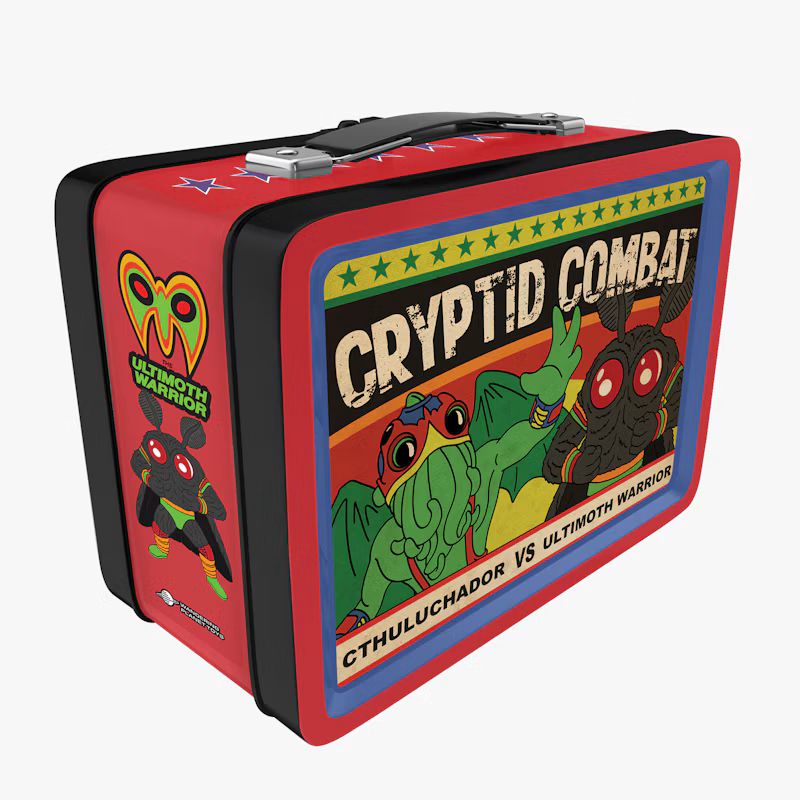
Velikan also made the header card art, the lunchbox artwork and the campaign poster. All of it is styled like a weathered fairground bill. The figures come in three colourways: The Insanity Smackdown, The Midnight Matchup and Fire Versus Ice.
How did you approach the 2D artwork differently from the sculpts, and what retro packaging inspired it?
Velikan: I made a poster for my wrestlers and the Kickstarter page. It looks like an old gaudy poster you’d see on a tentpole. I wanted the graphics to look like something you’d see at a fairground: bright, eye-catching and a little tattered and weathered.
Which colourway is your personal favourite, and why?
Velikan: Mine is of course The Insanity Smackdown. It’s my baby and how I pictured them in my head when I sculpted them. I dearly hoped someone would paint them and send me pics. Now Doc has made my dream come true. They are gloriously amazing! Although… Fire Cthulhu is so cool. I love those wings!
Who wins, and who’s next in the ring?
No wrestling interview is complete without a prediction. And Velikan already has a whole roster of Elder Gods waiting in the locker room.
Mothman versus Cthulhu: who actually wins this match?
Velikan: I think Cthulhu has him beat with his eldritch powers, but who knows what Mothman has up his sleeve?
Doc: I mean, don’t count Mothman out. Someone who sees disasters coming can know how to avoid them! He’ll see Cthulhu’s moves before he makes them! And he’ll always know when Cthulhu is holding chapstick.
If Cryptid Combat takes off, who’s next in the ring?
Velikan: I am working on that now. I had planned a line of these so that you could mix and match them up for more bouts! I am working on ideas like the Iron Sheik as Nyarlathotep, Andre the Giant Shoggoth, etc. Nothing firm yet. We’ve been concentrating on this.
Doc: I’m all about Yog-Sothoth.
Back Cryptid Combat: Cthulhu and Mothman are $49 each or $85 for the pair on Backerkit until November 20th, 2026.