Previously on Hell of a Job
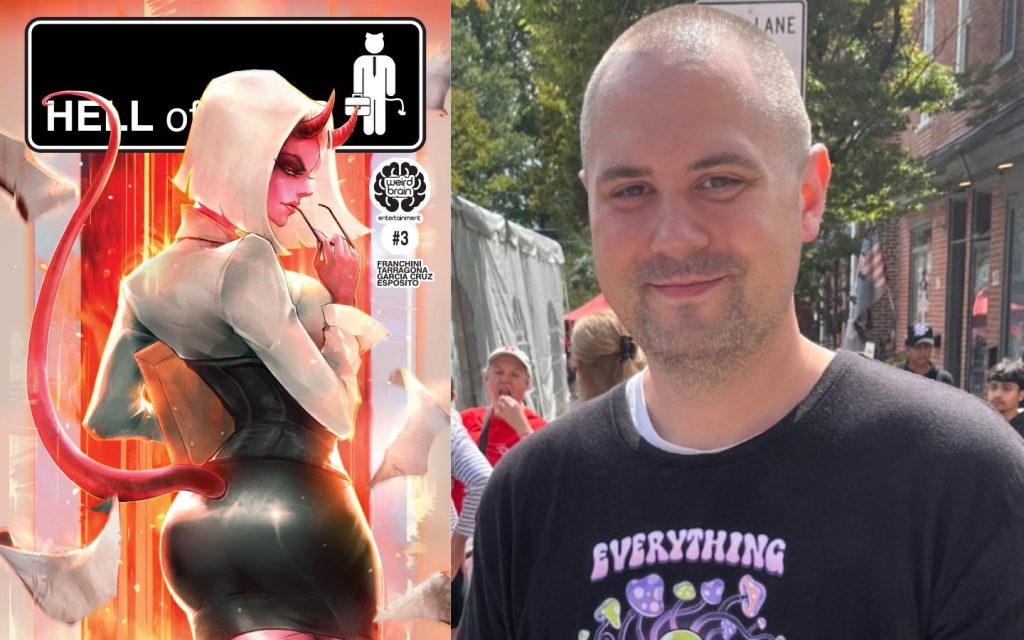
Dave Franchini has built Weird Brain Entertainment the way most people build a side hustle that quietly takes over their life — one self-written, self-edited, self-shipped comic at a time. Hell of a Job follows Stevie, a saleswoman who discovers her demonic bosses are, in fact, demons, chasing impossible quotas through an afterlife run like the world’s worst org chart.
Three issues in, the corporate-satire-meets-literal-damnation premise has done exactly what Franchini hoped: people hear the elevator pitch at a convention table and their face does something involuntary, because everyone’s had a job that felt like hell. Franchini just decided to take that feeling to the next level.
The Kickstarter bundles all three Hell of a Job issues and has already cleared 165% funding. By his own count, Franchini has close to two hundred comics written — rotating between Hell of a Job, Frosted Up, Anti-Christine and the Four Unicorns of the Apocalypse, and Sven the Groundhog – all part of his shared Pennsylvania universe. I spoke with him about writing evil middle-management villains, mining his own sales-job trauma and what it really takes to build something meant to outlast him.
An Interview with Dave Franchini about Hell of a Job
You’re now three issues into Hell of a Job. Has the story gone where you originally planned, or has it surprised you along the way?
Dave Franchini: For the story itself it has been following the outline I mapped out way before I wrote the first issue, but those are mostly story beats. Each issue kind of evolves the characters around these crazy situations I build for them to take us along the path. Mostly I tried to go into each section of hell step-by-step with Stevie so I could create the creatures and look as I wrote the scripts.
But overall we are hurtling down the path I have planned for our characters for the most part, though Bethany and Jude’s story might adjust a tad for these next two issues.
This campaign bundles all three issues together for new readers. Looking back at Issue #1 now, is there anything you wish you’d done differently knowing where the story was headed?
Dave Franchini: That’s a tough one because I think most writers or even artists never feel like their previous work is finished and can be tweaked. So definitely when I reread the issues before writing the next one I see things and opportunities I missed originally, but mostly because as I dive into each script I’m a different person than the one who wrote the previous one. So for small interactions and dialogue here and there, definitely, but for the larger story we are following along my plan for this one so I don’t regret anything yet, though I’m about to jump into issue #5’s script which will end this first arc so we will see how that goes haha.
This campaign is already funded at 137%. What do you think it is about Hell of a Job specifically that resonates with people — is it the horror, the workplace satire, or something else entirely?
Dave Franchini: Just from the responses I get from people at conventions and at comic book stores, when I talk to them the biggest thing for this series is that it’s relatable. Once I tell the premise/elevator pitch I see smirks and smiles go across people’s faces and I can see it somehow unlocks some thought or memory in them. We’ve all had jobs or maybe just a day at the job that we thought this place is hell, and to see the story unravel and make fun of the corporate structure I think (and hope) it just clicks with people and they can relate to it and laugh at the insanity of it all.
RELATED: An Interview with ‘Super Mondo Mega Mutts’ Writer: Curt Pires
Hell as a corporate structure is a great concept — but how do you actually visualize that on the page? What does the demonic org chart look like, and how deep does the ladder go?
Dave Franchini: That’s the fun part, there’s tons of material to mine for this series, but equally the hard part is figuring out which to focus on throughout the story. I would love to dive through every department and hopefully as time goes on I can breakdown some of those but for now this first arc of 5 issues will just give us mostly a small taste of these departments, but I see it like the corporate structure itself, a deep dark hole of misery with no real end.
There’s always going to be something that comes and shakes things up. This story mostly just gives us the broad picture and I hope I can tell more stories where we get more depth of these hellish departments.
Stevie is in sales, chasing impossible targets — and you spent time in sales yourself at Zenescope. How much of her day-to-day misery is drawn from personal experience?
Dave Franchini: [laughs] Anyone who has been in sales, I think, understands the pain of cold-calls or unreachable goals that may be set before you. With this story none of my actual experiences show up in it, but I definitely used my memory of sales and other previously tedious jobs I wasn’t fully meant to spend my life doing, to help give Stevie her personality and view towards some of these situations.
RELATED: THE O.Z. is back on Kickstarter, and it’s bringing the war Home to Oz one last time
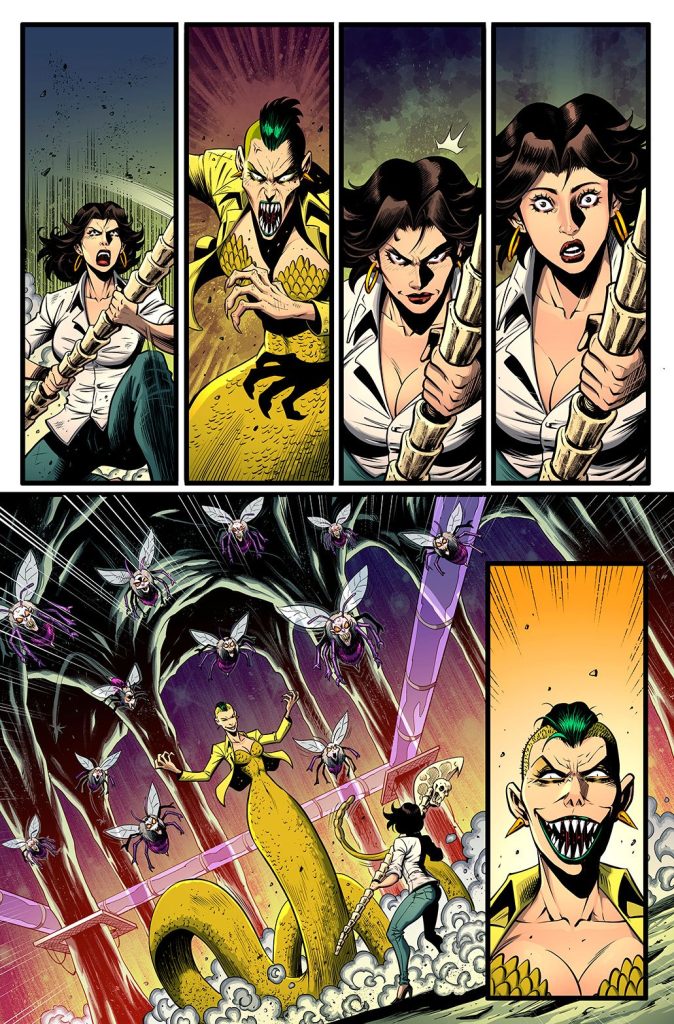
The demons in Hell of a Job aren’t just monsters — they’re management. How do you write villains who feel genuinely threatening but also absurdly bureaucratic at the same time?
Dave Franchini: It’s a mixture of real life experiences and movies and tv. I like to absorb as much as I can from life and different forms of entertainment and kind of blend them up and dump them on the page. But if you read this series you realize some of these characters, especially the ones in management are amped to be very strange and horrible, though they definitely have a small basis of my experiences in there.
Stevie is facing literal eternal damnation, which could go very dark very fast. How do you maintain the dark comedy tone without letting the stakes swallow the fun?
Dave Franchini: I think maybe just the absurdity of the characters and the story keeps it light, while the dark idea and story hides under all the fun and craziness on the page. But really, it’s meant to be a fun and playful story with dark humor so I just try and make sure to keep on that path and not try and deliver this depressing too-close-to-home reality for some people. Hopefully that’s been working so far.
By issue #3, Stevie has been through a lot. How has she changed — and has she been tempted at all by the power that demonic corporate life could offer her?
Dave Franchini: I don’t think she has really been tempted yet by what hell offers her. She is just peeling back the layers right now and I think she is reacting as a normal person would who just found out that their bosses are literal demons and they’d rather not be stuck being tortured or turned into a monster for eternity. But that doesn’t mean there won’t be actual temptations as the story progresses.
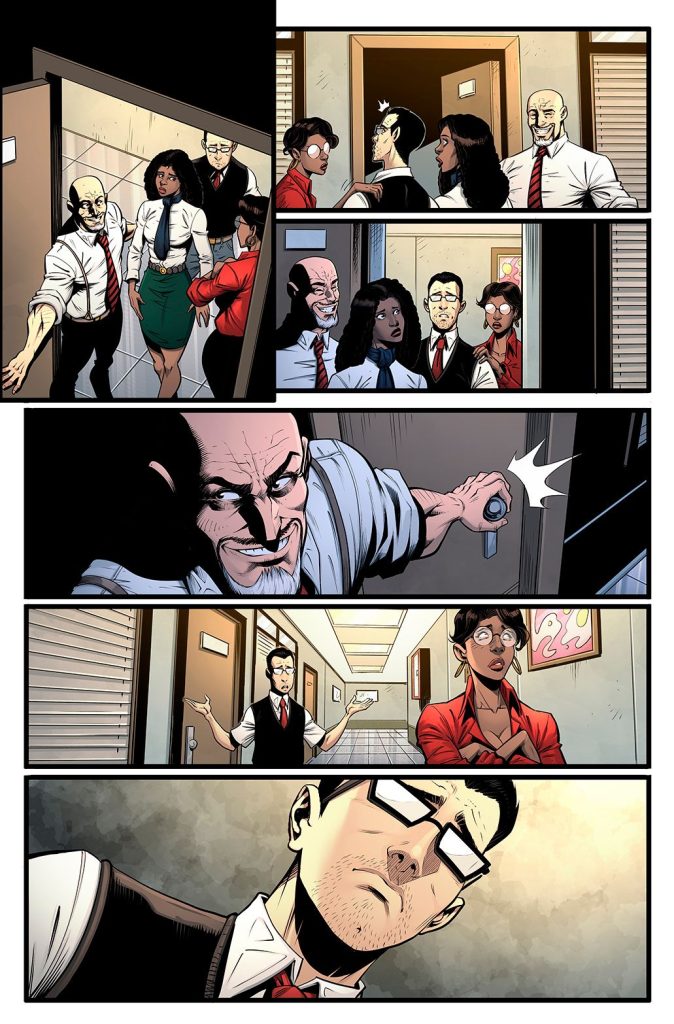
Stevie has friends and office enemies along for this ride. How important is that ensemble to the story, and does anyone in her circle surprise her — or betray her — as things escalate?
Dave Franchini: I can’t reveal too much as you’ll need to read the story to find out some of these answers. But as far as the importance of the ensemble to the story, I’d say very. Just like the co-workers at your workplace, they add to your entire work experience, whether good or bad and are just as important to how your job affects you as the work itself. Plus an office comedy without crazy co-workers just would feel empty and would be a missed opportunity to have fun.
You’ve described the feeling of handing a script to an artist and then holding your finished comic a month later as an instant gratification unlike anything else. Does that feeling hold up by the third issue of a series, or does it change as you get deeper into a story?
Dave Franchini: Yeah, that feeling, even after close to 200 comics written, hasn’t gone away and I hope it never does. Each time I get a new issue printed and I spend a day flipping through it and enjoying it, haha then I have to put it down and move on. A bit of mixed feeling where you get to enjoy getting your book in, but then you have to go make the next one.
How far ahead have you written Hell of a Job? Do you know exactly how Stevie’s story ends, or are you discovering it as you go?
Dave Franchini: With doing independent comics, especially writing all of my own, being far ahead is a dream I’ll
probably never fully accomplish. Each story needs the care and patience to get them right, but also I can’t get too far ahead with getting them drawn or I can’t afford food. I write all 4 series that I release currently with a few others in various stages, so once I finish an issue of Hell of a Job, then I move onto an issue of Frosted Up, then Anti-Christine and then Sven the Groundhog. And I repeat that cycle over and over. Plus I have been doing some freelance writing for other publishers that will be announced and coming out soon.
But right now, for Hell of a Job, issue #4 is about 8 pages away from being completed in art and issue #5 I have
outlined and will start writing in the next 2 weeks after I finish a few other scripts I have on the list. As far as knowing where Stevie’s story goes, I do know that. I know how this 5 issue arc ends and I know what happens next, at least the beginning of it but still far out on how we get to the very end of her story.
You’ve now run three consecutive Kickstarters for this series. What has your backer community told you — through pledges, comments, or feedback — about what they love most about Hell of a Job?
Dave Franchini: Some people have reached out and told me they like the story and can’t wait for the next issues, which is an awesome thing to hear and a great feeling. I’m glad people have been liking this book and the others. Really means a lot that isn’t really easy to explain, but I’m thankful for all the responses and support.
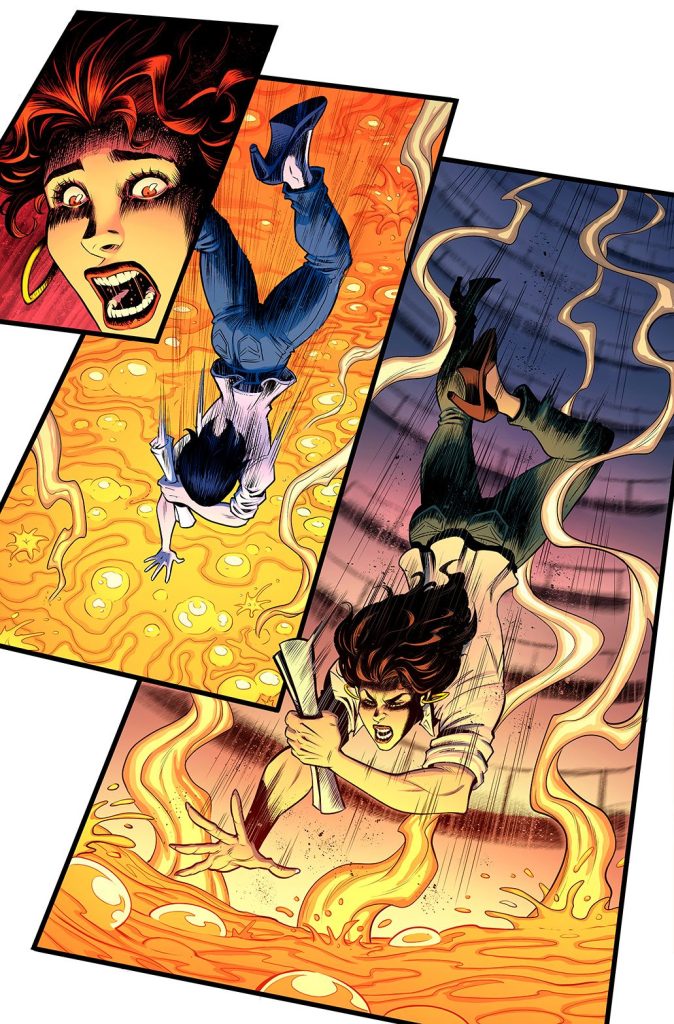
Each campaign has grown. What’s the one thing you do differently now on a Kickstarter launch compared to when issue #1 went live?
Dave Franchini: Besides figuring out how much time it takes me to set everything up for the kickstarter and after
I don’t do a lot of different things, at least not as much as I like. There just isn’t a lot of time to do extras as I write, edit, sell, market and ship all the books myself. Each campaign I have been trying to figure out different items to try out and see what the fans like. And I keep trying to grow and expand the cover artist talent pool each issue if I can. Hopefully as I grow I can figure some more out. It’s a learning experience.
Hell of a Job, Sven, Anti-Christine, and your other titles are all building toward a shared Pennsylvania universe. Does hell have a role to play in that bigger picture, or does it stay contained to Stevie’s story?
Dave Franchini: For right now each series is staying contained to the stories they tell. But as the issues come out I am slowly tying them all together. Some are just small easter eggs in the background or in dialogue, others like what happens in Anti-Christine and the Four Unicorns of the Apocalypse #3 has larger ties. But in the end they are all stories happening around the same time in different parts of PA. Sven the Groundhog is the earliest in the timeline of events though, at least so far.
You’ve said you want Weird Brain Entertainment to be a legacy — something that exists after you’re gone. A year in, does the work feel like it’s becoming that?
Dave Franchini: [laughs] I’d say I’d have to put a lot more work and time in than a year to achieve that. It’s still the goal to create characters and stories that last longer than me, but right now I’ll be happy to keep getting the next issue out. I just want to make comics so I’ll be happy to just make one book at a time.
Where can my readers find you online?
Dave Franchini: You can find me on Instagram, X, Facebook, Substack and on my Website.
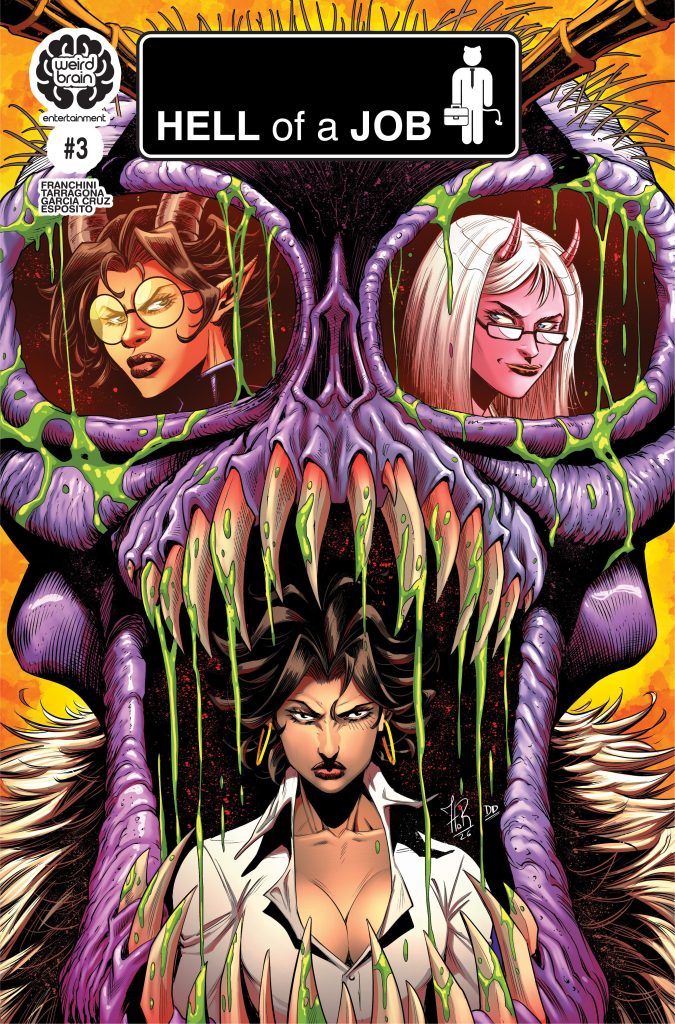
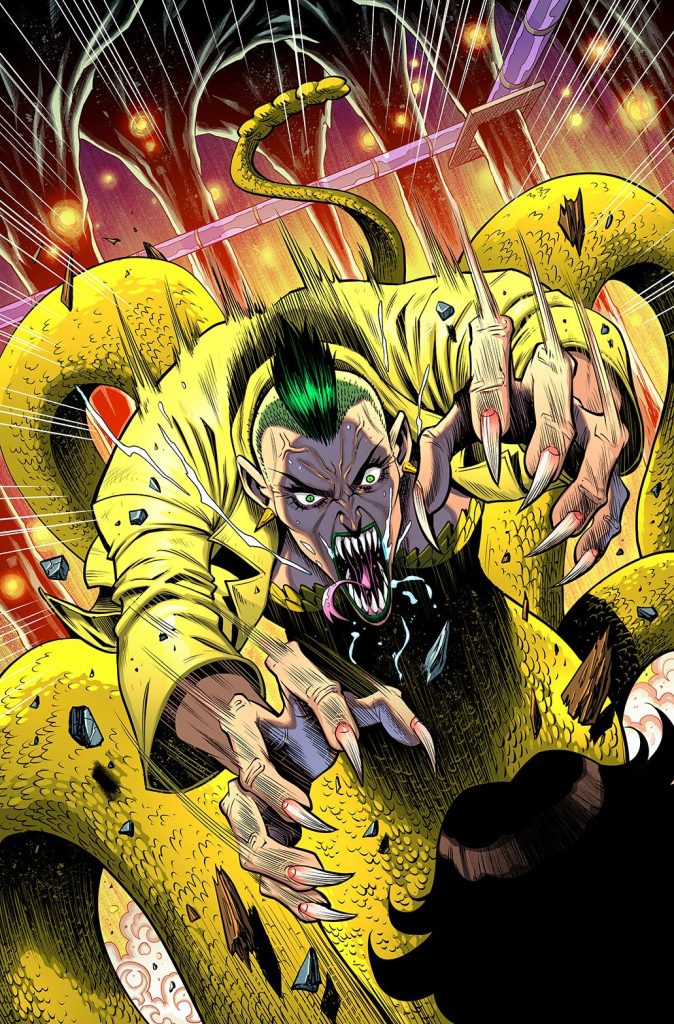
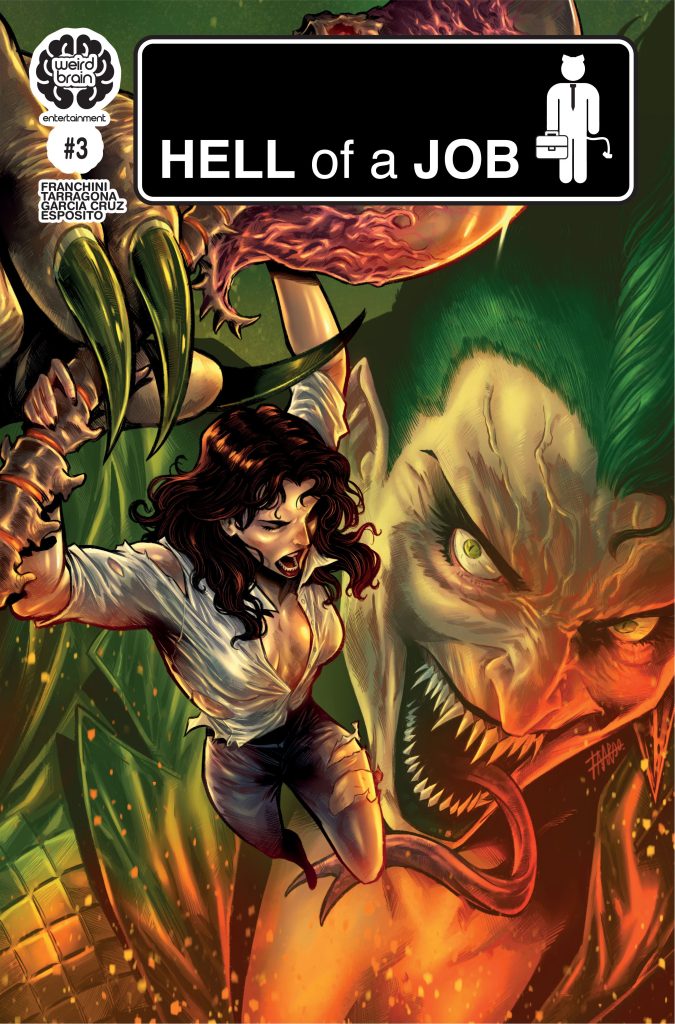
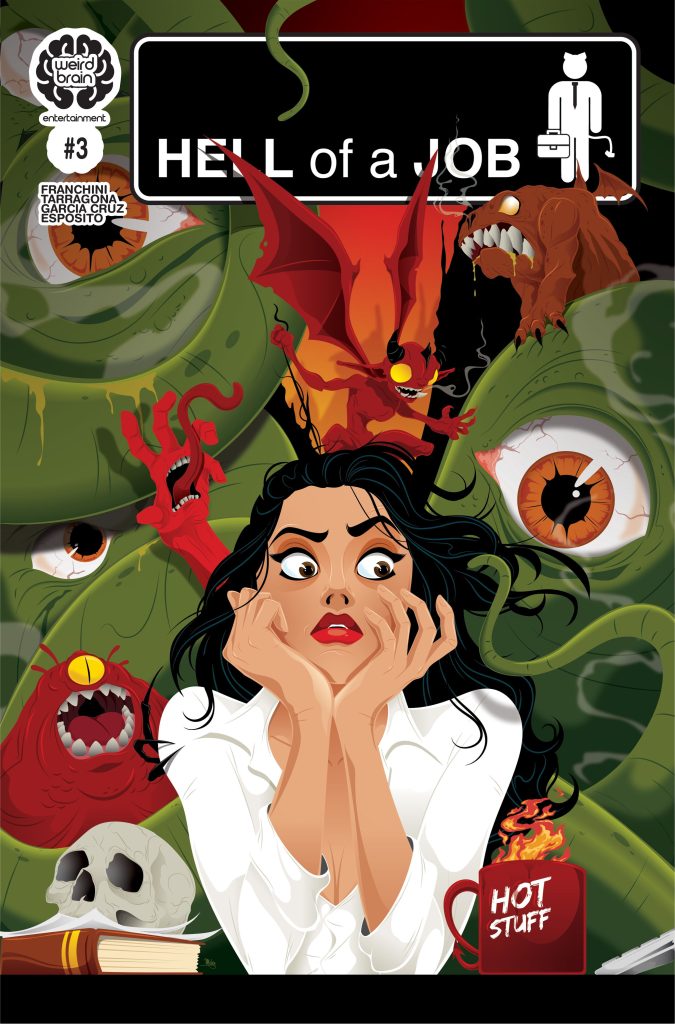
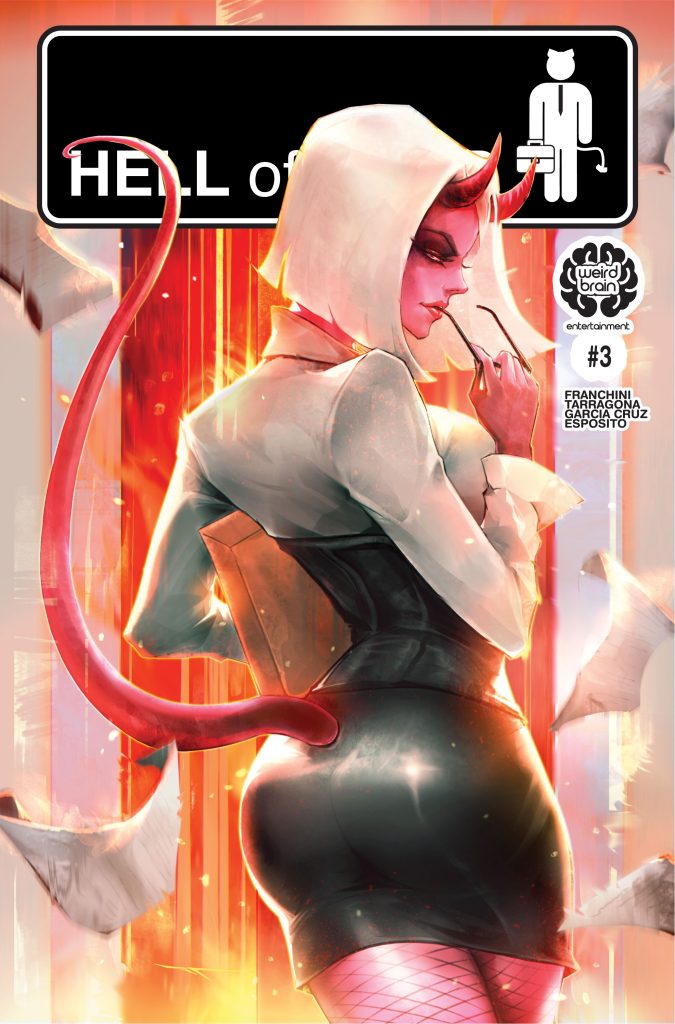
Hell of a Job #3 Variant Covers
Will you be picking up a copy of Hell of a Job?
Did this Dave Franchini interview convince you to pick up an issue of Hell of a Job? What’s your favourite comic book series with a strong female lead?
Let me know in the comments.
More in Comics, Interviews, Kickstarter