
Body Horror Comics
What is it about a story that truly gets under your skin? Is it the monster hiding in the dark, or is it the horrifying thought that the monster might just be… us?
That’s the question at the heart of body horror, a subgenre that specializes in the graphic, surreal, and always uncomfortable transformation of the human form. This is a special kind of art. It’s designed to make you squirm in your seat, to make you question the very stability of your own flesh.
Today, we’re peeling back the skin on this deeply unsettling corner of fiction and counting down 25 of the most stomach-churning body horror comics ever made, from Western comics to manga. These are stories that don’t just show you monsters; they show you the process of becoming one. From parasitic takeovers to the slow, creeping dread of a cursed town, these comics will make your own body feel like a stranger.
So, maybe take a deep breath. We’re diving in.
25. Toxic Crusaders
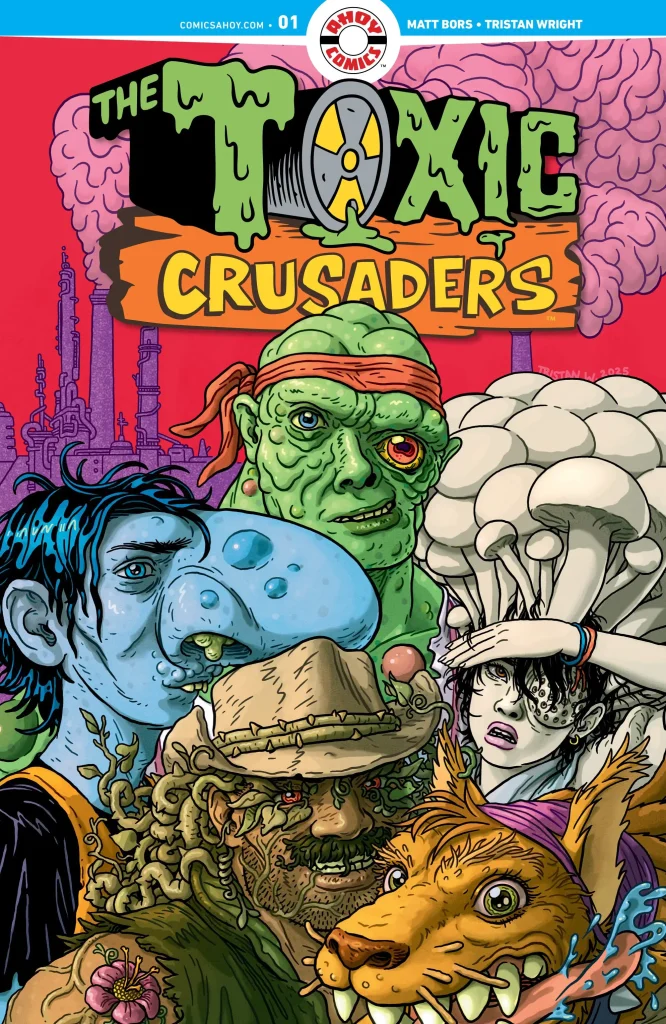
Toxic Crusaders is back — and it’s nastier, gooier, and more gloriously grotesque than ever. AHOY Comics resurrects the cult classic with a radioactive middle finger aimed straight at corporate greed and ecological collapse. Writer Matt Bors and artist Tristan Wright crack open a barrel of nostalgic sludge and pour out a five-issue mutant brawl, following Toxie and his ragtag gang of ooze-powered freaks — No-Zone, Junkyard, Major Disaster, and newcomer Fungirl — as they battle an alien conspiracy leaking out from the same green gunk that mutated them. This isn’t your sanitized Saturday morning cartoon. This is Troma-core turned technicolor terror.
The body horror here doesn’t just splash — it slimes. From No-Zone’s gargantuan, weaponized nostrils to Junkyard’s mangy man-dog muscle, every panel is a love letter to anatomical anarchy. Fungirl, the series’ newest sludge-born warrior, steals scenes with her fungal flesh and unapologetic weirdness. And the villains? They’re walking war crimes of toxic design — melted, morphed, and chemically pissed-off. Wright’s artwork leans fully into the monstrous: bulging eyes, oozing limbs, and transformations that feel like Rick and Morty met The Thing at a waste dump barbeque.
But Toxic Crusaders isn’t just a nostalgia-fueled gore-fest — it’s a satirical smackdown. Bors uses the mutant mayhem to take jabs at environmental negligence, corporate corruption, and late-stage capitalism’s love affair with pollution. It’s heavy-handed in the best possible way, because if there’s one thing this comic understands, it’s that subtlety doesn’t survive a dip in toxic sludge. Equal parts horror, comedy, and punk-rock pulp, Toxic Crusaders is back to remind us that sometimes the only way to fight evil… is with a mop and a face full of radioactive rage.
24. I Breathed a Body
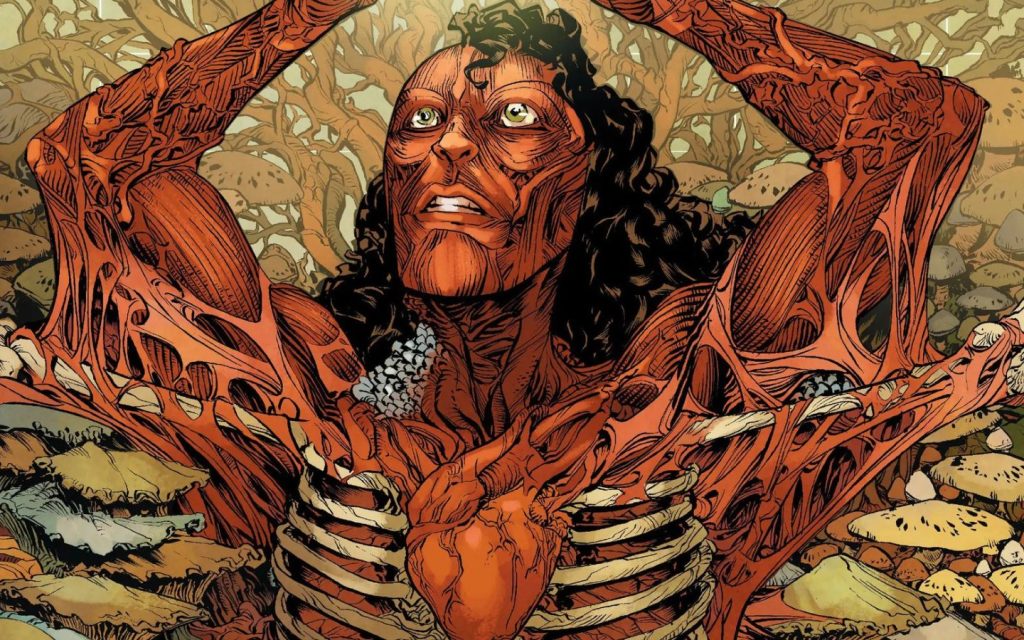
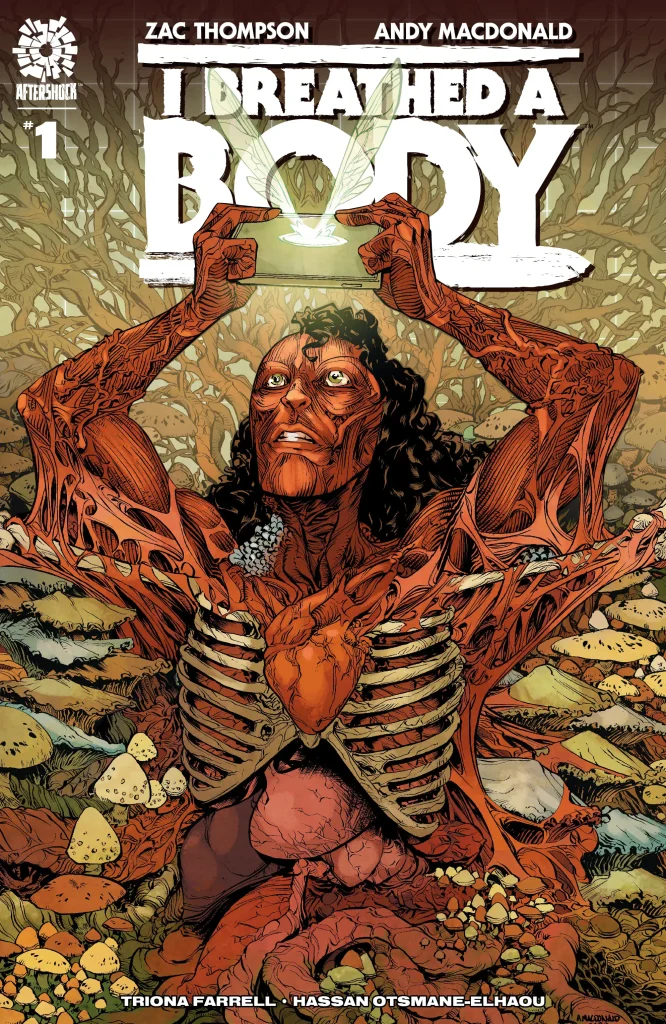
I Breathed a Body is what happens when tech worship, influencer culture, and rotting cosmic fungi have a baby—and it bursts out of the womb already trending. Written by Zac Thompson (The Dregs, Lonely Receiver) with body-melting visuals by Andy MacDonald, this AfterShock horror series isn’t just unsettling — it’s wet, fleshy, and high on philosophical dread. Think Black Mirror mainlining Cronenberg on a fungal bender, then puking up a livestream. Set in a dystopian future where social clout is gospel and biotech billionaires treat human lives like source code, the comic centers around Anne Stewart, a PR fixer for a tech company that’s one live-disembowelment away from godhood.
From the moment influencer golden boy Mylo Holman slices open his guts on camera in the first issue — and turns it into viral gold — you know this ain’t your average horror book. His death isn’t the end, it’s content. As Anne spirals deeper into the madness of MyCopia, she’s surrounded by sickening imagery: grotesque flesh-farms, bio-organic servers pulsing with muscle and mucus, and human corpses jacked into fungal mainframes like they’re Dropbox accounts. Data becomes decay. The internet has literally become a living, breathing organism—and it’s hungry. The body horror here doesn’t just shock — it critiques. It’s not about what’s real. It’s about what can be monetised.
What makes I Breathed a Body more than just a gore-fest is how brutally it skewers our addiction to virality, attention, and trauma-as-spectacle. It asks: what’s the difference between a cult and a fandom? Between a body and a brand? Thompson delivers a fungal apocalypse stitched together with dread, grief, and grotesque beauty. If you like your horror introspective, dripping, and uncomfortably close to reality — this is the comic that crawls under your skin and makes a home there. Consider this your formal invitation to breathe in — and rot.
23. Viscere #1: Body Horror
Viscere #1 is a blood-slicked, nerve-splitting love letter to the perverse poetry of body horror. Spearheaded by editor Katie Skelly and dropped like a meaty slap to the face by indie imprint Strega Sporca, this 128-page comic anthology doesn’t just dabble in the grotesque — it bathes in it. Think of it as the arthouse lovechild of Junji Ito, Eurotrash cinema, and a heavy dose of feminist rage. Eight underground visionaries — including Tia Roxae, Corinne Halbert, and Alejandra Gutiérrez — tear open the flesh to explore what’s festering beneath, all wrapped in a dripping visual aesthetic that’s equal parts hypnotic and horrifying.
Every entry in Viscere feels like a hallucinogenic descent into a haunted ribcage. Gutiérrez’s “Teratoma” channels medical nightmares into living, thinking tumors that demand agency. Brailsford’s “Body. Double.” strips identity bare as it mirrors self and other in a skin-crawling doppelgänger face-off. And Halbert’s “Total Vore”? Imagine being devoured from the inside out — emotionally, sexually, existentially—and loving every second of it. These aren’t just horror stories; they’re fleshy confessionals oozing catharsis and queasy beauty. Like staring at your own reflection long enough to see it rot.
What really sells Viscere is how fearless it is. These stories don’t shy away from the messiness of bodies—they exalt it. Mucus, pus, teeth, split skin, strange growths — it’s all here, rendered in art styles that jump from psychedelic fever dreams to stark, surgical inkwork. If you’re the kind of sicko who thinks horror should punch you in the guts and then whisper secrets through your exposed spine, Viscere #1 was made for you. This isn’t just a comic book — it’s a biological rebellion. File it under “must-read while slowly melting into the couch.”
22. Come Into Me
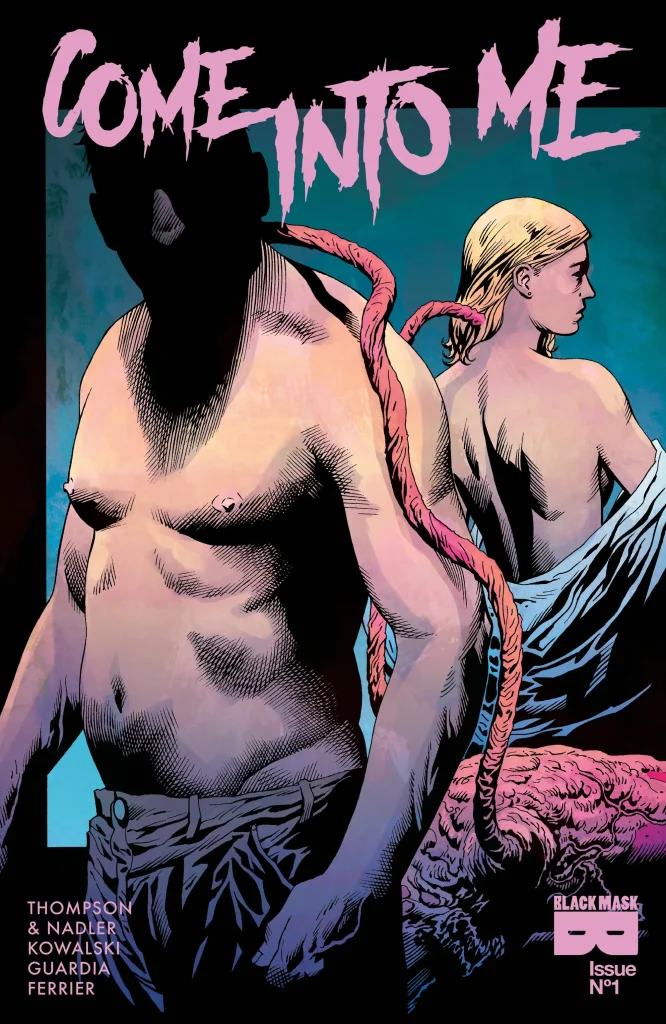
Come Into Me is a wet, squirming tech-horror fable about what happens when the boundary between me and you ceases to exist — literally. Penned by Zac Thompson and Lonnie Nadler, and brought to visceral, nerve-twitching life by Piotr Kowalski’s art and Niko Guardia’s flesh-toned nightmares, this four-issue series from Black Mask Studios doesn’t just tap into body horror — it plunges elbow-deep into your guts and makes a nest. The story circles around Dr. Sebastian Quinn, a visionary tech bro with godlike aspirations, and Becky, a desperate woman looking to escape her life. Their fates collide through InBeing — a biotech procedure that allows two minds to inhabit a single body. But instead of enlightenment, they find mutual psychological mutilation.
The horror here isn’t subtle — it’s steaming, throbbing, and grotesquely intimate. As Quinn and Becky begin to share flesh and thought, things unravel into scenes that could make Cronenberg blush. Picture your worst social anxiety, now with the added bonus of hearing someone else’s trauma in your head… while they control your limbs. One standout moment involves a full-blown identity collapse, where Becky’s mind takes control and Quinn’s body becomes a twitching meat puppet, unable to scream as someone else lives his life. Later, the horror becomes visual and internal — melting faces, hallucinatory organ swaps, and one unforgettable moment where a character peels back skin like data corruption in meatspace.
At its oozy core, Come Into Me is a meditation on intimacy, control, and the human need to be understood — wrapped in a skin suit of biotech gone wrong. It interrogates how far we’d go to connect with someone else, and what happens when that connection turns parasitic. The art is deliberately uncomfortable: smeared with sweat, bile, and raw vulnerability. If Videodrome was a tech startup pitch and The Fly had a Tinder profile, Come Into Me would be the biological backlash swiping right on you. This isn’t just a comic — it’s cohabitation horror. And once you let it in, it doesn’t leave.
21. Vivisectionary
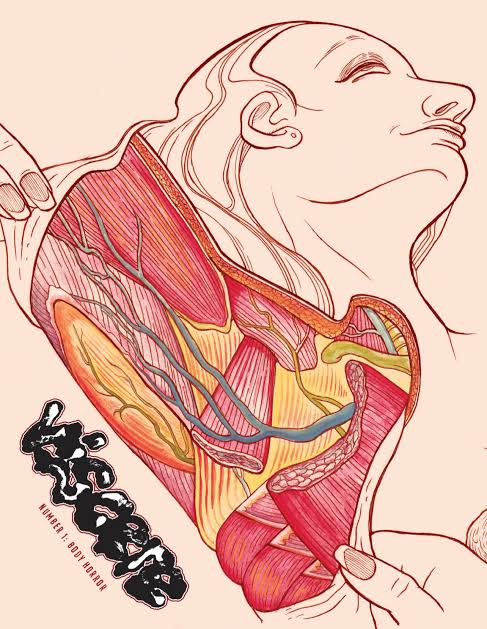
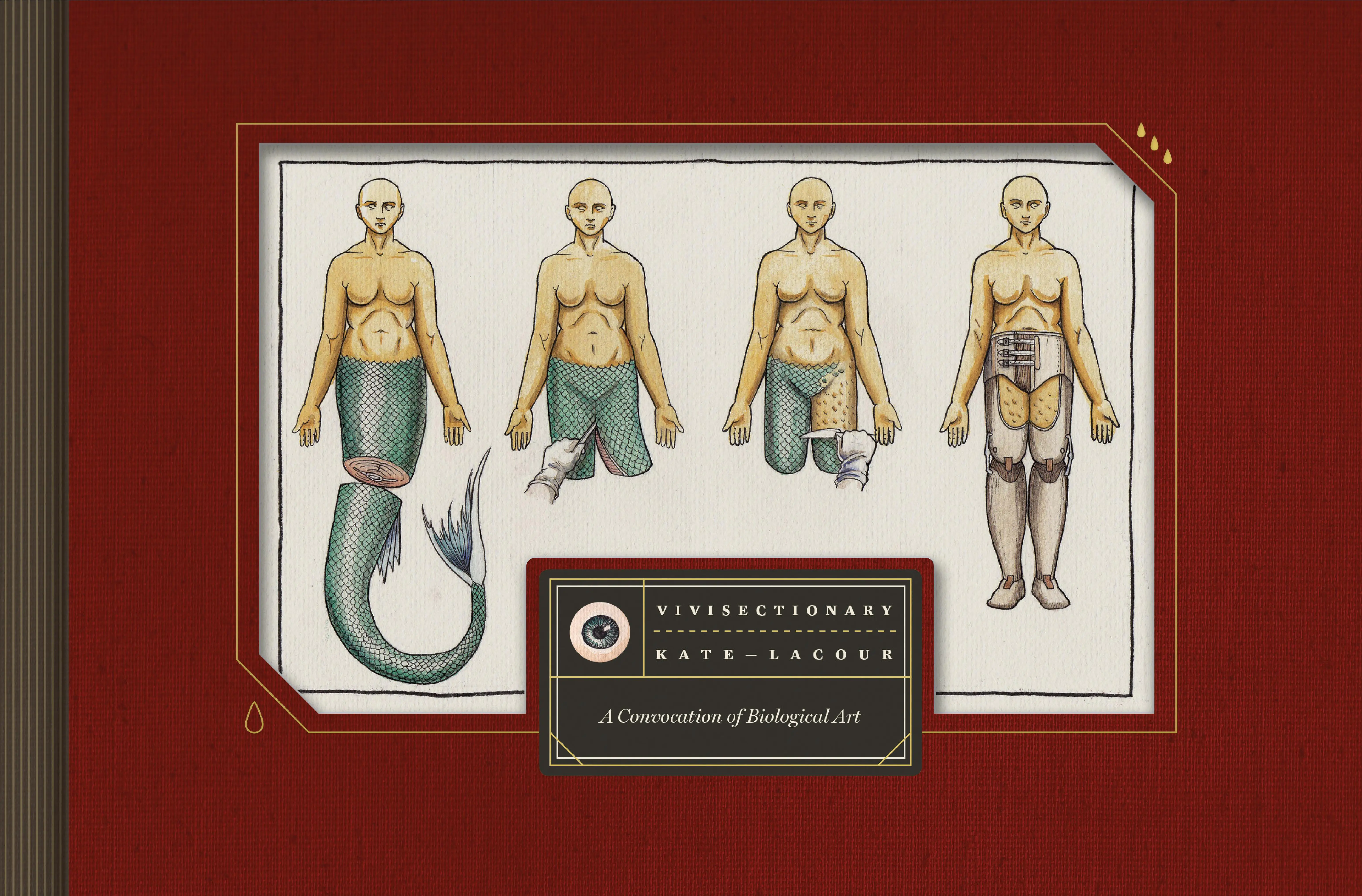
Vivisectionary is what happens when a medical textbook drops acid, falls into a baptismal font, and crawls out reeking of sex, science, and sacrilege. Created by Kate Lacour — artist, art therapist, and anatomical heretic —this 144-page visual collection is less a comic and more an illustrated grimoire of body horror. Published by Fantagraphics, it’s a dense parade of full-page illustrations that mimic scientific diagrams — if those diagrams were drafted by a mad priest dissecting saints and sinners in equal measure. There’s no plot, no characters, no dialogue — just the raw poetry of the body reimagined, exploded, and sanctified through beautifully grotesque art.
Inside, the human form is transformed beyond recognition: intestines blossom into orchids, brains unravel into balls of yarn, and hummingbirds nest inside hollowed-out torsos like chirping parasites. One scene renders pigs bred into massive, living cubes of flesh — eyeless, silent, and farmed like meat monoliths. Another sees a woman’s body breaking open into a sequence of larvae and cocoons, metamorphosis as martyrdom. There’s a spine filled with methamphetamine capsules, teeth erupting from internal organs, and holy figures with intestines wrapped like halos. Lacour’s art leans on meticulous linework and religious iconography, making every panel feel like a divine autopsy.
Vivisectionary isn’t horror for the faint of gut — it’s an ecclesiastical dissection of biology, gender, and control. Each page operates like a riddle, daring you to find beauty in deformity, ecstasy in anatomy, and salvation in secretion. There’s no narrative, but there is rhythm—a fever dream cadence of images that build into a spiritual, squishy enlightenment. This book doesn’t scream at you — it whispers secrets from the meat. If David Cronenberg designed stained glass windows, they’d probably look like this. Strap in, strip down, and prepare to have your sense of self vivisected — this is body horror that transcends flesh and tiptoes into the divine.
20. The Low, Low Woods
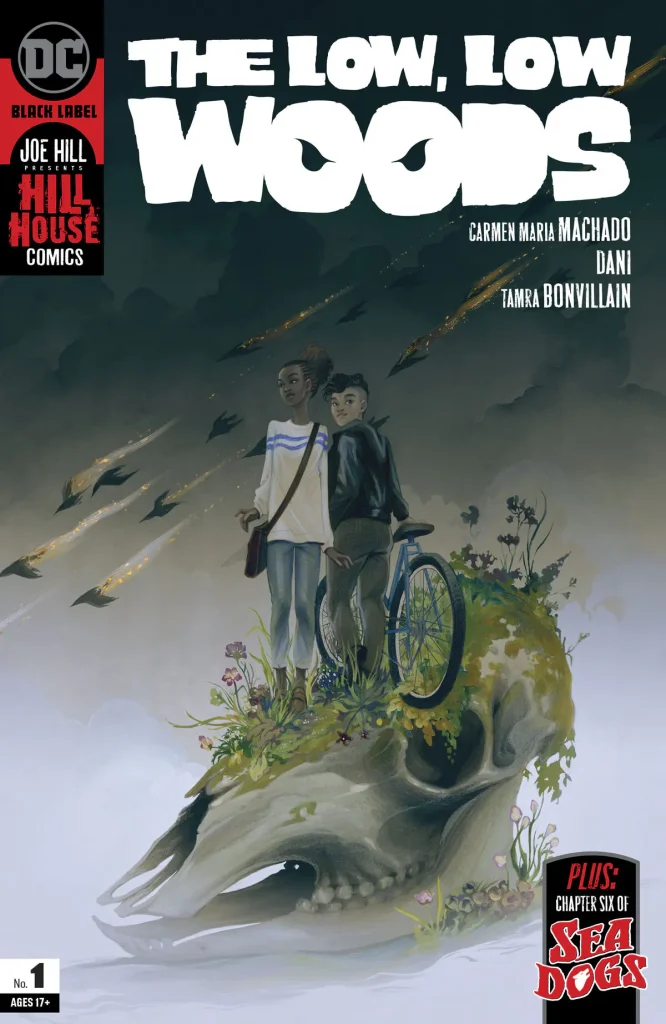
The Low, Low Woods is where Appalachian folk horror slinks into feminist body horror, wearing the skin of magical realism like a tattered prom dress. Written by Carmen Maria Machado (author of Her Body and Other Parties), with haunting visuals by Dani and Tamra Bonvillain, this Hill House Comics release dives into the scorched guts of Shudder-to-Think, Pennsylvania — a mining town eternally on fire, both literally and metaphorically. When best friends El and Vee wake up mid-movie with no memory of how they got there, it sets off a chain reaction of nightmare logic, buried trauma, and skinless men lumbering out of the woods like meat sculptures on a pilgrimage.
This isn’t just about coal fires and creepy woods — it’s about bodies, autonomy, and what happens when you’re told to forget the worst thing that’s ever happened to you. A girl’s abdomen sprouts a living sinkhole. Deer stalk the shadows with humanlike hunger. Flesh peels like wallpaper, and beneath it? Systemic rot. The townspeople—especially the women—are victims of a chemical memory wipe, a slow erasure of abuse at the hands of the town’s patriarchal power structure. The body horror isn’t there to titillate.
It’s there to scream, to blister, to demand that you remember. One of the most gut-punching moments? The realization that every woman in town has been violated — and then scrubbed clean like it never happened.
But what elevates The Low, Low Woods beyond the nightmare is the bond between El and Vee. Amid the surrealism and subterranean horror, their friendship is the warm pulse that guides you through the fog. It’s tender, queer, and quietly radical. Machado crafts a love letter to the power of shared memory and the refusal to let pain be buried in someone else’s ash heap. The horror may be fungal, feminine, and feral — but so is the healing. This isn’t your standard spookshow; it’s a reclamation. A gothic lullaby sung by the women who weren’t supposed to speak.
19. The Squirrel Machine
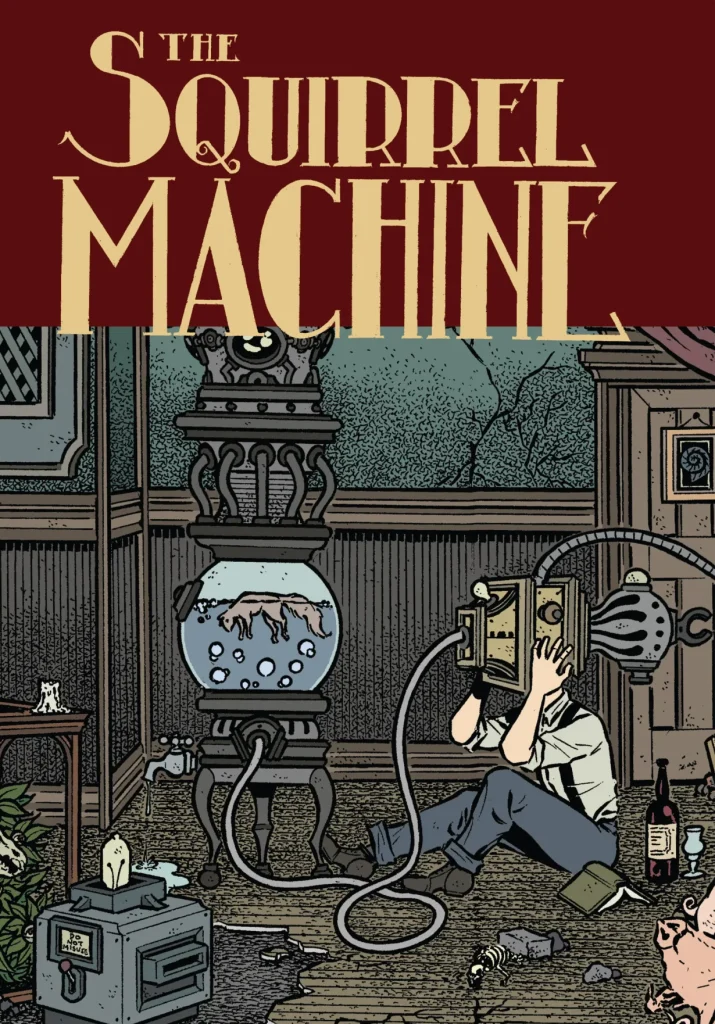
The Squirrel Machine is what happens when steampunk, psychoanalysis, and body horror crawl into a haunted laboratory and die screaming. Hans Rickheit’s baroque, meticulously inked graphic novel is an underground classic drenched in Victorian dread and grotesque invention. It follows the Torpor brothers — Edmund and William — two genius-level misfits living in a New England town that would rather stuff you in a coffin than let you be weird. Their art? Deranged musical instruments made from bones, meat, and decay. Their legacy? A descent into fever-dream lunacy beneath the floorboards of polite society.
If The Elephant Man was filtered through a Lovecraftian meat grinder, you’d get something close to the visceral unease of Rickheit’s vision. One unforgettable moment sees William’s body ballooned into a swollen, tumor-riddled horror as he retreats into self-mutilation and subconscious creation. Meanwhile, Edmund sleepwalks through decaying dreams and underground tunnels, slowly discovering the Squirrel Machine itself — a biomechanical womb of perverse imagination pulsing beneath their home. Flesh and metal merge, not just symbolically, but literally. Eyeballs, pipes, sinew, and brass all singing the hymn of a mad creator too pure — or too diseased — for the world above.
But this isn’t just steampunk splattercore. It’s a cracked meditation on repression, creativity, and the alienation of genius. Rickheit doesn’t just draw horror — he vivisects it. Every panel is stitched with the cold precision of a medical diagram, hiding a squirming chaos underneath. The townsfolk are horrified by what the Torpor brothers represent: artists unbound by convention or bodily integrity. The Squirrel Machine is the ultimate anti-coming-of-age story — a moaning, fleshy manifesto that dares to say: maybe the madness was the point all along. It’s haunting, it’s disgusting, and it’s weirdly beautiful. File it under: Victorian Meatcore.
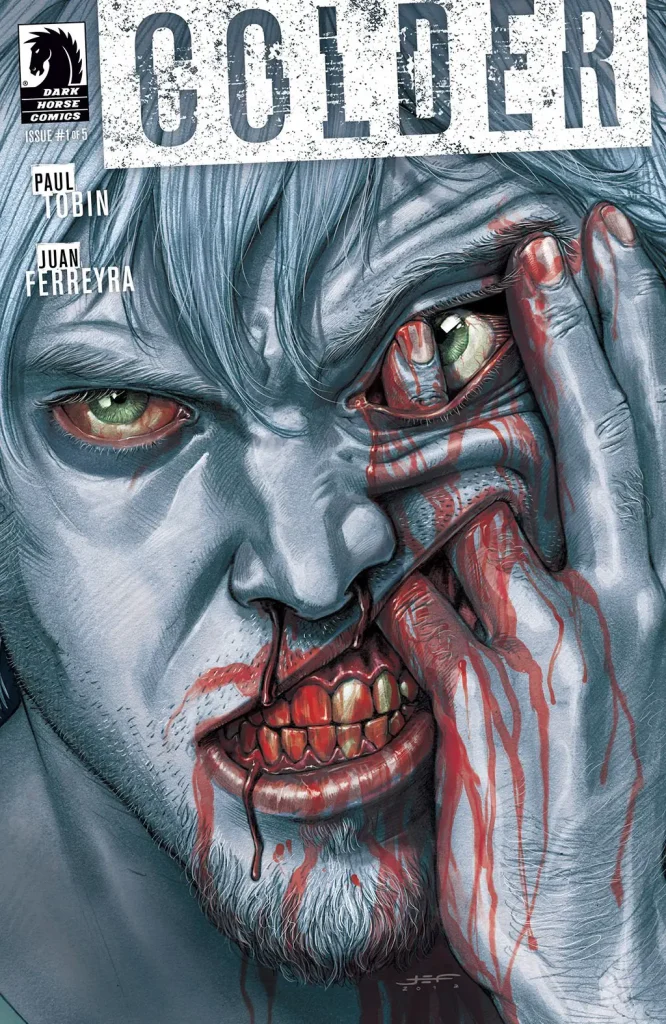
18. Colder
Colder is what happens when mental illness, body horror, and nightmare logic are stitched together into a single skin-crawling fever dream. Written by Paul Tobin and illustrated by the unholy wizard Juan Ferreyra, this Dark Horse Comics series drops you headfirst into the icy grip of psychological terror. At its core is Declan Thomas — once an asylum patient, now an emotionless enigma with the ability to slip inside other people’s madness like it’s a warm bath. But every time he does, his body temp plummets—he’s quite literally freezing to death while walking through the minds of the broken.
And if that wasn’t bleak enough, enter Nimble Jack — a chaos clown with a Cheshire grin and the appetite of a Lovecraftian parasite. Jack doesn’t just terrorize people — he feeds off their insanity like it’s a gourmet meal. One of the most memorably grotesque moments in Colder? Jack slithering out of a homeless man’s mouth like a magician pulling off the world’s most traumatic trick. The series peels back the thin tissue separating reality and delusion, dragging readers through the “Hungry World” — a meat-grinder dimension where heads bloom like flowers and sanity unravels into shrieking, fleshy geometry. Ferreyra’s art is unrelenting, transforming minds into hellscapes of melting faces, twisted limbs, and flesh that shouldn’t move the way it does.
But Colder isn’t just about the gore — it’s about isolation, fear, and the icy silence that creeps in when your mind turns against you. Declan isn’t a superhero; he’s a ticking time bomb of empathy and entropy. The series dives deep into trauma without blinking, using horror as both metaphor and punishment. It’s a cold, beautiful descent into madness—a story where healing costs you your body and survival means dragging monsters out by their teeth. If Silent Hill, The Cell, and Tool music videos had a beautiful, deranged baby, it’d be named Colder.
17. Immortal Hulk
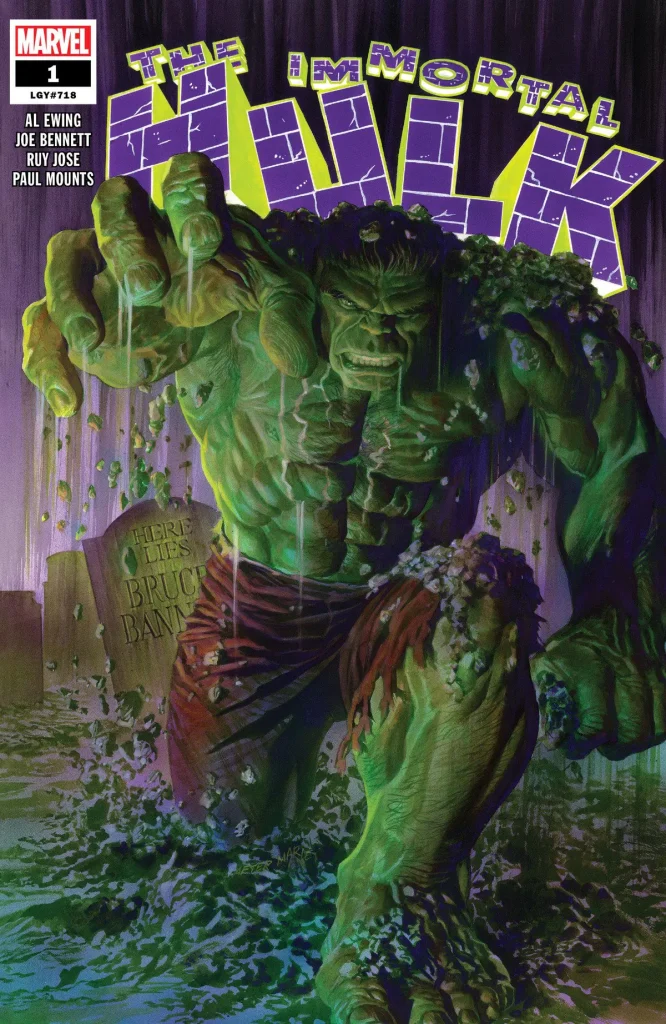
Immortal Hulk is a critically acclaimed horror-reinvention of the Hulk mythos, written by Al Ewing with nightmarish, body-warping art by Joe Bennett. Running for 50 issues (2018–2021), this isn’t your Saturday morning gamma rage machine. It’s a cosmic, theological, and grotesquely intimate horror saga about immortality, identity, and the monsters hiding in our reflection. Banner doesn’t just turn into the Hulk anymore—he dies, and the Hulk claws his way back through the grave.
The series pivots around a chilling twist: Bruce Banner is immortal, but not in the comforting “Wolverine can’t die” way. He can be shot, burned, torn apart — even dismembered — but when the sun goes down, the Hulk rises again from whatever remains. One of the most unforgettable body horror moments comes in Issue #1, when Banner is shot in the head during a robbery and later resurrects in the morgue, flesh still repairing itself as the Hulk comes out snarling. Later issues don’t hold back: the Hulk’s organs are harvested, his body is split apart and contained in jars, and at one point, he pulls himself out of his own skin — an image that’s equal parts metal and stomach-turning.
And then there’s the Green Door — a mysterious gateway that connects Hulk’s immortality to a deeper cosmic horror. It leads to the Below-Place, ruled by the Lovecraftian entity One-Below-All, who seeks to consume all forms of life and gamma mutation. The Hulk becomes not just a rage monster but a vessel for theological and metaphysical terror. Joe Bennett’s art brings it all to life with Cronenbergian flair — spines twist, jaws unhinge, flesh mutates mid-sentence. Whether it’s the Abomination’s grotesque fusion of faces or the multiple body-warping transformations of Banner himself, Immortal Hulk is a high-concept monster story disguised as superhero horror — angry, tragic, and soaked in gamma-green dread.
16. InSEXts
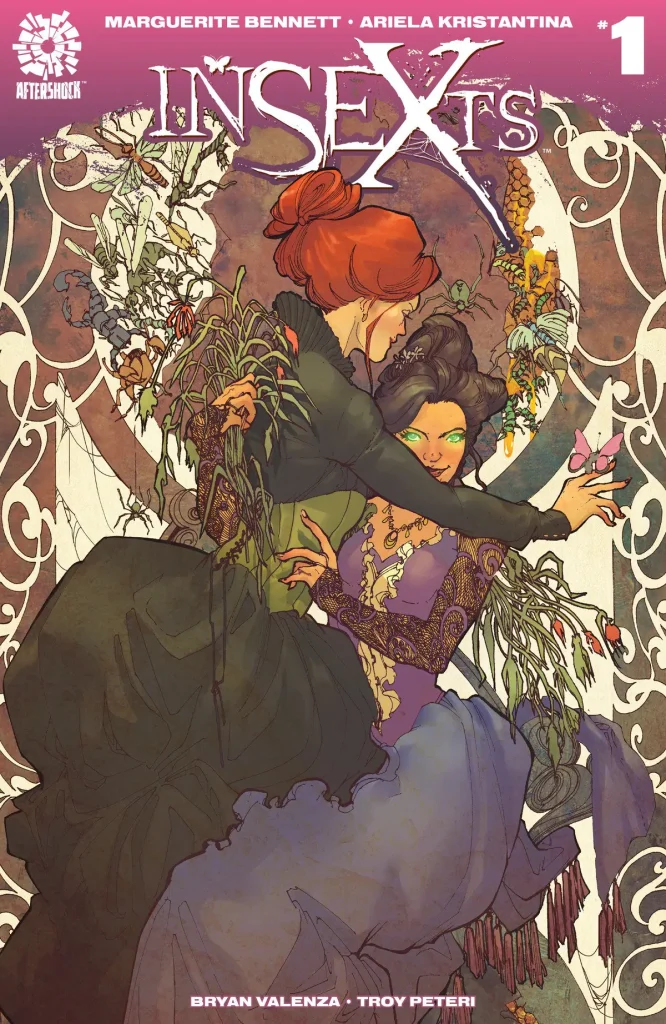
InSEXts is a decadent nightmare dipped in absinthe and stitched together with silk and sinew. Written by Marguerite Bennett with art by Ariela Kristantina, this 13-issue AfterShock Comics series delivers a heady blend of Victorian erotica, grotesque body horror, and unapologetic queer liberation. Set in 19th-century London — a city more diseased than dignified — it follows Lady Lalita Bertram and her lover Mariah, a maid, as they transform their forbidden passion into a grotesque rebirth. But their revolution doesn’t come with swords — it comes with wings, mandibles, and eggs. Yes, eggs.
From the moment Lady Bertram tears open her cheating husband’s chest cavity — while mid-metamorphosis — InSEXts makes one thing clear: this is a love story with claws. One standout body horror sequence sees Lalita’s pregnant body crack open to reveal something less human and more divine-insect hybrid, her newly birthed child part cherub, part larva. Mariah, equally monstrous and beautiful, grows pincers and wings to match her rage. As they navigate a twisted upper-class hellscape of demons, doctors, and lecherous lords, their bodies mutate — not as punishment, but as power. Horror becomes a love language. Transformation becomes survival.
What sets InSEXts apart is how it fuses the sensual and the horrific without apology. Bennett and Kristantina don’t just draw women with agency — they draw them devouring it. There’s skin splitting and blood blooming, yes — but it’s wrapped around intimate moments of love, trauma, and reclamation. This is feminism with fangs. Gothic horror that flutters between arousal and revulsion. If Penny Dreadful, Species, and Angela Carter’s Nightmares had a lovechild, it would crawl from the pages of InSEXts, dripping with ichor and humming a lullaby. Victorian horror has never felt this alive.
15. Saga of the Swamp Thing
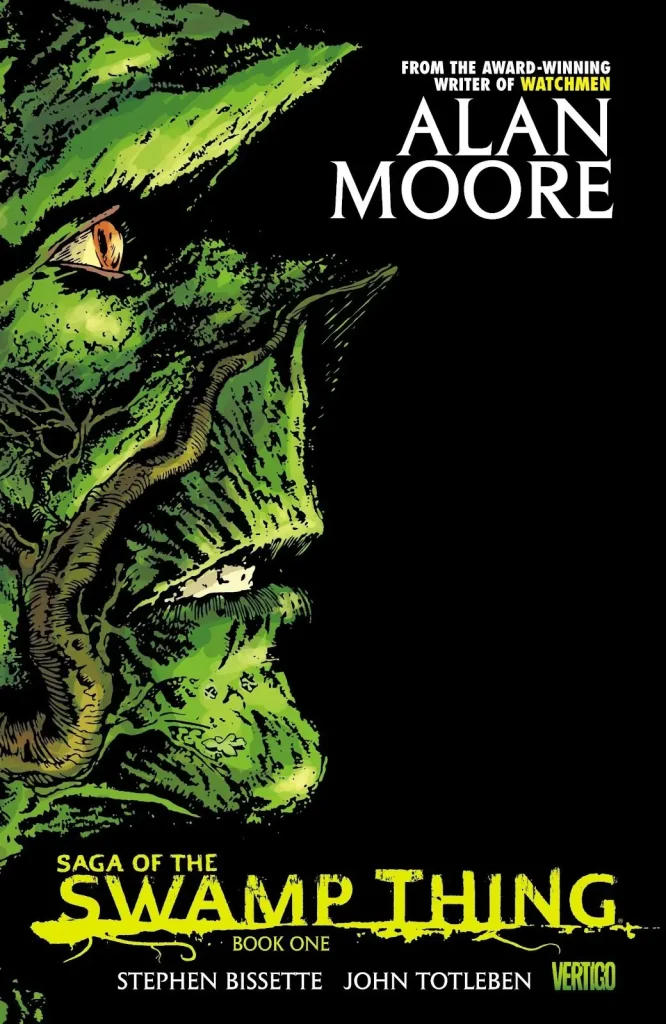
Saga of the Swamp Thing isn’t just a body horror comic — it’s a full-blown psychedelic rebirth of the grotesque, wrapped in moss and existential dread. When Alan Moore took the reins with Issue #20, he didn’t just reinvent the Swamp Thing — he excavated him, rewrote his DNA, and made him something altogether stranger. Gone was the man-turned-monster trope. Instead, we got a plant that thought it was a man — a walking vegetable tragedy with the soul of a poet and the body of decaying godhood. Moore, alongside artists Stephen Bissette and John Totleben, transformed a horror B-lister into an eco-terror deity, dripping with pathos, sap, and the occasional scream.
The series delivers horror by way of decay, fungus, and body horror that blossoms like diseased orchids in your brain. One panel you’re watching Anton Arcane claw his way out of Hell in a stitched-together corpse built from the damned. The next, Swamp Thing is gifting Abby Arcane a living tuber grown from his own green flesh, triggering a shared hallucination of erotic flora and cosmic unity. It’s not just gross — it’s beautiful. The Floronic Man’s attempt to sync with the Green and wipe out animal life results in a full-on vegetative apocalypse where grass splits concrete and vines strangle civilization. This isn’t gore for gore’s sake — it’s eco-horror at its most transcendent.
But at its beating heart, Saga of the Swamp Thing is a gothic romance wrapped in philosophical mulch. It’s a meditation on identity, grief, love, and the dirt we all return to. Swamp Thing and Abby’s relationship burns quietly through the mire — tender, strange, and defiantly human. Moore asks you to reconsider what makes something alive, what makes something monstrous, and whether roots might grow deeper than blood. This isn’t just a comic book series — it’s a garden of nightmares, poetry, and decomposing truths. Come for the muck monsters. Stay for the enlightenment.
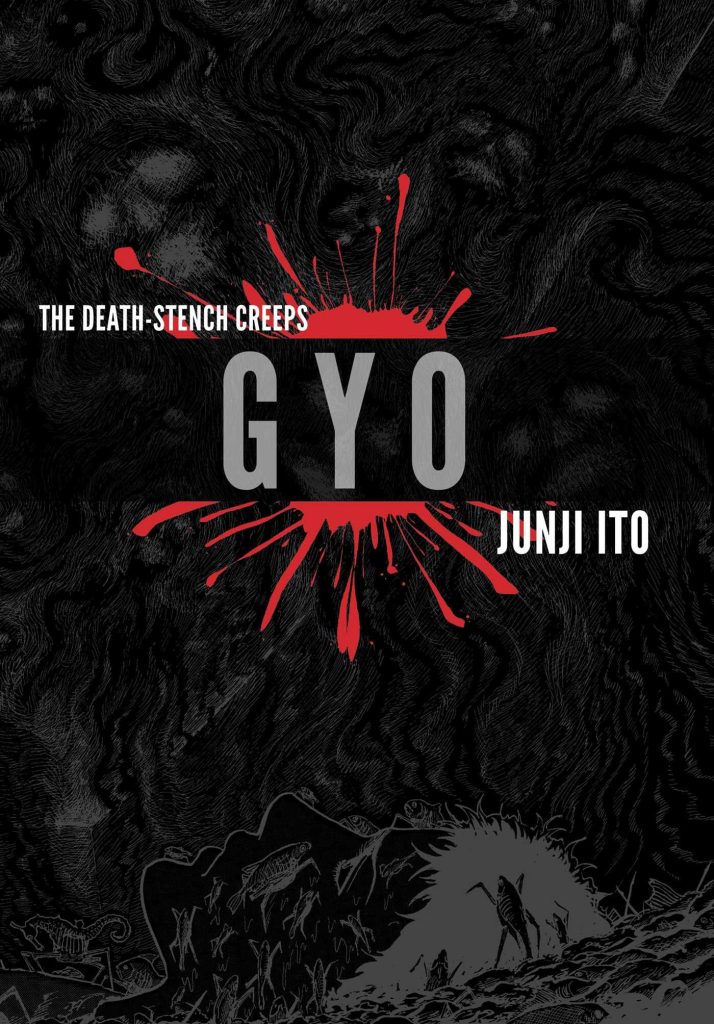
14. Gyo
Gyo is Junji Ito’s aquatic apocalypse — a grotesque fusion of body horror and bio-mechanical nightmare that turns the ocean into a rotting battlefield. The story follows Tadashi and his girlfriend Kaori, whose seaside vacation in Okinawa is shattered when a fish with metal legs scuttles into their lives, trailing a nauseating “death stench.” This isn’t just a freak occurrence; it’s the opening salvo of an invasion. Soon, the shores are overrun by sea creatures—sharks, octopuses, even whales — mounted on spindly, mechanical legs, powered by a putrid gas emitted from their decaying bodies. The stench is unbearable, the horror inescapable.
As the infection spreads, the line between life and death blurs. Humans begin to bloat and emit the same foul gas, their bodies becoming hosts for the mechanical legs. Kaori, afflicted by the stench, undergoes a horrifying transformation, her body swelling with gas and covered in boils. In a desperate attempt to end her suffering, she tries to hang herself, only to be saved and subsequently turned into a grotesque bio-mechanical entity by Tadashi’s uncle, Dr. Koyanagi. The imagery is visceral: bloated corpses on spider-like legs, tubes inserted into orifices, and the ever-present, suffocating stench of decay.
But Gyo isn’t just about shock value. It’s a commentary on humanity’s hubris and the unintended consequences of our actions. The origin of the walking fish traces back to a World War II experiment gone awry — a germ engineered to produce gas, used to power mechanical legs for spreading infection. This germ, now evolved, has turned the ocean’s depths into a breeding ground for monstrosities. Ito’s artwork captures this descent into madness with meticulous detail, making Gyo a haunting exploration of ecological horror and the grotesque.
13. BTTM FDRS
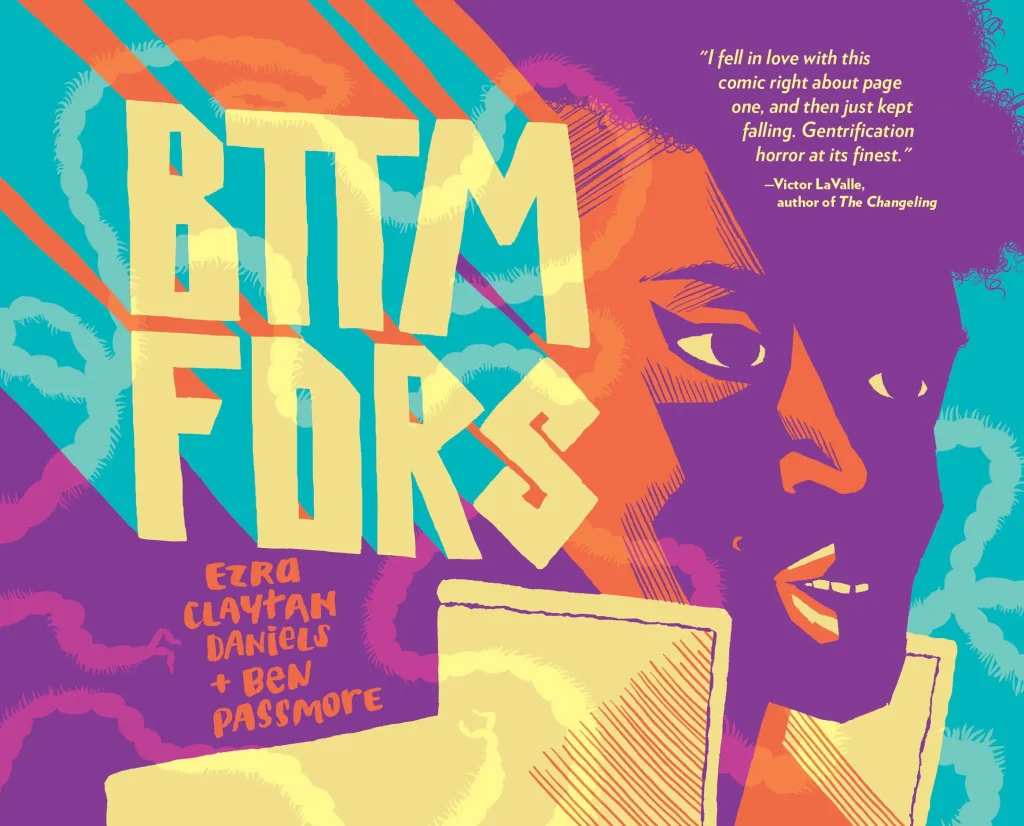
BTTM FDRS is gentrification meets body horror. It’s a razor-sharp, pastel-drenched scream against the commodification of Black culture, wrapped in tentacles and dripping with bile. Written by Ezra Claytan Daniels and illustrated with anarchic energy by Ben Passmore, this Afrofuturist horror-comedy follows Darla, an ambitious fashion designer who moves into a dirt-cheap apartment in Chicago’s Bottomyards. But what starts as a savvy housing decision quickly mutates into a psychedelic nightmare, as the building’s very walls begin to breathe, digest, and devour. Welcome to Moreau’s Castle, where culture isn’t just appropriated — it’s consumed.
The body horror in BTTM FDRS hits hard and it hits weird. There’s a toilet that bleeds viscera, flesh-hungry vents that unleash face-melting tendrils, and a squirming undercurrent of infection that seeps into every floorboard. The horror is grotesque, but never gratuitous — each gory spectacle is a metaphor in motion. That face getting devoured? It’s what happens when a community is stripped of its identity. The building isn’t just haunted—it’s a living organism fattened on cultural erasure. Passmore’s art dials it all up with a jarring juxtaposition: bright colors, cartoonish shapes, and grinning monstrosities, creating a visual dissonance that’s both hilarious and horrifying.
But this isn’t just a splatter comic with a message — it’s a gut-punch commentary on appropriation, privilege, and parasitic capitalism. As Darla and her friends navigate the chaos, BTTM FDRS peels back layers of performative allyship and tech-bro exploitation to expose the rotten infrastructure beneath urban renewal. It’s They Live for the age of Instagram clout and boutique landlords. Daniels and Passmore aren’t here to play nice — they’re here to gut the system, with style, satire, and a whole lot of gore. If Jordan Peele made a graphic novel on acid, it’d probably look like this.
12. Enigma
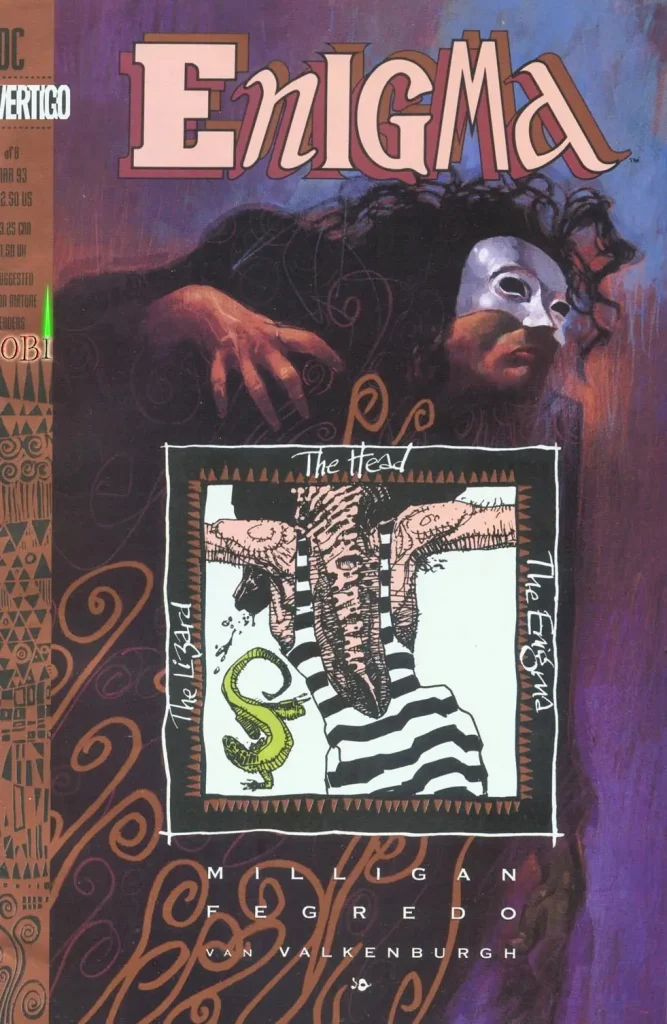
Enigma is a brain-melting, genre-twisting headtrip that drops the superhero mythos into a blender with queer identity, metaphysical crisis, and a healthy squirt of surrealist body horror. Written by Peter Milligan with mind-bending art from Duncan Fegredo, this 1993 Vertigo deep cut follows Michael Smith — a perfectly average guy whose beige life gets violently upended when his childhood comic book hero, the Enigma, steps out of fiction and into reality. What follows isn’t just a story; it’s a cosmic identity crisis with tights, trauma, and tentacles.
The horror doesn’t come with zombies or serial killers — it oozes out through the villains, each a manifestation of Michael’s repressed desires and fractured psyche. There’s The Head, a floating brain vampire who slurps intelligence through a chrome straw, and Envelope Girl, who wraps people in her grotesquely oversized coat and spits them out somewhere else in the universe. It’s the kind of body horror that doesn’t scream gore, but whispers transformation. Think Grant Morrison on a comedown, channeling Kafka through the lens of a closeted twentysomething in denial. Every grotesque encounter peels away Michael’s internalized fear until there’s nothing left but raw, queer revelation.
At its twitching, bleeding core, Enigma isn’t about capes or crime — it’s a body horror comic about becoming. About what happens when the stories we consume consume us. It’s a hallucinogenic coming-out party dressed in comic book drag, where identity is liquid and every panel drips with the surreal. Michael’s evolution from passive observer to fully-realised queer antihero is both terrifying and triumphant. Enigma dares you to look inside and ask: what monsters are you hiding, and who gave you the right to feel shame about them? This isn’t just a forgotten Vertigo gem — it’s a manifesto in skin and ink.
11. Lonely Receiver
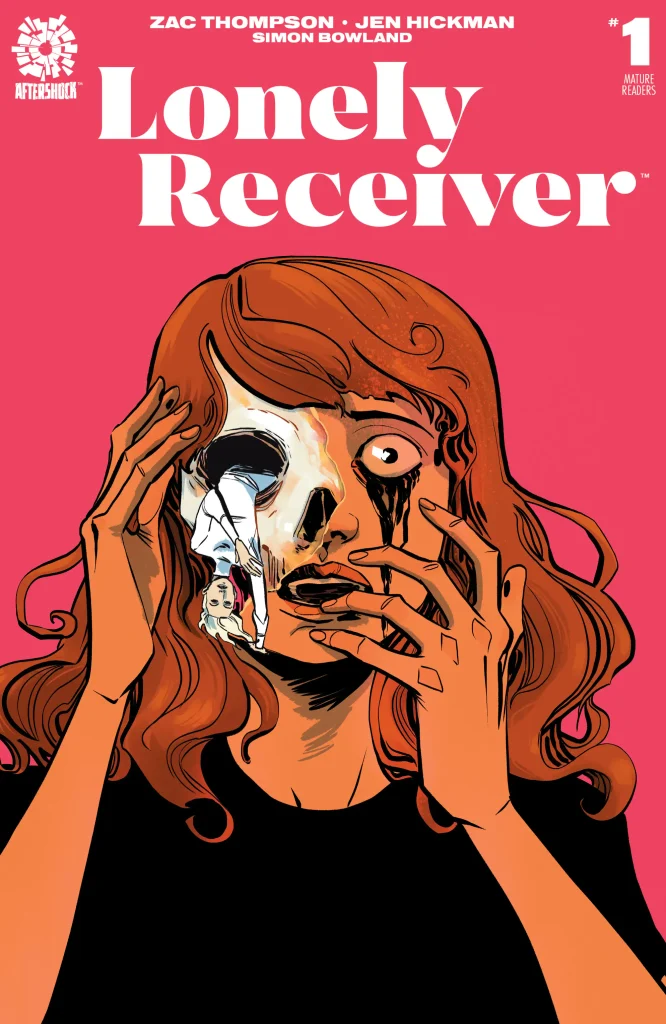
Lonely Receiver is a techno-breakup horror story that crawls under your skin, eats your heart out, and leaves you scrolling through your ex’s deleted data trail. Written by Zac Thompson and illustrated with disturbing pastel elegance by Jen Hickman, this AfterShock Comics series takes place in a sleek, near-future dystopia where AI partners are bought, sold, and programmed for devotion. At the center is Catrin Vander, a woman who’s spent ten years in a digital-marriage with Rhion, her ideal partner — until one day, Rhion simply… disconnects. What follows isn’t healing — it’s a psychological downward spiral laced with madness, obsession, and full-blown techno-body horror.
From the jump, Lonely Receiver drips with unsettling imagery and emotional rot. Catrin’s mind begins to unravel as she desperately clings to what’s left of Rhion — diving into corrupted memories, virtual sex rituals, and mutilating her body in the name of transcendence. One of the most viscerally disturbing moments comes when Catrin enters “The Garden,” a hallucinatory tech haven where people carve themselves open and modify their senses to feel more, not better. Her skin becomes a canvas for neuromantic trauma, her body warping with surgical implants, synthetic scars, and emotion-fueled delusions that blur the line between self and software. It’s like Eternal Sunshine directed by David Cronenberg during a heartbreak bender.
But beneath all the flesh, code, and feedback loops, Lonely Receiver is a painfully intimate tale about grief and identity. It doesn’t just ask what happens when love ends — it asks what happens when love never existed in the first place. It weaponizes the language of romance, then dissects it under a microscope soaked in synthetic tears. Zac Thompson’s script cuts deep, and Jen Hickman’s art captures a fragile, spiraling woman lost in the glowing ghost of digital affection. This isn’t just body horror — it’s soul horror. A queer, sci-fi scream into the algorithmic void. Swipe right on this nightmare.
10. The Beauty
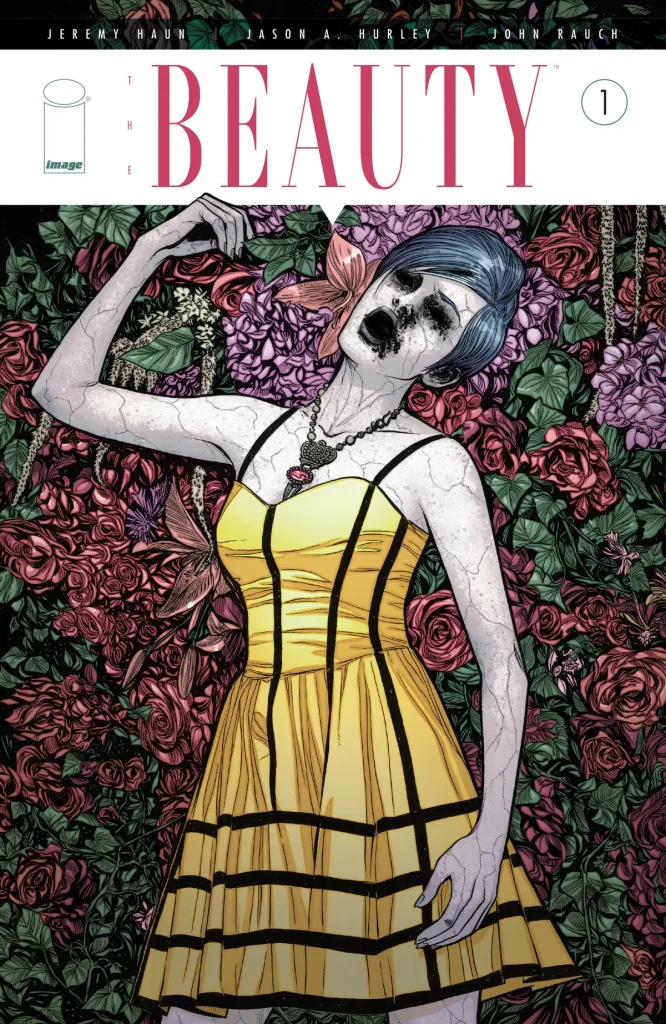
The Beauty is what happens when society’s obsession with hotness turns terminal — literally. Created by Jeremy Haun and Jason A. Hurley, this Image Comics series sets its scalpel-sharp body horror tale in a world where a sexually transmitted disease called “The Beauty” makes you irresistibly attractive. Clear skin. Perfect symmetry. Glowing like a social media filter made flesh. But here’s the kicker: after a while, you combust. From the inside. Fire. Blood. Beautiful corpses. It’s a grim detective noir where half the world is infected and nobody’s asking why—they’re just trying to stay photogenic until they explode.
The horror hits hard and fast. In the very first issue, a commuter literally melts from the inside out, her mouth gushing blood moments before spontaneous combustion. It only escalates from there. People infected with The Beauty start collapsing in fits of pain, gasping through blistering skin and internal firestorms. Then there’s the post-cure survivors — burnt, broken, and barely human, their former glamour now a mask of horror. One of the most chilling figures is Mr. Calaveras, a skeletal enigma in a Día de los Muertos mask whose disfigurement says everything about the cost of aesthetic perfection. The visuals? Think Se7en meets America’s Next Top Model, with a healthy splash of Cronenberg.
But beneath the body count and gooey implosions, The Beauty is a razor-edged takedown of toxic beauty standards and capitalist rot. Detectives Vaughn and Foster navigate a world where biotech corporations have monetized human vanity — and everyone’s lining up for their ticket to the grave. It’s a tale of cosmetic addiction, political corruption, and the psychological rot festering beneath curated perfection. The horror isn’t just in the flesh — it’s in the want. In the way we worship the surface and ignore the fire burning underneath. The Beauty isn’t just a cautionary tale. It’s a goddamn mirror. And you won’t like what you see.
9. Black Hole
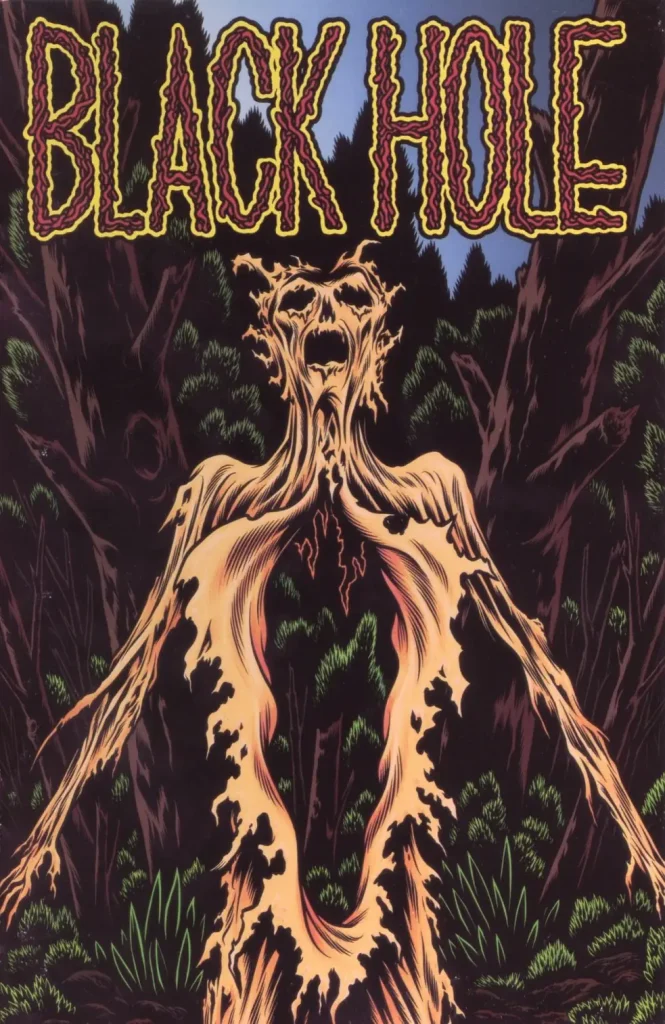
Black Hole is a slow-burn scream wrapped in the humid fog of 1970s suburbia, where teenage angst mutates into full-blown biological horror. Created by Charles Burns in stark, inky black-and-white, this comic doesn’t whisper about adolescence — it claws it open with surgical precision. The story follows a group of teens in Seattle who contract “The Bug,” a sexually transmitted disease that doesn’t kill you — it warps you. Think tails, second mouths, molting flesh, and whatever that thing is growing behind your ear. Burns doesn’t just depict puberty—he dissects it, leaving it twitching on the page for you to gawk at.
The body horror in Black Hole is deeply intimate and disturbingly matter-of-fact. One girl sloughs her skin like a reptile. Another teen’s mutation — a twitching mouth growing on his throat — won’t stop whispering secrets. A boy with a full-blown monster face hides in the woods, where the infected form a kind of tragic, discarded tribe. No jump scares, just the creeping terror of your own body betraying you. Burns’ clean linework only sharpens the grotesquery, as if Nancy and EC Comics collided in a David Cronenberg fever dream. The horror doesn’t shock — it lingers.
Black Hole isn’t just horror — it’s a black mirror held up to every awkward, shame-riddled, hormonal corner of being a teen. The Bug isn’t just a virus — it’s a metaphor for alienation, desire, and the irreversible damage of growing up in a world that doesn’t understand you. Burns doesn’t offer tidy metaphors or redemption arcs — just the raw ache of youth, loneliness, and transformation. It’s as much a coming-of-age tragedy as it is a rotting love letter to the monsters we become when we’re trying to find ourselves. Uncomfortable, unforgettable, and absolutely essential — Black Hole leaves a scar. And you’ll want to pick at it.
8. Ballistic
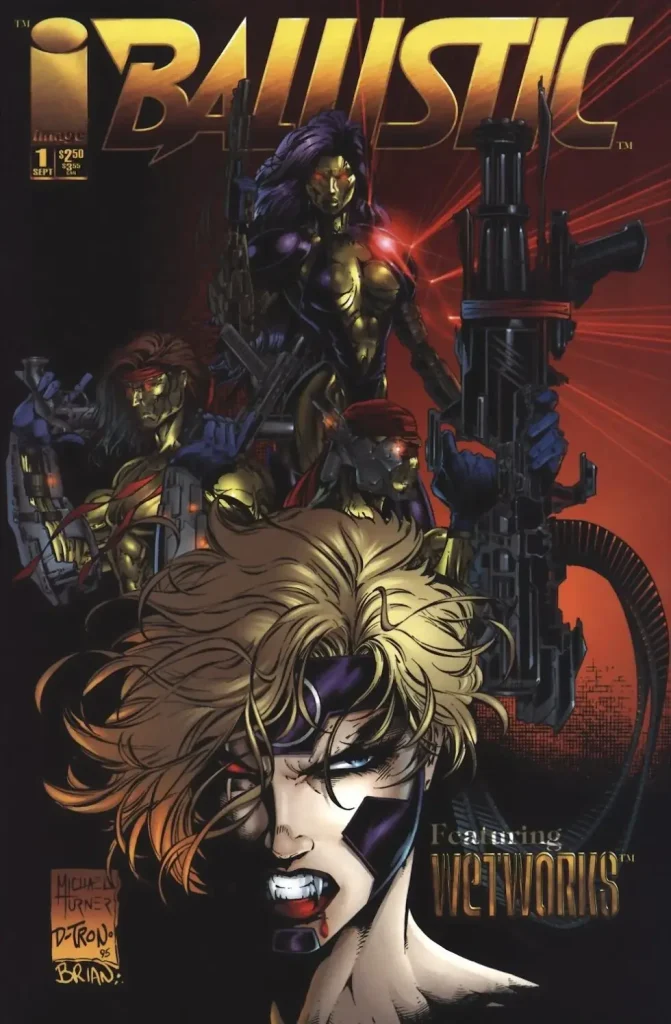
Ballistic is a filthy, drug-fueled bullet straight to the face of the cyberpunk genre — equal parts bonkers body horror and buddy comedy, fermented in biotech slime. Cooked up by writer Adam Egypt Mortimer and drawn with chaotic glee by The Boys co-creator Darick Robertson, this Black Mask Studios gem hurls you into Repo City State: a decaying, post-eco-apocalyptic metropolis built from sentient trash and living technology. At the center of this neon mess is Butch — an air-con repairman with dreams of criminal greatness—and his sidekick Gun, a foul-mouthed, heroin-shooting, genetically engineered talking pistol with the personality of a coked-up gremlin.
From the get-go, Ballistic oozes biotech body horror. Literally. The city breathes, bleeds, and digests. Buildings pulse with veins. Drones leak mucus. People splice themselves into meat machines for the right price. And Gun? He’s not just sentient — he’s alive in the most disgusting way possible, constantly leaking, squirming, and arguing like a junkie roommate who also happens to shoot bullets. One of the most grotesque moments comes when a wall absorbs a man—swallowing him whole and reconfiguring his screaming body into living insulation. It’s like Videodrome got a tech upgrade and decided to party in a sewer.
But beneath the gross-out gags and LSD-slick visuals, Ballistic actually has something to say. It’s a story about broken dreams in a world where even your toaster might be judging you. Butch wants to matter in a city that doesn’t care if you exist—and every choice he makes drives him further into a maze of existential dread, biotech nightmares, and capitalist mutation. Mortimer and Robertson’s grotesque satire skewers everything: toxic masculinity, surveillance culture, and the corporatization of life itself. If Transmetropolitan and Rick and Morty had a mutant baby raised on acid and bad decisions, its name would be Ballistic. And it’d be yelling at you by page two.
7. When I Arrived at the Castle
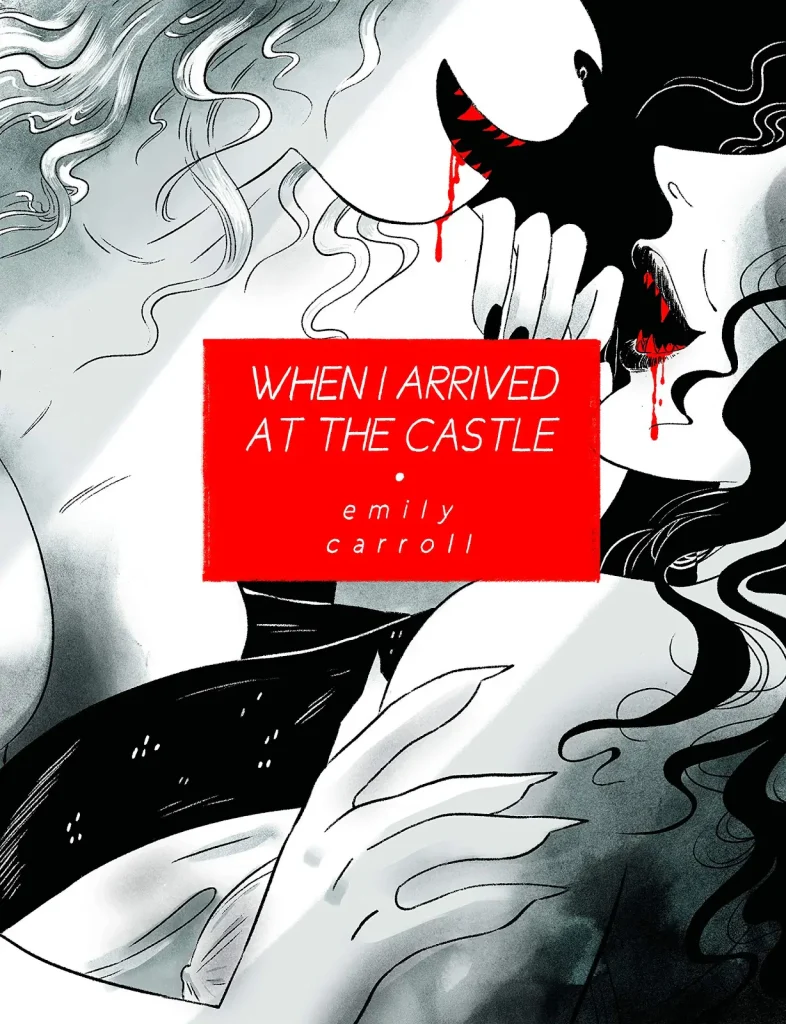
When I Arrived at the Castle is Emily Carroll’s love letter to the monstrous feminine, soaked in crimson, draped in gothic lace, and pulsing with queer rage. It’s less a comic and more a fever dream torn from the velvet lining of a vampire’s coffin. A feline-featured protagonist — equal parts assassin and lost soul — arrives at a haunted castle to kill the Countess, a centuries-old predator with a taste for women and a palace built on bones. What follows is a surreal, erotic dance between prey and predator, beauty and rot, desire and violence. Carroll doesn’t play with genre—she seduces it and slits its throat.
Visually, it’s a blood-soaked opera. Carroll’s palette — black, white, and arterial red — drips off the page in molten dread. The body horror is equal parts seductive and grotesque: women melting into each other like flesh puppets, a voyeuristic bath scene bubbling with black water and sexual menace, and a final confrontation that feels more like a transformation ritual than a fight. One unforgettable image sees the Countess slither from her own skin — red, raw, reborn — a moment that’s both orgasmic and terrifying. Carroll uses gore not as punctuation, but as language — fluid, visceral, unrelenting.
But beneath the fangs and flesh, When I Arrived at the Castle is a body horror story about power, consent, and the seductive lure of becoming what you fear the most. It’s a haunted mirror reflecting trauma and transformation — where the line between victim and monster isn’t just blurred, it’s bled dry. Carroll’s storytelling is deliberately ambiguous, as if the whole book were whispered through a keyhole. This isn’t just gothic horror — it’s an act of queer reclamation. An erotic myth soaked in perfume and gore. When I Arrived at the Castle doesn’t just ask you to enter — it dares you to stay.
6. Criminal Macabre
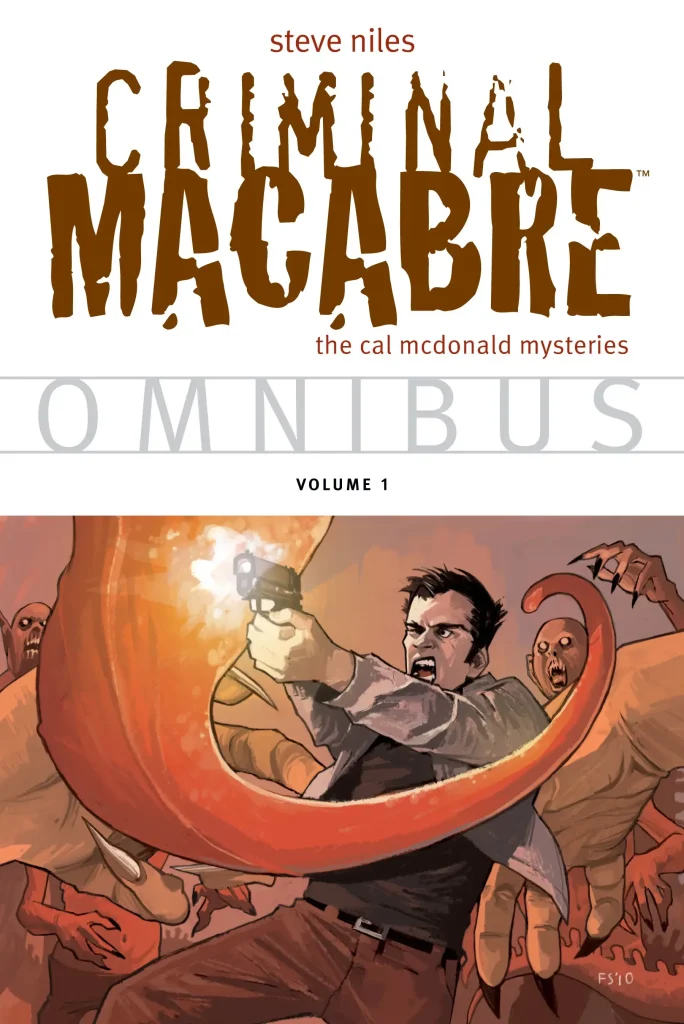
Criminal Macabre is what happens when you take hard-boiled noir, drag it through the sewers of Hell, and hand it a bottle of pills and a shotgun. Written by horror maestro Steve Niles and oozing with pulp-soaked grit, the series follows Cal McDonald — an ex-cop turned supernatural PI with the charm of a dumpster fire and the survival instincts of a cockroach in a church full of demons. He drinks like it’s a job, smokes like it’s a cure, and fights monsters because nobody else is messed up enough to do it. Picture John Constantine if he quit giving a damn (even more than he normally does) and made friends with a corpse named Mo’Lock.
The body horror in Criminal Macabre is delightfully unhinged. We’re talking mad scientists splicing humans with tech in Supernatural Freak Machine, a demon-birthed abomination of a baby in My Demon Baby, and prison inmates twisted into meat sculptures in Cell Block 666. Blood doesn’t just get spilled — it gets repurposed. One minute Cal’s fighting mutated ghouls with tentacles for limbs, the next he’s trapped in a flesh prison built from the regrets of the damned. Flesh melds with metal, eyes bulge where eyes should never be, and nobody gets out clean — least of all Cal.
But beneath all the gore, grit, and graveyard snark, Criminal Macabre is a character study in burnout and existential rot. Cal McDonald is less a hero and more a human ashtray — smoldering with rage, regret, and just enough willpower to keep stumbling forward. He doesn’t fight the monsters because he believes in good — he fights because it’s the only thing keeping him from becoming one. Steve Niles gives us horror with heart, splatter with soul. If you like your occult detectives drunk, damaged, and dragging demons into the daylight — Criminal Macabre is your brand of beautiful, bloody poison.
5. Escape from Jesus Island
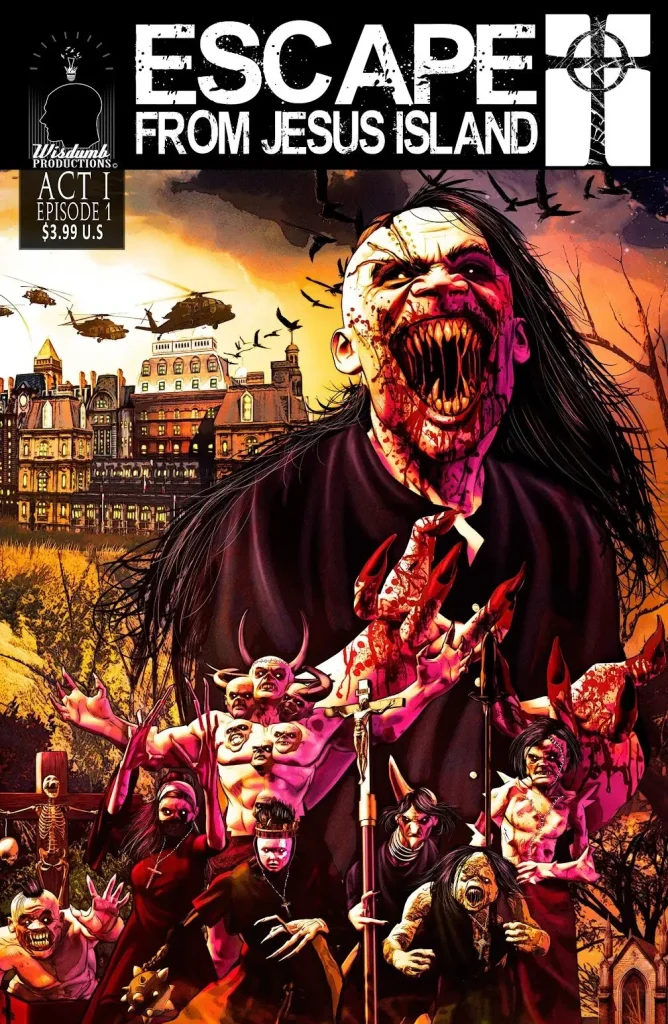
Escape from Jesus Island is what happens when you blend a petri dish full of sacrilege, corporate dystopia, and grindhouse gore—and then drop it straight into Hell with a snarl. Written by Shawn French and illustrated by the deeply disturbed Mortimer Glum, this indie horror series kicks off with ReGen Corp’s noble-sounding mission: resurrecting Jesus through cloning. But instead of a savior, they get two sons of God — one angelic, one an apocalyptic nightmare named Damien. Enter the organisation called S.T.A.B. (Stop Treating Animals Badly), a group of animal rights activists who think they’re just liberating test subjects but end up stumbling into a full-blown biblical massacre on a remote island built for divine experimentation.
The body horror here doesn’t whisper — it screams. Glum’s art cranks the grotesque to 11: mutant Jesuses with flayed skin, gnashing teeth, and crucifixion scars that ooze radioactive righteousness. There’s a scene where a clone with a gaping maw in its chest devours a man whole — religious symbolism meets Cannibal Holocaust. Failed experiments roam the island like holy abominations, riddled with extra limbs, twisted organs, and perverted divinity. Every inch of this comic is dripping with viscera, nihilism, and a deep, blasphemous grin. This is body horror as divine punishment, and every page feels like it should come with a biohazard warning and a rosary.
But beneath the gore-slicked chaos, Escape from Jesus Island actually asks some hard-hitting questions. What happens when biotech tries to manufacture salvation? What price are we willing to pay for perfection — and who profits from it? French’s script isn’t just here to shock; it digs into themes of religious exploitation, unchecked science, and the corporate colonization of belief. It’s satirical, sacrilegious, and strangely profound in all the best/worst ways. If The Island of Dr. Moreau, The Passion of the Christ, and Tetsuo: The Iron Man had a mutant baby, this is the comic that would claw its way from the womb screaming: “Amen, motherfucker.”
4. Fragments of Horror
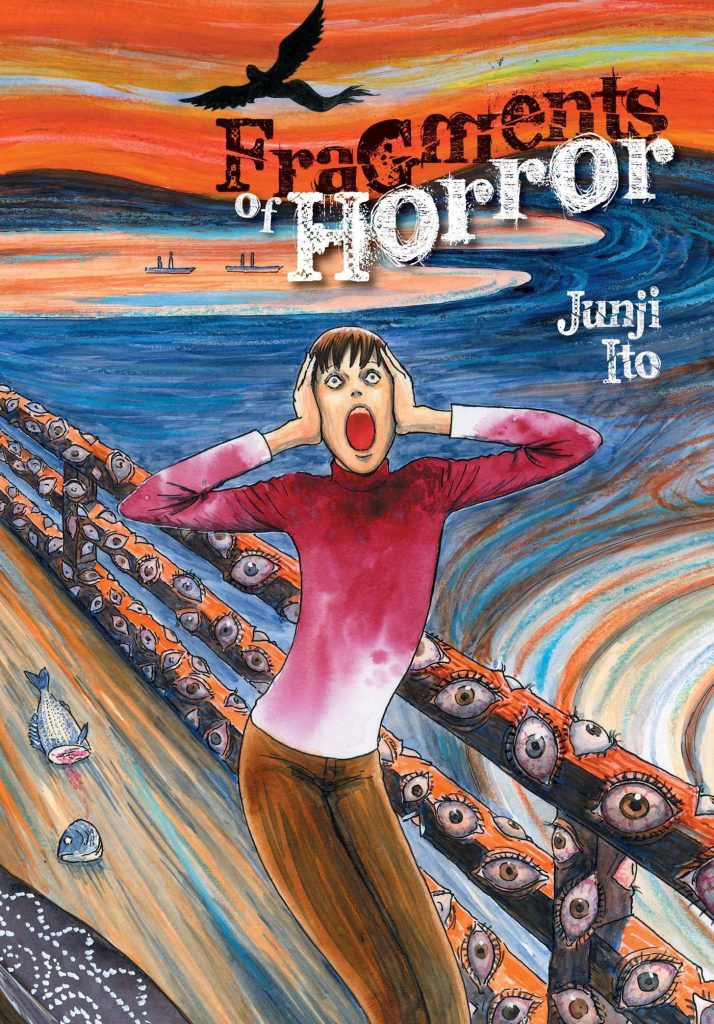
Fragments of Horror is Junji Ito’s return to the page with a whisper—and then a scream. After nearly a decade away from the genre that made him a cult god of grotesque, Ito came back swinging with this eight-story anthology of psychological sludge and skin-crawling weirdness. Each tale in Fragments of Horror is its own exquisite corpse, stitched together with themes of obsession, grief, madness, and decay. Whether it’s a haunted house that shifts with the dead’s emotions or a girlfriend so controlling she whispers instructions into your soul, Ito proves once again that horror doesn’t have to be loud—it just has to be wrong in all the right ways.
The body horror here is classic Ito: beautiful, haunting, and deeply uncomfortable. In “Dissection-Chan,” a wide-eyed girl’s sexual obsession with being cut open leads to a surgery scene soaked in dread and clinical perversion. “Tomio: Red Turtleneck” is straight-up nightmare fuel, featuring a man trying to hold his own severed head in place, sinew stretching like wet chewing gum as his world unravels. And in “Blackbird,” Ito takes a survival story and mutates it into something far more sinister — a starving hiker kept alive by a birdlike woman who regurgitates food into his mouth. It’s erotic, revolting, and you won’t be able to look away.
But Fragments of Horror isn’t just a greatest hits collection of flesh freakouts. There’s heart here in it too. “Gentle Goodbye” delivers emotional devastation with ghostly elegance, painting a soft-focus tragedy about grief and the illusion of closure. “Whispering Woman” is a slow burn that unpacks power, control, and identity through parasitic co-dependence. Ito’s linework is as sharp as ever — gorgeous, meticulous, and designed to haunt the back of your eyelids. This isn’t just horror. It’s artful decay. Fragments of Horror proves that even in short bursts, Junji Ito can rewrite your nightmares and redraw the map of your brain — with ink, madness, and a scalpel.
3. Heavy Metal Drummer
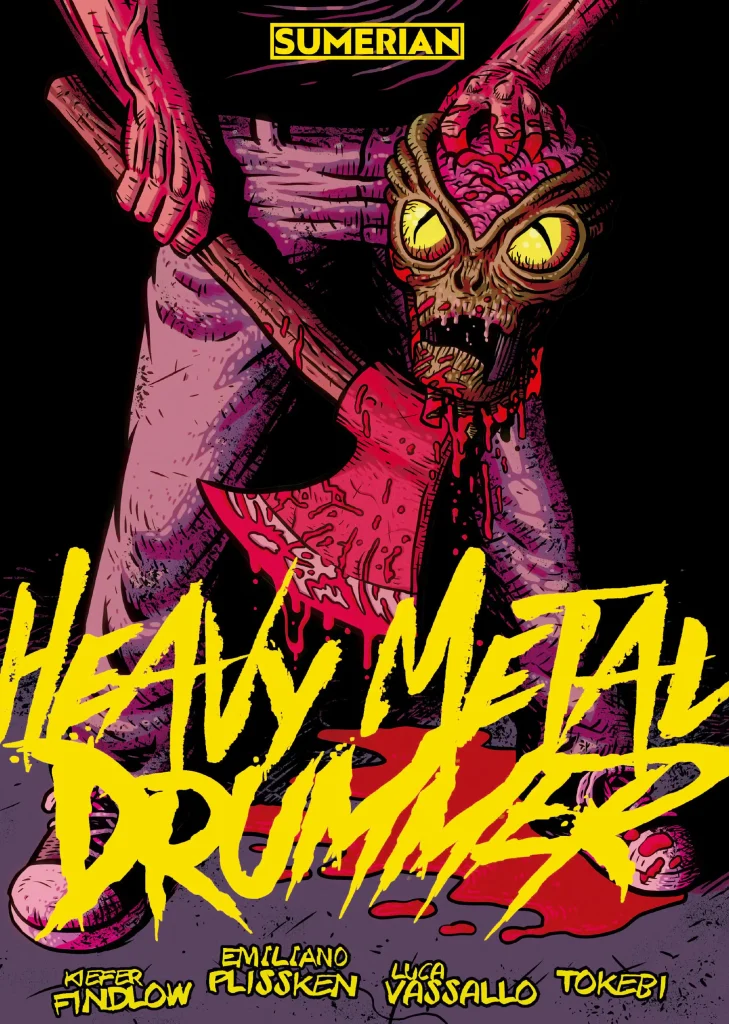
Heavy Metal Drummer is what happens when you drop a cosmic horror bomb on Sunset Strip circa 1986, lace it with acid, and blast Slayer at full volume. Written by Kiefer Findlow and Emiliano Plissken with visuals by Luca Vassallo that look like they were beamed straight out of an alien VCR, this series is part They Live, part Re-Animator, and all fuzzed-out chaos. It follows Dave — a deadbeat junkie and heavy metal drummer—who stumbles into a nightmare when a cosmic mirror turns him into a chosen one. His mission? Butcher parasitic shapeshifters masquerading as horny old women who feast on the souls of L.A.’s morally bankrupt.
The body horror here doesn’t tiptoe — it grinds. Vassallo’s panels are soaked in neon bile, depicting senior citizens splitting open into tentacled, meat-wrapped monstrosities with gaping maws and eyeballs in places eyeballs shouldn’t be. Dave’s reality glitches between hallucination and slaughter, with scenes of him ripping through goo-covered alien flesh in back alleys and dive bars that feel like they were scribbled in the margins of a Slayer fan’s notebook. One standout moment? A parasite-lady peels her skin off like a jacket mid-coitus, revealing a gelatinous demon form that proceeds to melt a man with psychic gore-pulse. It’s bonkers, it’s brutal, and it rips.
But beneath the skulls, slime, and cosmic entrails, Heavy Metal Drummer has heart — twisted, bruised heart, but heart nonetheless. Dave’s journey isn’t just about saving the world; it’s about crawling out of addiction-fueled nihilism and beating his demons to death with a snare drum. The comic rips into themes of identity, perception, and fate, asking what happens when you’re the instrument of a universe that doesn’t care if you live or die—just that you shred. If Repo Man and Dead Alive had a baby during a Venom show, it would look like Heavy Metal Drummer. It’s loud, lewd, and beautifully grotesque. Plug in. Black out. Kill everything.
2. Shade, the Changing Man
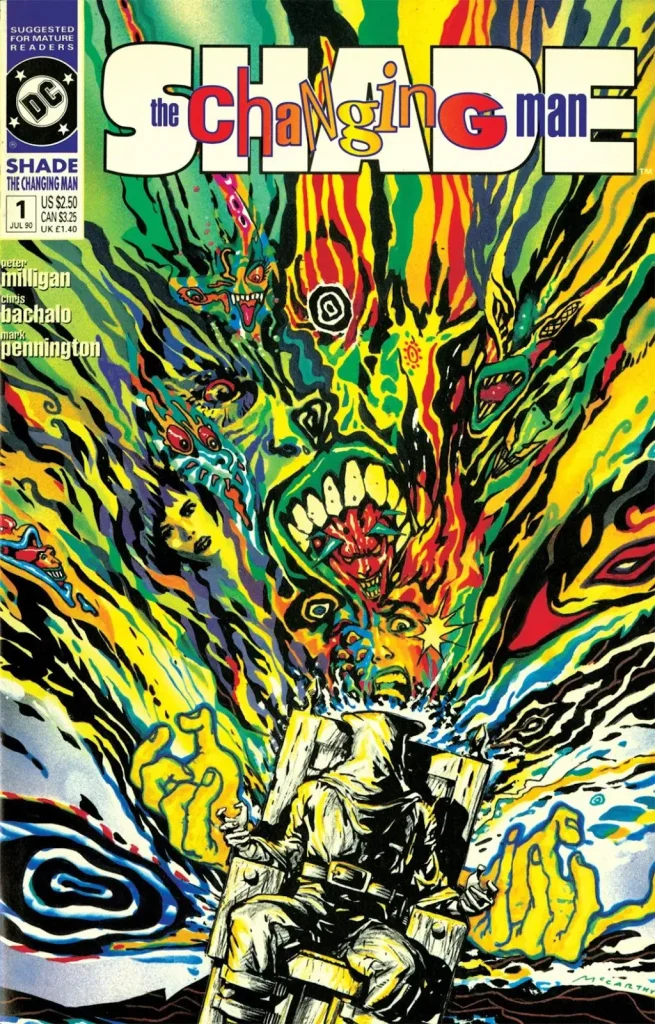
Shade, the Changing Man is a psychedelic scream into the burning heart of American insanity. Revived and mutated under DC’s Vertigo imprint by Peter Milligan and Chris Bachalo, this early ’90s mind-melter follows Rac Shade—a red-haired alien poet from the planet Meta — who crash-lands into the corpse of a convicted serial killer. Armed with his reality-warping Madness Vest, Shade becomes a cosmic therapist for a dying culture, dragging his reluctant companion Kathy George (whose parents were murdered by Shade’s new body’s former occupant — yes, really) across a warped America haunted by a creature called the American Scream. It’s part road trip, part therapy session, all acid-soaked existential crisis.
Milligan and Bachalo don’t just flirt with body horror — they take it home, marry it, and wake up next to its skinless twin. This book is bursting with twisted, Cronenbergian body horror. Identities warp. Faces melt. One moment you’re a human; the next you’re a channel for cultural guilt vomiting up JFK’s ghost. Shade’s Madness Vest reshapes reality like it’s made of wet clay, and the transformations aren’t just skin-deep — they rip apart sanity, gender, even time.
In one unforgettable arc, Shade experiences life through a woman’s body, complete with menstruation, forcing a brutal reckoning with gender identity that’s as emotionally raw as it is physically surreal. It’s like watching a body horror film directed by William S. Burroughs during a panic attack.
But for all its grotesque imagery and apocalyptic weirdness, Shade, the Changing Man is, at its gooey core, about the terrifying beauty of change. It’s a meditation on trauma, redemption, and the madness we mistake for truth. The series uses horror as a scalpel — cutting open American culture to reveal the rotting teeth beneath the smile. Shade’s relationship with Kathy is a slow-burning, complex love story formed in the ashes of unspeakable violence. This isn’t just Vertigo’s overlooked gem — it’s one of the boldest, weirdest, and most emotionally resonant comics ever printed. Read it. Bleed with it. Change with it.
1. Uzumaki
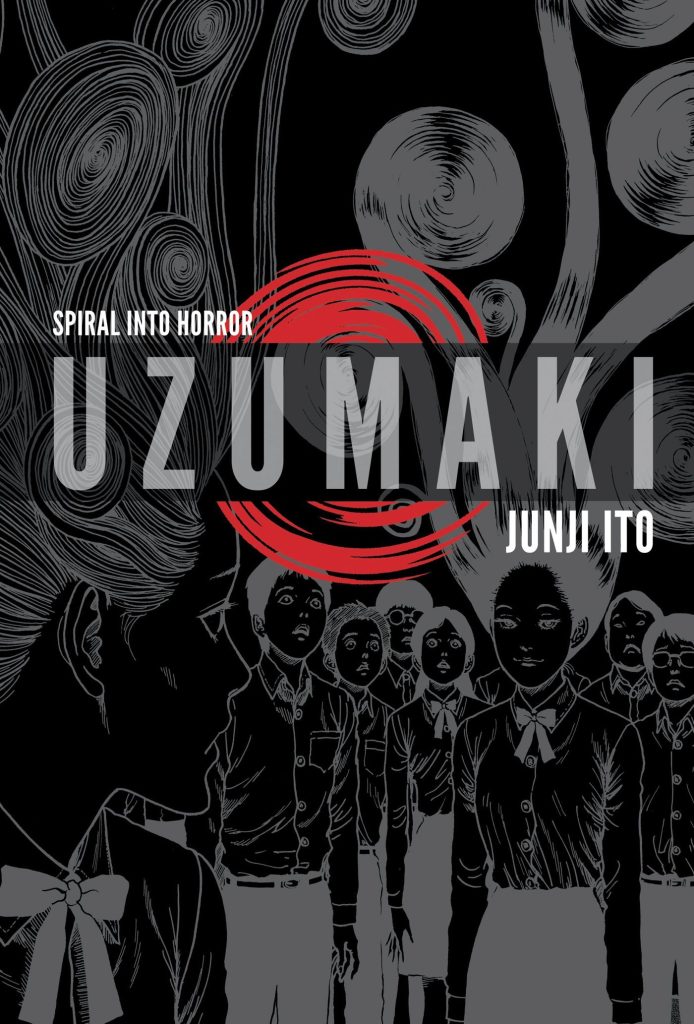
Uzumaki is Junji Ito’s spiraling descent into geometric terror — part cosmic horror, part body meltdown, and all nightmare fuel. Set in the cursed coastal town of Kurouzu-cho, Uzumaki doesn’t unleash monsters or ghosts — it unleashes a shape. A simple spiral. But under Ito’s ink-stained fingers, that spiral becomes a symbol of obsession, transformation, and inescapable doom. Through the eyes of teenage survivor Kirie Goshima and her increasingly unhinged boyfriend Shuichi, we watch as their sleepy town goes from mildly eerie to a full-blown vortex of madness, where everything — and everyone — is slowly consumed by the spiral.
The body horror here is legendary, stomach-turning, and unforgettable. One man twists his body into a grotesque spiral, his spine contorted into a corkscrew of agony. Another student transforms into a human snail, leaving a glistening mucus trail behind as he slithers to class. There’s the girl whose hair coils into a parasitic tornado, draining her life while mesmerizing onlookers — and the woman who gouges her fingertips and drills into her head to rid herself of spirals hiding in her own body. Each chapter is its own grotesque fable, drawing you deeper into Kurouzu-cho’s madness while your stomach and sanity turn in sync.
But Uzumaki isn’t just a freakshow of body contortions and visual mind games — it’s a meditation on inevitability, fate, and the way madness infects from the outside and the inside. Ito doesn’t explain the spiral’s origin. The spiral isn’t a villain. It’s a truth. A cosmic punchline etched into nature, waiting patiently to pull everything inward. By the final chapters, the town itself collapses into a spiral-shaped hell, and time becomes meaningless. Uzumaki doesn’t just horrify — it haunts. It curls into your brain and festers. It’s the kind of horror that doesn’t scream — it echoes. Over and over. Forever.
What do you think of these Body Horror Comics?
Do you love them or hate them? Are any of your favourite body horror comics on this list?